

What Size Generator Does an Airport Actually Need?
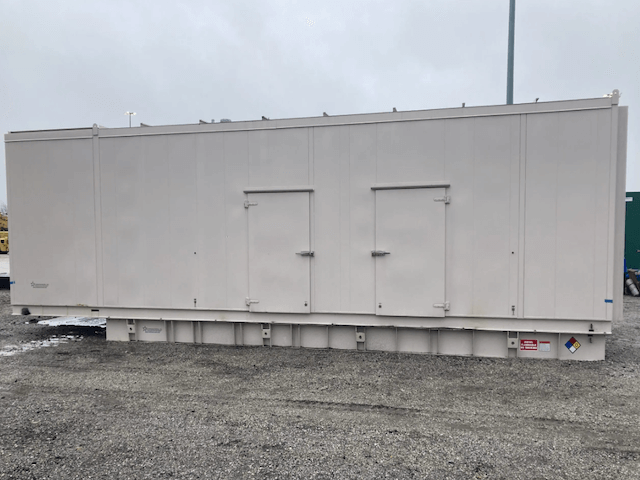
The answer depends entirely on what has to stay on. A regional airfield keeping security, communications, and basic lighting live during an outage has very different requirements than a major commercial terminal running baggage carousels, jet bridges, air traffic control, and full terminal HVAC simultaneously. Small regional airports typically land in the 125 kW range. Adequate. Proven. Cost-effective. Larger commercial facilities pushing simultaneous peak loads across dozens of critical systems need 350 kW or more — and the engineering to back it up. Load analysis should always drive the decision, not gut feel about facility size.
Why Airport Power Backup Is Non-Negotiable
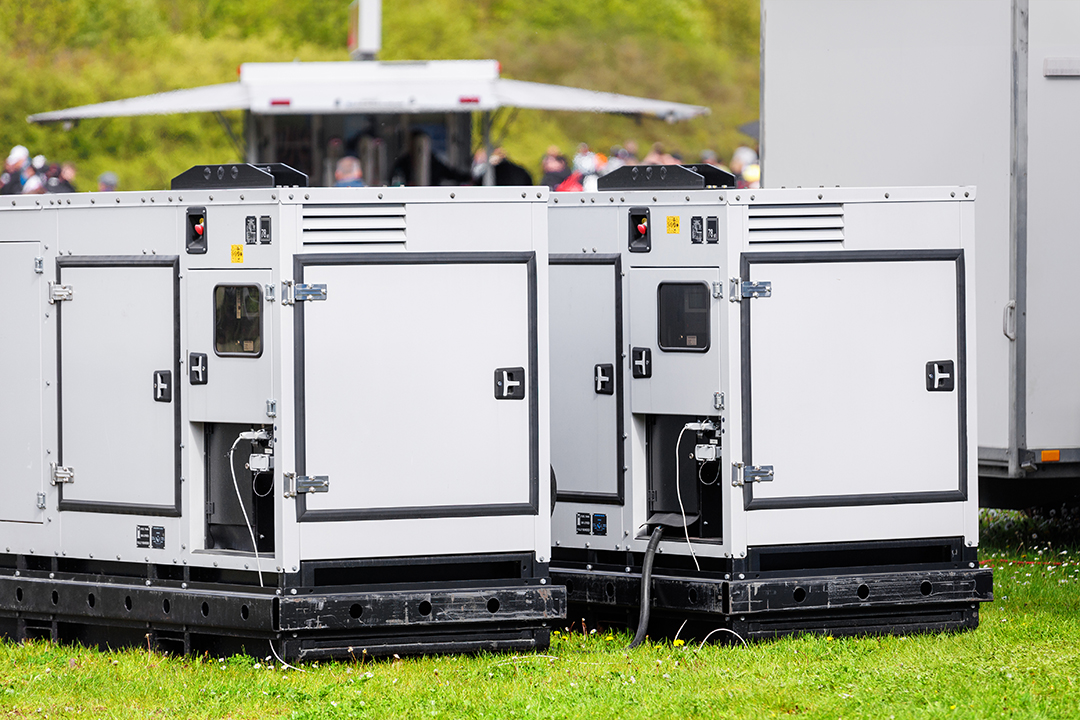
Airports don’t get to go dark. Ever. Runway lighting, instrument landing systems, air traffic control communications, baggage handling, terminal security — every one of these systems operates on the assumption that power is always there. A grid fault that lasts thirty seconds at a hotel is an inconvenience. At an airport, it triggers regulatory incident reports, grounds aircraft, strands passengers, and in worst-case scenarios creates genuine safety hazards. Industrial backup generators eliminate that exposure. They transfer load automatically, hold it indefinitely, and hand it back cleanly when grid power returns. That’s not a luxury for airport operators. It’s a baseline requirement.
Generator Models We Stock for Airport Applications
Two units in our current inventory consistently match airport power specifications. For regional airports and smaller airfield support buildings, the Caterpillar XQ125 trailer-mounted diesel generator is a 125 kW workhorse — mobile, fast to commission, and built to Cat’s exacting reliability standards for critical applications. Step up to a major commercial terminal environment and the Caterpillar XQ350 trailer-mounted diesel generator takes over — 350 kW of continuous output, capable of sustaining runway lighting, baggage systems, and air traffic control equipment through an extended outage without breaking a sweat.
Turnkey Industries: Airport Power Solutions Built Around Your Operation
Every airport is different. Passenger volume, terminal configuration, ground support complexity, regulatory environment — these variables shape power requirements in ways that a one-size-fits-all approach simply cannot address. Turnkey Industries works with airport operators and facility managers to match the right generator to the right application. Our inventory spans the full range of output capacities, and every unit ships thoroughly inspected and ready for immediate deployment. We’ve moved equipment to airports, airfields, and aviation support facilities across the country. We know what the work requires.
Shop Airport Generators by kW Range
Smaller regional airports and airfield support facilities typically find their match within our 100kW–249kW generators for sale. Major commercial airports running concurrent high-draw systems across large terminal footprints should be looking at our 250kW–374kW industrial generators — output levels where there is genuine headroom to sustain every critical airport system simultaneously, including runway infrastructure, without risking an overload event.
Buying or Selling Airport Generator Equipment

We carry one of the largest used industrial generator inventories in the United States, with units at 125 kW and 250 kW regularly stocked for airfield applications. Every unit ships from Texas with fast lead times and arrives ready to run. Need to offload equipment? We buy used generators too — get a quote on selling your generator here.
What Types of Generators Are Available?
Our inventory covers the full spectrum — used generators, new units, trailer-mounted configurations, standby systems, diesel-powered, and natural gas options. If you have a spec in mind and don’t see the right unit listed, call us. Our team sources equipment constantly and we can often locate what you need faster than you’d expect. Contact us online.
Renting a Generator for Airport Operations
Planned maintenance shutdowns, generator changeovers during infrastructure upgrades, and emergency replacement when a permanent unit fails — these are the scenarios where airport facilities teams need temporary generator capacity fast and can’t wait on procurement timelines. Stag Rentals maintains a fleet of high-capacity industrial generators available for short and long-term rental, deployable on short notice across Texas and beyond. For airports in hurricane-exposed coastal regions, a pre-season contingency power agreement guarantees equipment availability before a storm event — critical in a market where every facility in the region is competing for the same rental units at the same time. Emergency rental requests are handled through Stag’s emergency generator rental program, with rapid dispatch for time-critical airport power situations.
Frequently Asked Questions: Generators for Airport Facilities
What regulatory standards govern emergency power systems at commercial airports?
FAA Advisory Circular 150/5340-26 covers maintenance of airport visual aid facilities and references power system requirements for airfield lighting. NFPA 70 (National Electrical Code) and NFPA 110 (Emergency and Standby Power Systems) apply to the generator installations themselves. Airports certificated under 14 CFR Part 139 must comply with FAA certification requirements that include provisions for backup power to runway lighting and navigational aids. Additionally, TSA security directives may impose specific requirements for continuous power to access control and surveillance systems. Facilities teams should coordinate with their FAA regional office and ARFF (Airport Rescue and Fire Fighting) planning documents when specifying backup power systems.
How quickly must an airport generator transfer load after a grid fault?
NFPA 110 defines transfer time requirements based on equipment class. Class X systems must transfer within 10 milliseconds — typically for life-safety systems using static transfer switches. Class 10 systems transfer within 10 seconds, which covers most airport emergency power applications including runway lighting and air traffic control. The automatic transfer switch (ATS) is as critical as the generator itself — a properly sized generator paired with a slow or unreliable ATS will still fail to meet transfer time requirements. Specify the ATS and generator together, not independently.
Can a single generator cover the entire terminal during an outage, or do airports typically use multiple units?
Larger commercial airports almost universally use distributed backup power architecture — multiple generator sets staged across the facility, each assigned to a specific load zone. This approach provides redundancy (failure of one unit doesn’t take down the entire facility), allows for load shedding by zone, and makes maintenance scheduling practical without full facility exposure. Regional airports with simpler infrastructure may use a single primary generator with a smaller secondary unit as backup. The right architecture depends on the facility’s critical load map, not the generator catalog.
How do I calculate the generator load requirement for a terminal baggage handling system?
Baggage conveyor systems are among the largest motor loads in a terminal. Start by collecting the nameplate horsepower for every motor in the system — sort conveyors, flat belt conveyors, baggage claim carousel drives, and screening equipment motors. Convert HP to kW (1 HP ≈ 0.746 kW) for running load. Then identify your largest single motor and multiply its running kW by 2.5 to 3.0 for startup surge capacity. If multiple motors start in sequence during system initialization, you may need to account for staggered startup surge across several motors. Most baggage systems are three-phase 480V — confirm your generator output voltage matches before specifying.
What fuel storage requirements apply to airport backup generators?
NFPA 110 requires Level 1 emergency power systems (life-safety classification) to have fuel storage sufficient for a minimum of 96 hours of operation at full load. This is a minimum — airports in areas with extended grid outage risk (hurricane zones, areas with aging grid infrastructure) should plan for longer. Above-ground storage tanks at airports are subject to FAA obstruction clearance requirements and may also fall under EPA SPCC (Spill Prevention, Control, and Countermeasure) regulations if total on-site fuel storage exceeds 1,320 gallons in aboveground containers. Coordinate tank placement with your airport’s environmental compliance officer before installation.
How should airports handle generator load testing without disrupting active terminal operations?
NFPA 110 requires monthly no-load or load tests and annual full-load tests for Level 1 systems. At active airports, full-load testing is typically scheduled during overnight low-traffic windows and coordinated with air traffic control to avoid conflicts with instrument approaches. Resistive load bank testing — applying a resistive load to the generator without actually switching the facility load — is the safest method for annual full-load verification without live transfer risk. Maintain a log of all test dates, load levels, and any anomalies observed; FAA inspectors and insurance underwriters may request this documentation.