
Building a Generator Rental Fleet? Here’s What Actually Moves.
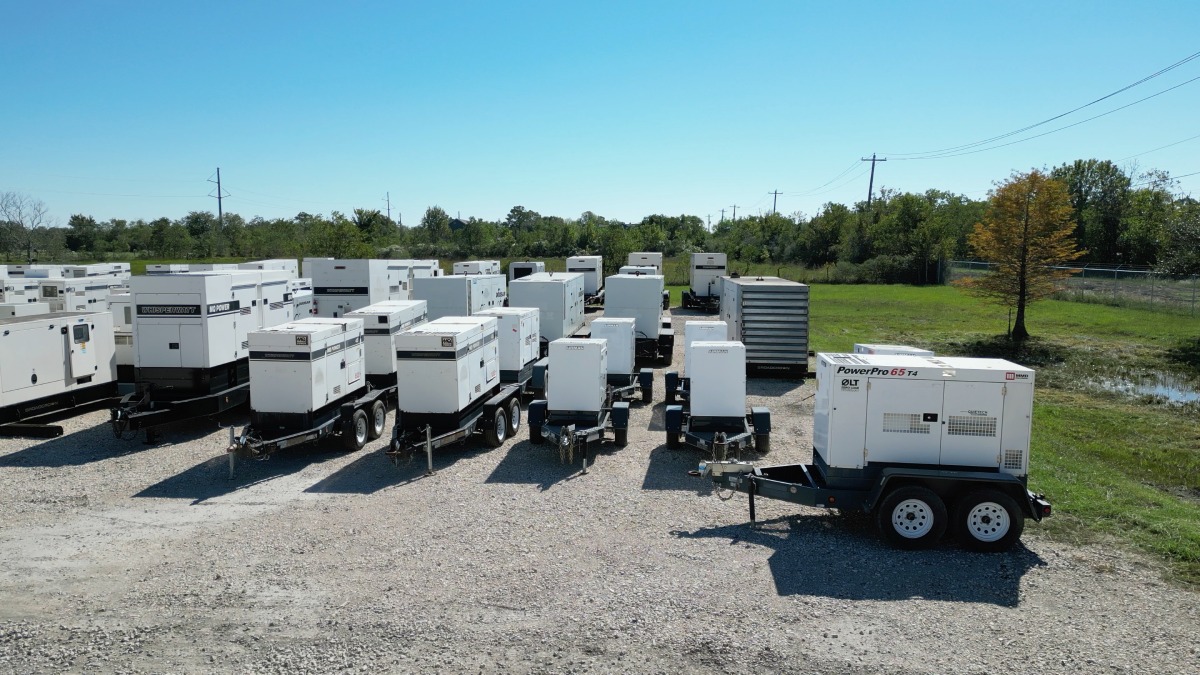
Rental company procurement is a fundamentally different calculation than end-user procurement. You’re not buying a generator to solve one power problem at one site. You’re buying inventory — units that need to rent repeatedly, return cleanly, service quickly, and hold resale value through multiple fleet cycles. The wrong unit sits on the yard. The right unit runs 200+ days a year and pays for itself in 18 months. Fleet composition matters more than individual unit specs, and the sweet spot for most rental inventories sits in the 100 kW to 175 kW range — versatile enough to serve construction, events, emergency standby, and industrial applications without being so large that the customer pool narrows. That said, having a few larger units in the fleet opens doors to commercial and industrial contracts that smaller competitors can’t touch.
What Rental Customers Actually Need
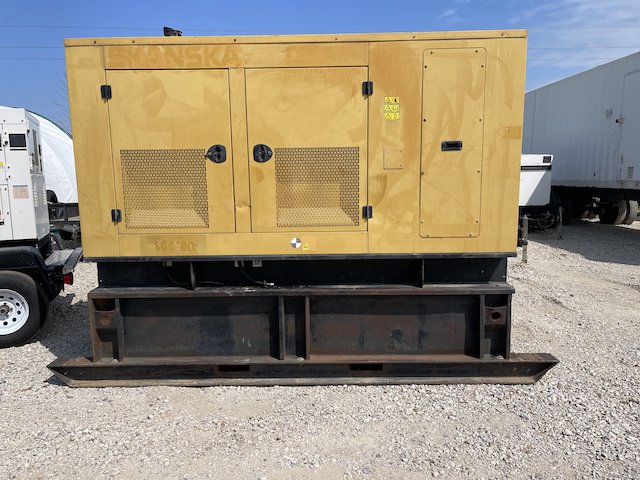
Temporary power demand is wildly varied. A weekend outdoor event needs something that’s quiet, quick to set up, and reliable for 48 hours straight. A construction site needs something that can take the abuse of a job site environment, start reliably every morning, and run 10 hours a day for months. A disaster relief operation needs something that deploys fast, runs on whatever fuel is available, and keeps going through conditions that would ground lesser equipment. Emergency commercial standby rentals — a hospital whose permanent generator failed, a data center waiting on a parts order — need something that transfers load cleanly and holds it without any drama. No single unit serves all of these scenarios equally well, but trailer-mounted diesel units in the 100 kW to 250 kW range come closest to covering the widest range of rental applications.
Fleet Sizing Strategy for Generator Rental Companies
The most utilization comes from the middle of the range. A 125 kW generator rents to construction sites, outdoor events, small commercial standby applications, and light industrial projects — the broadest possible customer base. Go below 75 kW and you’re competing on price with equipment that costs a fraction as much to own. Go above 250 kW and your customer pool shrinks to industrial and commercial accounts that often have longer lead times and more complex logistics. The smartest fleet compositions we see are weighted toward the 75 kW to 175 kW range, with a handful of larger units — 250 kW to 500 kW — that command premium day rates and open the door to contracts that smaller fleets can’t bid on.
High-Utilization Rental Sizes by Application
- Outdoor events and temporary venues — 100 kW to 150 kW trailer-mounted units
- Construction sites — 75 kW to 175 kW, trailer-mounted diesel preferred
- Emergency commercial standby — 125 kW to 250 kW with clean transfer capability
- Disaster relief and municipal emergency response — 100 kW to 200 kW, fast-deploy trailer units
- Industrial and petrochemical rentals — 250 kW to 500 kW+, longer contract duration
Units Worth Stocking in a Rental Fleet
The Multiquip DCA70SSI trailer-mounted diesel generator is exactly the kind of unit that earns its place in a rental fleet — trailer-mounted for fast deployment, sound-attenuated for event and urban applications, and built to the reliability standard that Multiquip’s DCA series has maintained across decades of rental industry use. For rental companies targeting commercial and industrial accounts that require higher output, the Atlas Copco QAS250 trailer-mounted diesel generator delivers 250 kW in a well-proven mobile configuration — a unit that commands meaningful day rates across construction, industrial, and emergency standby rental applications and holds its value through multiple fleet cycles.
Browse Rental Fleet Generators by Output Range
The highest-utilization rental units typically live in our 50kW–74kW, 75kW–99kW, and 100kW–249kW ranges — the bread-and-butter sizes that cover the widest spectrum of rental applications. Companies building out their fleet with premium commercial and industrial capacity should also explore our 250kW–374kW generators, where day rates improve significantly and contract durations tend to run longer.
Turnkey Industries as a Fleet Acquisition Partner
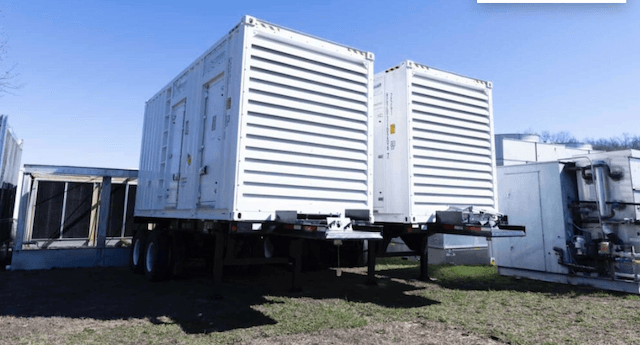
Rental companies are repeat buyers — not one-time purchasers. When you find a supplier whose inspection standards you trust and whose pricing works for fleet economics, you come back. Turnkey Industries has built its reputation on exactly that kind of relationship. Every unit in our inventory is load bank tested and ships ready to rent — not ready to service first, then rent. We carry trailer-mounted diesel inventory across the output range that rental fleets require, from compact 30 kW units up through high-capacity industrial generators, and our Texas location means logistics work in your favor for most of the country. We also buy fleet units coming off rental cycle — if you’re rotating equipment out, get a quote on what we’ll pay for your decommissioned units.
Available Generator Configurations for Rental Fleet Acquisition
Rental fleets are built on trailer-mounted diesel. That’s the core, and it’s what dominates our inventory. Beyond that, we also stock used generators with documented service histories that work for fleet buyers who need to move fast on price, new units for companies that require clean hours and OEM documentation, and a range of output capacities from the light end of the rental market through industrial-scale applications. If you’re building out a fleet and have specific size, brand, or configuration requirements across multiple units, talk to our team directly — volume acquisition conversations are worth having in person.
Stag Rentals: A Wholesale Partner for Generator Rental Companies
If your rental fleet has a gap in capacity — a customer request for a size you don’t stock, a period where your inventory is fully committed and a new contract comes in, or a market you’re expanding into before you’ve built the fleet depth to cover it — Stag Rentals operates as a wholesale resource that rental companies can draw on. Rather than turning away a contract or losing a customer relationship, rental operators in Texas and surrounding markets have used Stag as a behind-the-scenes capacity source for industrial generator sizes they don’t currently have available. Stag’s fleet covers the emergency response and disaster recovery market specifically — a segment where demand is unpredictable and rental companies without deep fleet reserves lose contracts to better-positioned competitors. If your company operates in Texas markets and wants to discuss a wholesale or capacity-sharing arrangement, reach out to Stag directly.
Frequently Asked Questions: Generator Rental Company Operations
What maintenance interval should a rental company use for fleet generators that turn over between customers with unknown run hours?
The standard approach for rental fleet management is to service every unit at return regardless of stated run hours — you can’t verify what a customer actually ran, and deferred maintenance on a rental unit compounds across multiple customers. At minimum, verify oil level and condition, check coolant level and condition, inspect air filter restriction indicator, and run the unit under load for 15 to 30 minutes before release to the next customer. Full oil and filter change intervals should be based on the manufacturer’s hour recommendation or 90 days calendar time, whichever comes first, regardless of stated rental hours. Fuel system inspection — checking for water contamination, checking injectors for symptoms of dirty fuel — should be part of every return inspection on units coming off long-term contracts where fuel quality may have been inconsistent.
How should a rental company structure its rental agreement to protect against generator damage from customer misuse?
Rental agreements for industrial generators should explicitly address: maximum load as a percentage of rated capacity (typically 80% continuous), prohibition on operating below 30% load for extended periods (wet stacking provision), fuel type and quality requirements (No. 2 diesel only, no blended fuels without written approval), customer responsibility for fuel and coolant level monitoring, prohibition on moving a running generator, and customer liability for damage resulting from operation outside agreement parameters. Document the generator’s condition at delivery with photos and a pre-delivery inspection checklist signed by the customer or their representative. The same documentation at return establishes the baseline for any damage claim. Require the customer to designate a responsible operator and provide basic operating instructions in writing — verbal instruction is not defensible when a customer claims they weren’t told not to overload the unit.
What insurance coverage does a generator rental company need, and how does it differ from general equipment rental insurance?
Generator rental introduces specific exposures that general equipment rental policies may not adequately address. Physical damage coverage for the generator itself is standard, but rental companies should confirm that their policy covers the unit while on rent to third parties, not just while on the rental yard. Business interruption coverage for lost rental revenue when a unit is damaged and out of service is often underinsured in small rental company policies. Third-party liability exposure is significant — a generator that fails and causes a fire, a carbon monoxide incident from improper exhaust routing by a customer, or a fuel spill from a damaged tank can all generate substantial third-party claims. Discuss with your broker whether your policy covers incidents caused by customer misuse versus equipment defect, as the coverage trigger differs. Require customers to carry their own liability coverage and list your company as an additional insured on their policy for the rental period.
How do rental companies handle multi-state operations and EPA compliance for their generator fleet?
EPA Tier requirements apply to the engine manufacture date, not to the rental transaction — a Tier 3 engine manufactured in 2010 remains a Tier 3 engine regardless of what state it operates in. However, some states — California being the most significant — impose additional requirements on diesel engines operating within state borders through CARB (California Air Resources Board) regulations that are more stringent than federal EPA Tier standards. CARB’s In-Use Off-Road Diesel Regulation affects non-road diesel equipment including generators above 25 HP operated in California. Rental companies renting into California must verify that their fleet meets CARB requirements for the engine tier and hours on the unit. Several other states have adopted or are adopting similar standards. Track the regulatory status of each state market you operate in, maintain engine tier documentation for every fleet unit, and consult an environmental compliance attorney before expanding rental operations into new state markets with active non-road diesel regulations.
What is the right approach to fleet GPS and telematics for a generator rental company?
Telematics provides rental companies with three valuable capabilities: location tracking for asset recovery and customer dispute resolution, runtime hour tracking for accurate billing and maintenance scheduling, and remote monitoring of engine parameters that can identify developing problems before they become failures. For a rental fleet, the runtime data alone typically justifies the telematics cost — billing disputes over run hours are common, and documented telematics data is definitive. Engine parameter monitoring — oil pressure, coolant temperature, battery voltage, fault codes — allows fleet managers to identify units that are being overloaded or experiencing warning conditions before a customer calls to report a failure. Most major telematics providers offer generator-specific monitoring integrations. Factor telematics installation and monthly service cost into your fleet unit economics when evaluating new acquisitions — units without telematics infrastructure should be priced accordingly if you plan to retrofit them.
How does a generator rental company build a hurricane contingency revenue stream in Gulf Coast Texas markets?
Hurricane contingency contracts — where commercial and industrial customers pay a retainer to have a generator pre-committed and staged before hurricane season — are a significant revenue opportunity for Texas Gulf Coast rental companies. The customer pays a standby fee (typically 15% to 25% of the standard day rate) for each month the generator is reserved but not deployed, and full day rate from the moment the unit is delivered. From the rental company’s perspective, this converts uncertain emergency demand into predictable recurring revenue while guaranteeing equipment availability to customers who need it most. The market for these contracts includes hospitals, data centers, water districts, large commercial properties, food distribution facilities, and any other organization with critical operational continuity requirements in hurricane-exposed markets. Build these contracts into your annual sales cycle — they should be renewed or established between January and May before hurricane season begins, not sold reactively when a storm is already in the Gulf. Stag Rentals operates this model directly and can discuss how it works in practice for Gulf Coast rental operators.