
Industrial Generators For Sale

Rock Crushing Industry Generators General Maintenance & Cost Of Industrial Generators

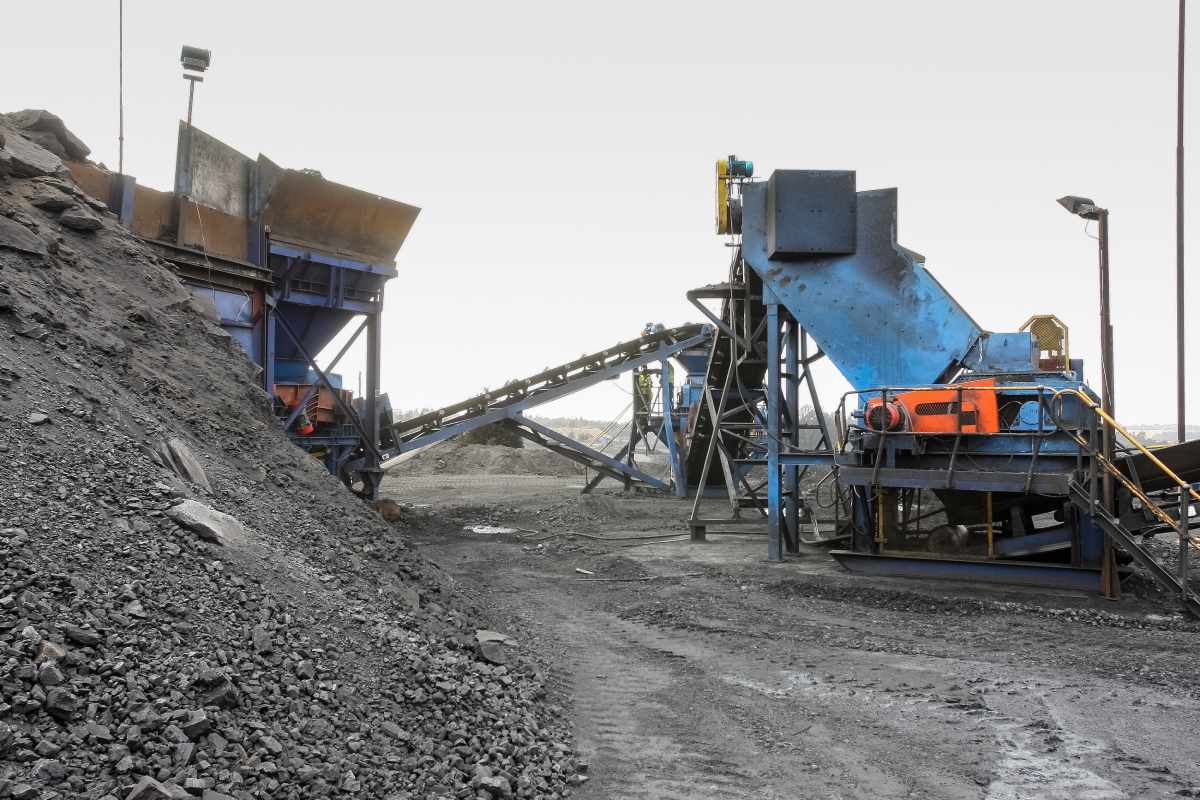
rock crushing using machine

Specialized Generators for Rock Crushing Industry

At Turnkey Industries, we recognize the demanding nature of the rock crushing industry, and that’s why we offer a comprehensive selection of specialized industrial generators tailored to meet the unique power needs of crushing operations. Our extensive inventory showcases renowned brands including Caterpillar, Multiquip, Cummins, and Baldor, ensuring that you find the perfect generator to support your rock crushing activities. These generators are meticulously engineered to deliver reliable and efficient power, ensuring uninterrupted operations for crushers, conveyors, and other crucial equipment. Trust in our expertise, and experience the peace of mind that comes with choosing Turnkey Industries for all your rock crushing industry generator requirements. With our dedicated generators, you can optimize productivity, minimize downtime, and maximize output, empowering your rock crushing operations to meet the demanding requirements of construction, road building, and various other projects with confidence and efficiency.

Why Do Rock Crushers Need Dedicated Generator Power?
Cummins generators for the rock crushing industry

Rock crushing is one of the most power-hungry operations in the extractive industry. Primary rock crushers alone draw enormous startup and running loads. Add conveyor systems, screens, dust suppression systems, site lighting, and auxiliary equipment and you have a continuous, high-demand power requirement that grid supply frequently cannot support — particularly on remote quarry sites where utility infrastructure does not reach.

Specialized generators built for this environment do not just provide backup. They are often the primary power source, running continuously through multi-shift production schedules in conditions that would stress lesser equipment into failure. Powering rock crushers is a prime power problem, not a standby one, and that distinction decides what you should buy. Turnkey Industries stocks units for exactly this duty.

How Does Each Type of Rock Crusher Load a Generator?

Generator selection starts with knowing which rock crushers are on the manifest, because each type presents a different load to the machine. The rock crushers decide the generator, not the other way round.

  • Jaw crushers — primary crushing duty, breaking large rocks down first. One jaw moves against a fixed plate, so the load is cyclical and surges every time material enters. Jaw crushers draw hard on startup and demand transient capacity.
  • Gyratory crusher — the other primary crushing option at high tonnage. A gyratory crusher runs a steadier load than a jaw but at larger absolute draw, and the mantle’s continuous motion means less load cycling.
  • Cone crushers — secondary crushing and tertiary duty, reducing smaller rocks to finer particles. Cone crushers run closer to constant load, and modern cone crushers often use variable frequency drives that cut startup surge substantially.
  • Impact crushers — used on softer stone and recycling, producing well-shaped product. Impact crushers carry high rotor inertia, which means a long, heavy acceleration on start.

Most plants run several crushing stages: a jaw or gyratory on primary, cone crushers on secondary and tertiary, with screening equipment between stages. Each stage adds running load from its electric motors, and the sequence you start them in determines peak demand. Starting every machine at once on a cold plant is what trips undersized generators, which is why plants with heavy rock crushers stagger their startup sequence deliberately.

The raw materials matter too. Hard rock punishes rock crushers harder than soft stone, and abrasive materials like granite and basalt push crusher motors toward their rated draw for longer. That means the generator sees sustained high load rather than the comfortable average a spec sheet implies. Various materials running through the same plant produce different load profiles week to week.

What Size Generator Does a Crushing Plant Need?
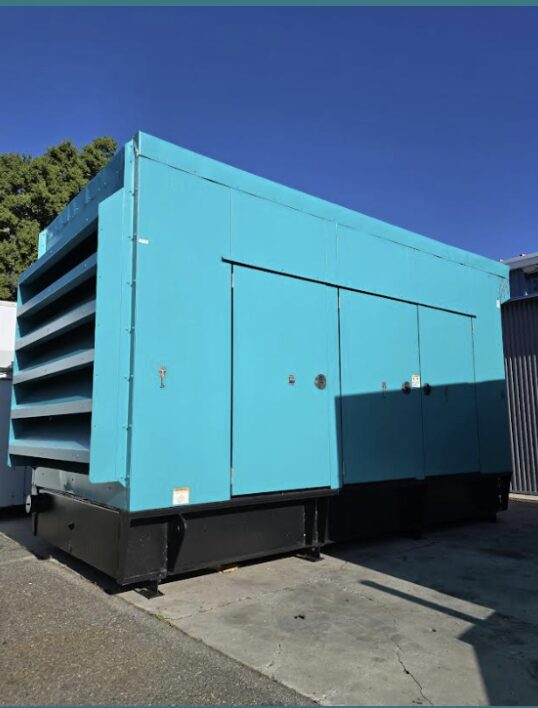
Cummins diesel generators for the rock crushing industry

Sizing comes down to the rock crushing equipment manifest and the duty cycle. Rough bands:

  • 125 kW to 250 kW — mobile rock crushers and small quarry sites processing moderate volumes
  • 250 kW to 500 kW — a single crushing circuit with conveyors and screening equipment
  • 500 kW to 1000 kW — multi-stage plants running primary and secondary crushing concurrently
  • 1000 kW to 1500 kW — full quarry processing plants with extensive conveyor networks

Mobile units work with 125 kW generators or 150 kW generators. A fixed quarry with multiple processing stages needs 250 kW to 300 kW as a baseline rather than a ceiling, and large plants push to 1,000 kW and beyond.

The factor operators most often underestimate is startup surge. Crusher motors pull far higher amperage at startup than at steady state, and a generator correctly sized for running load can still fail to start the rock crushing equipment without the transient capacity to absorb inrush. An undersized generator does not announce itself on the spec sheet — it announces itself as a plant that will not start on a Monday morning. Spec with that margin built in, and match the generator to measured power needs rather than nameplate arithmetic.

What Does Dust Do to a Generator on a Crushing Site?
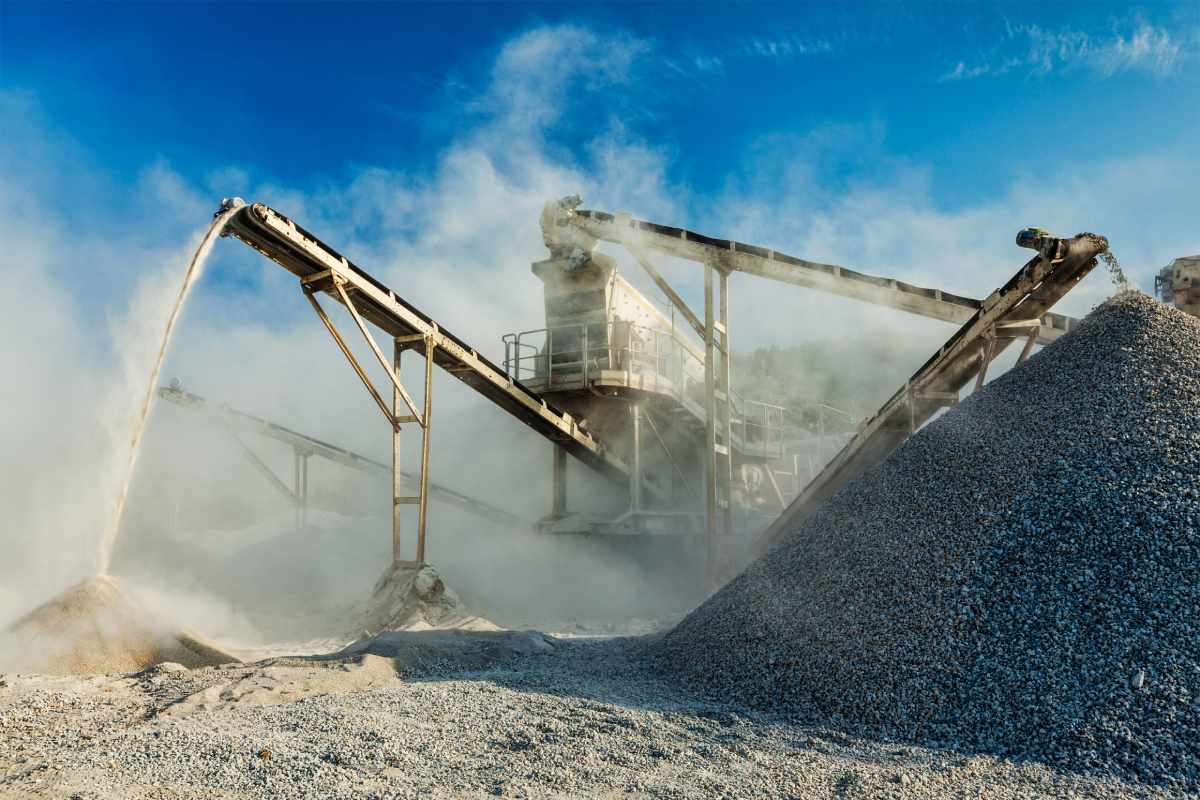
diesel generators for the rock crushing industry

Dust ingestion is the single biggest threat to generators working alongside rock crushers, and it is what separates equipment that lasts from equipment that does not. Crushed rock produces fine silica dust in significant amounts, and that dust finds air intakes, control panels, and alternator windings.

What works in these harsh environments: staged filtration with pre-cleaners ahead of the main filter, so the main filter is not doing all the work; air intake positioned away from prevailing dust sources; and enclosures sealed or positively pressurized so the air reaching the alternator is clean. Generators housed in robustly constructed enclosures rated for high particulate survive where standard commercial packages do not.

Vibration is the second threat. Rock crushers transmit substantial ground vibration that works on generator mounts, electrical terminations, and control components over time. Anti-vibration mounts between skid and pad help, and inspection intervals for mounting hardware and terminations should be tighter than a catalog suggests. Sound attenuated enclosures are worth specifying where the quarry sits near residential property, since rock crushing plants already draw noise complaints without a generator adding to them.

How Do Fuel Efficiency and Operating Costs Compare?

Fuel is the dominant operating cost on a crushing site running prime power, and fuel efficiency is therefore a sizing decision rather than an engine feature. A unit loaded at 70 to 80 percent of rating burns the least diesel per ton of crushed rock produced. The same machine at 25 percent load burns more fuel per kilowatt-hour and wet-stacks, which raises maintenance costs on top of the fuel bill — and maintenance costs on a remote quarry include the service call, not just the parts.

That argues against buying far more capacity than the plant needs. It also argues for running several machines in parallel on larger sites, so capacity can follow the production schedule rather than idling. Energy demands rise and fall with throughput, and a plant that can shed a generator during a slow shift saves measurably over a season.

Diesel engines dominate here for the same reason they do in the mining industry: fuel sits on site, and diesel engines will hold full load for days. Emissions regulations are the constraint worth checking early, because in some jurisdictions the engine tier determines whether the unit can be permitted at the site at all.

How Does Generator Power Protect the Production Schedule?

Downtime on a crushing site gets expensive fast. Idle rock crushers, stationary conveyors, crews standing down — the cost per hour of unplanned shutdown on a production operation is substantial, and lost production on a contract with tonnage commitments compounds into penalties. Uninterrupted operations are the whole point of the power plant.

Reliable power solutions remove the vulnerability remote sites face when grid supply is unavailable or unreliable. High reliability matters more here than peak specification, because the machine has to run every shift rather than impress on a datasheet — generators play a crucial role in whether a quarry hits its monthly tonnage. Turnkey Industries stocks trailer mounted diesel units suited to crushing operations that move between sites, and higher-capacity fixed units for permanent quarry installations, so operational flexibility does not cost you capacity.

Shop Rock Crushing Generators by kW Range

Smaller and mobile rock crushing operations typically find their match in our 100kW–249kW and 250kW–374kW generators for sale, with 375kW–499kW units covering a single crushing circuit with conveyors and screening. Larger quarry installations and high-volume crushing plants running multiple stages concurrently need the output in our 500kW–669kW, 670kW–839kW, and 840kW–999kW ranges, or 1,000kW–1,199kW and 1,200kW–1,399kW generators — capacity sufficient to handle simultaneous high-draw equipment loads including startup surge, without the voltage sag that damages crusher motors.

Generator Sizing Reference by Industry

  • Mining Operations — Small to medium mining operations typically require 500 kW to 1,500 kW. Larger open-pit and underground operations scale to 2,000 kW and beyond, with the largest projects needing 3,000 kW or more.
  • Educational Institutions — Smaller schools and campuses are served by 50 kW to 200 kW units. Larger colleges and universities with extensive facilities step up to 250 kW to 2,000 kW.
  • Cities and Municipalities — Essential municipal services are covered by 100 kW to 500 kW units. Medium cities need 600 kW to 2,000 kW, while large metropolitan areas require 3,000 kW and above.
  • Rock Crushing — Small to medium rock crushing operations need 200 kW to 500 kW to power primary rock crushers, screens, and conveyors. Large-scale crushing plants require 600 kW to 3,000 kW for full-plant operation.

Why Source Crushing Site Generators From Us?

Rock crushing sites present procurement challenges standard industrial applications do not: remote locations, demanding duty cycles, extreme dust and vibration exposure, and the need for mobile units that move with the operation. Turnkey Industries understands those requirements because we have supplied generators to extractive industry operations across the country, and we are in Dickinson, Texas, close to the quarry and aggregate market.

Every unit gets a 22-point inspection and is load bank tested before it ships, with our 30-day IronClad warranty behind it. Choosing the right generator for a crushing plant is mostly about matching measured load — including surge — to tested output, and a load bank record is the only proof that the machine does what the plate claims. We also purchase used generators, so if your operation is upgrading or consolidating, submit your units for a valuation here.

Looking to Buy or Sell a Used Crushing Site Generator?

We carry one of the largest used industrial generator inventories in the United States, with units suited to quarry and rock crushing applications across the output range. Equipment ships from Texas on fast lead times and arrives ready for deployment. If you are sourcing for an upcoming project or offloading surplus site equipment at project close, reach out to our team to discuss what is available and what we are buying.

What Types of Generators Are Available?

From rugged trailer-mounted diesel units built for remote site deployment to high-capacity fixed standby systems for permanent quarry installations, our inventory covers the range. Browse used generators, new units, trailer-mounted configurations, standby systems, diesel, and natural gas options. Not seeing the specification your operation requires? Contact us — we source equipment continuously and can often locate specific units on timelines that work for an active project schedule.

When Should a Crushing Operation Rent Instead?

Crushing operations that move between project sites, temporary aggregate production contracts with defined end dates, and situations where a permanent generator is down for service during an active production run — those are where rental makes operational and financial sense. Stag Power Rentals maintains a fleet of high-capacity trailer-mounted industrial generators available for rental at the output levels crushing and quarry operations require, deployable to remote sites across Texas. For operations running fixed-term contracts where capital purchase does not pencil out against project duration, rental provides the power capacity to maintain production without ownership overhead. Emergency generator rentals cover a primary unit failing mid-production, where the cost of downtime justifies same-day deployment to keep the site running.

Frequently Asked Questions: Generators for Rock Crushing Operations

How do I calculate the generator size needed for a jaw crusher and secondary cone crusher running simultaneously?

Start with the nameplate horsepower for each crusher motor. A typical primary jaw crusher in the 200 to 300 tph range runs a 150 to 250 HP motor; a secondary cone crusher in the same circuit might run a 100 to 200 HP motor. Convert HP to kW (multiply by 0.746) to get running load. The startup surge for each crusher motor is typically 3 to 6 times running current for direct-on-line starts — variable frequency drives reduce startup surge significantly if your equipment uses them. If starting the rock crushers sequentially rather than simultaneously, size the generator to handle the running load of all equipment plus the startup surge of the largest single motor being started. Add conveyor motors, screen drives, dust suppression pumps, site lighting, and control system load on top. Add 20% headroom. That is your minimum generator requirement, not a starting point for negotiation downward.

Our quarry is in a remote location with limited fuel delivery access. How do we manage generator fuel logistics?

Fuel logistics on remote quarry sites require planning that most urban industrial applications do not face. Establish your fuel consumption rate at your expected average load — most generator manufacturers provide consumption tables at 25%, 50%, 75%, and 100% load. Calculate daily consumption and multiply by your longest anticipated delivery gap, then double it for safety margin. On-site fuel storage should exceed that figure. Work with your fuel supplier to establish a delivery schedule and a priority delivery agreement for situations where weather or road conditions delay access, and get that agreement in writing before you need it. Consider a secondary fuel polishing system if stored diesel will sit for more than 60 to 90 days, particularly in hot climates where fuel degradation accelerates. Dirty fuel is a leading cause of injector failure on remote site generators where service response is slow.

What generator protection features are essential for a crushing site environment?

Dust ingestion is the primary threat to generators in rock crushing environments. Specify or retrofit enhanced air filtration — staged filtration with pre-cleaners designed for high-particulate environments significantly extends filter service life and protects the engine. Many standard generator enclosures are not designed for the dust levels rock crushers generate; verify that air intake and exhaust louvers are positioned away from prevailing dust sources and that the enclosure has positive pressure or appropriate sealing to prevent fine silica dust from reaching control panels and alternator windings. Vibration is the second major concern — crushing equipment transmits substantial ground vibration that affects generator mounts, electrical connections, and control system components over time. Inspect mounting hardware and electrical terminations more frequently than standard service intervals recommend. Anti-vibration mounts between the generator skid and the ground pad help significantly.

Can a diesel generator for a rock crushing site meet EPA Tier 4 requirements, and does that affect performance at altitude or high temperature?

Tier 4 Final diesel engines use advanced aftertreatment — diesel oxidation catalysts and selective catalytic reduction or diesel particulate filters — that add complexity compared to older tier engines. At high altitude, combustion air density decreases and engine power output derates accordingly, typically 3% to 4% per 1,000 feet above sea level. At high ambient temperatures, both engine output and cooling system capacity are reduced. For quarry sites at elevation or in hot climates, apply manufacturer derate tables to confirm the generator can deliver its rated output under your specific site conditions before specifying. Many manufacturers publish altitude and temperature derate charts; require this documentation as part of your equipment specification process. An undersized generator on a high-altitude crushing site is a common and expensive mistake.

Is it better to run one large generator or multiple smaller generators on a large quarry site?

Multiple smaller generators in parallel generally provide better operational flexibility and resilience for large quarry operations than a single large unit. With parallel generators, one unit can be taken offline for service without shutting down the entire operation, a critical advantage on a site where downtime costs are high. Load sharing between parallel units allows you to run only the capacity needed during lower-production periods, reducing fuel consumption and engine wear compared to a single oversized unit running at low load. The tradeoff is complexity — parallel operation requires synchronization controls, load sharing equipment, and operators who understand how to manage a paralleled system. For operations with experienced plant electricians and a full production schedule that justifies the investment, parallel configuration almost always wins.

How often should a rock crushing site generator be serviced?

Standard manufacturer service intervals are based on operating hours under normal conditions, typically oil and filter changes at 250 to 500 hours and coolant and major inspections at 1,000 to 2,000 hours. Rock crushing environments are not normal conditions. Dust loading on air filters, vibration effects on fasteners and electrical connections, and continuous heavy-load operation all accelerate wear and shorten effective service intervals. A practical approach for crushing site generators in high-dust, high-vibration environments is to cut standard intervals by 30% to 50% and add a daily visual inspection covering oil level, coolant level, air filter condition indicator, battery condition, and any visible fuel or coolant leaks. Establish a relationship with a local generator service provider who can respond quickly when an issue is identified — remote site downtime is expensive, and the cost of a service call is trivial next to a day of lost production.

Does crushing recycled concrete load a generator differently than hard rock?

Yes, and usually favorably. Recycled concrete and asphalt are softer than granite or basalt, so crusher motors see lower sustained draw and the plant can often run a higher throughput on the same connected power. The complication is rebar and contamination, which cause sudden load spikes and occasional stalls as the rock crushers work through an obstruction. Those transients are harder on a generator than steady heavy load, because each one looks like a motor restart. Plants running mixed feed — hard rock some weeks, recycled material others — should size for the hard rock case and expect the recycling work to run comfortably within it rather than the reverse.

Why Do Rock Crushers Need Dedicated Generator Power?

Cummins generators for the rock crushing industry

Rock crushing is one of the most power-hungry operations in the extractive industry. Primary rock crushers alone draw enormous startup and running loads. Add conveyor systems, screens, dust suppression systems, site lighting, and auxiliary equipment and you have a continuous, high-demand power requirement that grid supply frequently cannot support — particularly on remote quarry sites where utility infrastructure does not reach.

Specialized generators built for this environment do not just provide backup. They are often the primary power source, running continuously through multi-shift production schedules in conditions that would stress lesser equipment into failure. Powering rock crushers is a prime power problem, not a standby one, and that distinction decides what you should buy. Turnkey Industries stocks units for exactly this duty.

How Does Each Type of Rock Crusher Load a Generator?

Generator selection starts with knowing which rock crushers are on the manifest, because each type presents a different load to the machine. The rock crushers decide the generator, not the other way round.

  • Jaw crushers — primary crushing duty, breaking large rocks down first. One jaw moves against a fixed plate, so the load is cyclical and surges every time material enters. Jaw crushers draw hard on startup and demand transient capacity.
  • Gyratory crusher — the other primary crushing option at high tonnage. A gyratory crusher runs a steadier load than a jaw but at larger absolute draw, and the mantle’s continuous motion means less load cycling.
  • Cone crushers — secondary crushing and tertiary duty, reducing smaller rocks to finer particles. Cone crushers run closer to constant load, and modern cone crushers often use variable frequency drives that cut startup surge substantially.
  • Impact crushers — used on softer stone and recycling, producing well-shaped product. Impact crushers carry high rotor inertia, which means a long, heavy acceleration on start.

Most plants run several crushing stages: a jaw or gyratory on primary, cone crushers on secondary and tertiary, with screening equipment between stages. Each stage adds running load from its electric motors, and the sequence you start them in determines peak demand. Starting every machine at once on a cold plant is what trips undersized generators, which is why plants with heavy rock crushers stagger their startup sequence deliberately.

The raw materials matter too. Hard rock punishes rock crushers harder than soft stone, and abrasive materials like granite and basalt push crusher motors toward their rated draw for longer. That means the generator sees sustained high load rather than the comfortable average a spec sheet implies. Various materials running through the same plant produce different load profiles week to week.

What Size Generator Does a Crushing Plant Need?

Cummins diesel generators for the rock crushing industry

Sizing comes down to the rock crushing equipment manifest and the duty cycle. Rough bands:

  • 125 kW to 250 kW — mobile rock crushers and small quarry sites processing moderate volumes
  • 250 kW to 500 kW — a single crushing circuit with conveyors and screening equipment
  • 500 kW to 1000 kW — multi-stage plants running primary and secondary crushing concurrently
  • 1000 kW to 1500 kW — full quarry processing plants with extensive conveyor networks

Mobile units work with 125 kW generators or 150 kW generators. A fixed quarry with multiple processing stages needs 250 kW to 300 kW as a baseline rather than a ceiling, and large plants push to 1,000 kW and beyond.

The factor operators most often underestimate is startup surge. Crusher motors pull far higher amperage at startup than at steady state, and a generator correctly sized for running load can still fail to start the rock crushing equipment without the transient capacity to absorb inrush. An undersized generator does not announce itself on the spec sheet — it announces itself as a plant that will not start on a Monday morning. Spec with that margin built in, and match the generator to measured power needs rather than nameplate arithmetic.

What Does Dust Do to a Generator on a Crushing Site?

diesel generators for the rock crushing industry

Dust ingestion is the single biggest threat to generators working alongside rock crushers, and it is what separates equipment that lasts from equipment that does not. Crushed rock produces fine silica dust in significant amounts, and that dust finds air intakes, control panels, and alternator windings.

What works in these harsh environments: staged filtration with pre-cleaners ahead of the main filter, so the main filter is not doing all the work; air intake positioned away from prevailing dust sources; and enclosures sealed or positively pressurized so the air reaching the alternator is clean. Generators housed in robustly constructed enclosures rated for high particulate survive where standard commercial packages do not.

Vibration is the second threat. Rock crushers transmit substantial ground vibration that works on generator mounts, electrical terminations, and control components over time. Anti-vibration mounts between skid and pad help, and inspection intervals for mounting hardware and terminations should be tighter than a catalog suggests. Sound attenuated enclosures are worth specifying where the quarry sits near residential property, since rock crushing plants already draw noise complaints without a generator adding to them.

How Do Fuel Efficiency and Operating Costs Compare?

Fuel is the dominant operating cost on a crushing site running prime power, and fuel efficiency is therefore a sizing decision rather than an engine feature. A unit loaded at 70 to 80 percent of rating burns the least diesel per ton of crushed rock produced. The same machine at 25 percent load burns more fuel per kilowatt-hour and wet-stacks, which raises maintenance costs on top of the fuel bill — and maintenance costs on a remote quarry include the service call, not just the parts.

That argues against buying far more capacity than the plant needs. It also argues for running several machines in parallel on larger sites, so capacity can follow the production schedule rather than idling. Energy demands rise and fall with throughput, and a plant that can shed a generator during a slow shift saves measurably over a season.

Diesel engines dominate here for the same reason they do in the mining industry: fuel sits on site, and diesel engines will hold full load for days. Emissions regulations are the constraint worth checking early, because in some jurisdictions the engine tier determines whether the unit can be permitted at the site at all.

How Does Generator Power Protect the Production Schedule?

Downtime on a crushing site gets expensive fast. Idle rock crushers, stationary conveyors, crews standing down — the cost per hour of unplanned shutdown on a production operation is substantial, and lost production on a contract with tonnage commitments compounds into penalties. Uninterrupted operations are the whole point of the power plant.

Reliable power solutions remove the vulnerability remote sites face when grid supply is unavailable or unreliable. High reliability matters more here than peak specification, because the machine has to run every shift rather than impress on a datasheet — generators play a crucial role in whether a quarry hits its monthly tonnage. Turnkey Industries stocks trailer mounted diesel units suited to crushing operations that move between sites, and higher-capacity fixed units for permanent quarry installations, so operational flexibility does not cost you capacity.

Shop Rock Crushing Generators by kW Range

Smaller and mobile rock crushing operations typically find their match in our 100kW–249kW and 250kW–374kW generators for sale, with 375kW–499kW units covering a single crushing circuit with conveyors and screening. Larger quarry installations and high-volume crushing plants running multiple stages concurrently need the output in our 500kW–669kW, 670kW–839kW, and 840kW–999kW ranges, or 1,000kW–1,199kW and 1,200kW–1,399kW generators — capacity sufficient to handle simultaneous high-draw equipment loads including startup surge, without the voltage sag that damages crusher motors.

Generator Sizing Reference by Industry

  • Mining Operations — Small to medium mining operations typically require 500 kW to 1,500 kW. Larger open-pit and underground operations scale to 2,000 kW and beyond, with the largest projects needing 3,000 kW or more.
  • Educational Institutions — Smaller schools and campuses are served by 50 kW to 200 kW units. Larger colleges and universities with extensive facilities step up to 250 kW to 2,000 kW.
  • Cities and Municipalities — Essential municipal services are covered by 100 kW to 500 kW units. Medium cities need 600 kW to 2,000 kW, while large metropolitan areas require 3,000 kW and above.
  • Rock Crushing — Small to medium rock crushing operations need 200 kW to 500 kW to power primary rock crushers, screens, and conveyors. Large-scale crushing plants require 600 kW to 3,000 kW for full-plant operation.

Why Source Crushing Site Generators From Us?

Rock crushing sites present procurement challenges standard industrial applications do not: remote locations, demanding duty cycles, extreme dust and vibration exposure, and the need for mobile units that move with the operation. Turnkey Industries understands those requirements because we have supplied generators to extractive industry operations across the country, and we are in Dickinson, Texas, close to the quarry and aggregate market.

Every unit gets a 22-point inspection and is load bank tested before it ships, with our 30-day IronClad warranty behind it. Choosing the right generator for a crushing plant is mostly about matching measured load — including surge — to tested output, and a load bank record is the only proof that the machine does what the plate claims. We also purchase used generators, so if your operation is upgrading or consolidating, submit your units for a valuation here.

Looking to Buy or Sell a Used Crushing Site Generator?

We carry one of the largest used industrial generator inventories in the United States, with units suited to quarry and rock crushing applications across the output range. Equipment ships from Texas on fast lead times and arrives ready for deployment. If you are sourcing for an upcoming project or offloading surplus site equipment at project close, reach out to our team to discuss what is available and what we are buying.

What Types of Generators Are Available?

From rugged trailer-mounted diesel units built for remote site deployment to high-capacity fixed standby systems for permanent quarry installations, our inventory covers the range. Browse used generators, new units, trailer-mounted configurations, standby systems, diesel, and natural gas options. Not seeing the specification your operation requires? Contact us — we source equipment continuously and can often locate specific units on timelines that work for an active project schedule.

When Should a Crushing Operation Rent Instead?

Crushing operations that move between project sites, temporary aggregate production contracts with defined end dates, and situations where a permanent generator is down for service during an active production run — those are where rental makes operational and financial sense. Stag Power Rentals maintains a fleet of high-capacity trailer-mounted industrial generators available for rental at the output levels crushing and quarry operations require, deployable to remote sites across Texas. For operations running fixed-term contracts where capital purchase does not pencil out against project duration, rental provides the power capacity to maintain production without ownership overhead. Emergency generator rentals cover a primary unit failing mid-production, where the cost of downtime justifies same-day deployment to keep the site running.

Frequently Asked Questions: Generators for Rock Crushing Operations

How do I calculate the generator size needed for a jaw crusher and secondary cone crusher running simultaneously?

Start with the nameplate horsepower for each crusher motor. A typical primary jaw crusher in the 200 to 300 tph range runs a 150 to 250 HP motor; a secondary cone crusher in the same circuit might run a 100 to 200 HP motor. Convert HP to kW (multiply by 0.746) to get running load. The startup surge for each crusher motor is typically 3 to 6 times running current for direct-on-line starts — variable frequency drives reduce startup surge significantly if your equipment uses them. If starting the rock crushers sequentially rather than simultaneously, size the generator to handle the running load of all equipment plus the startup surge of the largest single motor being started. Add conveyor motors, screen drives, dust suppression pumps, site lighting, and control system load on top. Add 20% headroom. That is your minimum generator requirement, not a starting point for negotiation downward.

Our quarry is in a remote location with limited fuel delivery access. How do we manage generator fuel logistics?

Fuel logistics on remote quarry sites require planning that most urban industrial applications do not face. Establish your fuel consumption rate at your expected average load — most generator manufacturers provide consumption tables at 25%, 50%, 75%, and 100% load. Calculate daily consumption and multiply by your longest anticipated delivery gap, then double it for safety margin. On-site fuel storage should exceed that figure. Work with your fuel supplier to establish a delivery schedule and a priority delivery agreement for situations where weather or road conditions delay access, and get that agreement in writing before you need it. Consider a secondary fuel polishing system if stored diesel will sit for more than 60 to 90 days, particularly in hot climates where fuel degradation accelerates. Dirty fuel is a leading cause of injector failure on remote site generators where service response is slow.

What generator protection features are essential for a crushing site environment?

Dust ingestion is the primary threat to generators in rock crushing environments. Specify or retrofit enhanced air filtration — staged filtration with pre-cleaners designed for high-particulate environments significantly extends filter service life and protects the engine. Many standard generator enclosures are not designed for the dust levels rock crushers generate; verify that air intake and exhaust louvers are positioned away from prevailing dust sources and that the enclosure has positive pressure or appropriate sealing to prevent fine silica dust from reaching control panels and alternator windings. Vibration is the second major concern — crushing equipment transmits substantial ground vibration that affects generator mounts, electrical connections, and control system components over time. Inspect mounting hardware and electrical terminations more frequently than standard service intervals recommend. Anti-vibration mounts between the generator skid and the ground pad help significantly.

Can a diesel generator for a rock crushing site meet EPA Tier 4 requirements, and does that affect performance at altitude or high temperature?

Tier 4 Final diesel engines use advanced aftertreatment — diesel oxidation catalysts and selective catalytic reduction or diesel particulate filters — that add complexity compared to older tier engines. At high altitude, combustion air density decreases and engine power output derates accordingly, typically 3% to 4% per 1,000 feet above sea level. At high ambient temperatures, both engine output and cooling system capacity are reduced. For quarry sites at elevation or in hot climates, apply manufacturer derate tables to confirm the generator can deliver its rated output under your specific site conditions before specifying. Many manufacturers publish altitude and temperature derate charts; require this documentation as part of your equipment specification process. An undersized generator on a high-altitude crushing site is a common and expensive mistake.

Is it better to run one large generator or multiple smaller generators on a large quarry site?

Multiple smaller generators in parallel generally provide better operational flexibility and resilience for large quarry operations than a single large unit. With parallel generators, one unit can be taken offline for service without shutting down the entire operation, a critical advantage on a site where downtime costs are high. Load sharing between parallel units allows you to run only the capacity needed during lower-production periods, reducing fuel consumption and engine wear compared to a single oversized unit running at low load. The tradeoff is complexity — parallel operation requires synchronization controls, load sharing equipment, and operators who understand how to manage a paralleled system. For operations with experienced plant electricians and a full production schedule that justifies the investment, parallel configuration almost always wins.

How often should a rock crushing site generator be serviced?

Standard manufacturer service intervals are based on operating hours under normal conditions, typically oil and filter changes at 250 to 500 hours and coolant and major inspections at 1,000 to 2,000 hours. Rock crushing environments are not normal conditions. Dust loading on air filters, vibration effects on fasteners and electrical connections, and continuous heavy-load operation all accelerate wear and shorten effective service intervals. A practical approach for crushing site generators in high-dust, high-vibration environments is to cut standard intervals by 30% to 50% and add a daily visual inspection covering oil level, coolant level, air filter condition indicator, battery condition, and any visible fuel or coolant leaks. Establish a relationship with a local generator service provider who can respond quickly when an issue is identified — remote site downtime is expensive, and the cost of a service call is trivial next to a day of lost production.

Does crushing recycled concrete load a generator differently than hard rock?

Yes, and usually favorably. Recycled concrete and asphalt are softer than granite or basalt, so crusher motors see lower sustained draw and the plant can often run a higher throughput on the same connected power. The complication is rebar and contamination, which cause sudden load spikes and occasional stalls as the rock crushers work through an obstruction. Those transients are harder on a generator than steady heavy load, because each one looks like a motor restart. Plants running mixed feed — hard rock some weeks, recycled material others — should size for the hard rock case and expect the recycling work to run comfortably within it rather than the reverse.

What Our Customers Have To Say...

Turnkey Industries has earned the trust of customers through responsive service, knowledgeable support, and dependable industrial power solutions. From equipment selection to ongoing service, our team works to understand each customer’s needs and deliver a professional experience built on clear communication, reliable performance, and long-term relationships.
Posted on Google Google
Mark Sherrill profile picture
Mark Sherrill
Google star 1Google star 2Google star 3Google star 4Google star 5Trustindex verifies that the original source of the review is Google.
Awesome company to do business with. Very professional and their equipment is great.
Posted on Google Google
Byron Rivers profile picture
Byron Rivers
Google star 1Google star 2Google star 3Google star 4Google star 5Trustindex verifies that the original source of the review is Google.
Jake and Clint were great to work with. They truly care about their customers and provide excellent service. I’m looking forward to continuing our partnership and seeing their business succeed.
Posted on Google Google
Brian C. Isham profile picture
Brian C. Isham
Google star 1Google star 2Google star 3Google star 4Google star 5Trustindex verifies that the original source of the review is Google.
Dealing with Clint Hardy and Turnkey Industries has been a pleasure, they aim to please and care about the relationship between the client and vendor.
Posted on Google Google
Andrew Sayers profile picture
Andrew Sayers
Google star 1Google star 2Google star 3Google star 4Google star 5Trustindex verifies that the original source of the review is Google.
Clint and his team are incredibly knowledgeable about their products and services. They stand behind their tested units and I bought a lightly used towable generator for a great price with great confidence. They helped me out and programmed the CAT engine to run the necessary voltage for our equipment to help us get up and running. Thanks Clint and Rudy
Posted on Google Google
Troy Conway profile picture
Troy Conway
Google star 1Google star 2Google star 3Google star 4Google star 5Trustindex verifies that the original source of the review is Google.
Fantastic customer service! Would recommend to anyone!
Posted on Google Google
Andrew Spelman profile picture
Andrew Spelman
Google star 1Google star 2Google star 3Google star 4Google star 5Trustindex verifies that the original source of the review is Google.
The team at Turnkey was incredibly helpful in selecting a generator, getting the paperwork completed and shipping. Most importantly they provided all testing documents prior to shipping including a video of the load bank test which was a great bonus. Really enjoyed working with them and their communication was much appreciated. Will definitely be working with Turnkey on the next purchase.
Posted on Google Google
Corey Jackson profile picture
Corey Jackson
Google star 1Google star 2Google star 3Google star 4Google star 5Trustindex verifies that the original source of the review is Google.
We just made another purchase with Turnkey and they still have superior service and knowledge just like 10 years ago when we purchased our 1st generator.
Posted on Google Google
Ashley DeVault profile picture
Ashley DeVault
Google star 1Google star 2Google star 3Google star 4Google star 5Trustindex verifies that the original source of the review is Google.
Clint is the best! Customer service and knowledge are unbeatable.
Posted on Google Google
Kevin Mills profile picture
Kevin Mills
Google star 1Google star 2Google star 3Google star 4Google star 5Trustindex verifies that the original source of the review is Google.
In my project to upgrade our 3 megawatt generator plant I needed to sell our old gens that were being replaced. I reached out to folks that had contacted me on LinkedIn previously, I hit up multiple online retailers, and reached out to previous contacts. Clint with Turnkey was got back to me within minutes of my submission on their website. That level of response and engagement was consistent throughout the entire process. Aleigha was fantastic with scheduling and communication during the project and was great to work with. I can't score these guys any higher than 5 stars, if I could I would!

Popular Brands

Choose from the best Industrial Generator Brands!

At Turnkey Industries, you can shop from the best industrial generator brands.

24-7 Support

Need Help Finding What You’re Looking For?

Give One of Our Experts a Call!

Get in touch for more info about this unit!

Just fill out the form below or call us 713-823-0890

…Or Call Us 713-823-0890