
When the Water Stops, Everything Stops
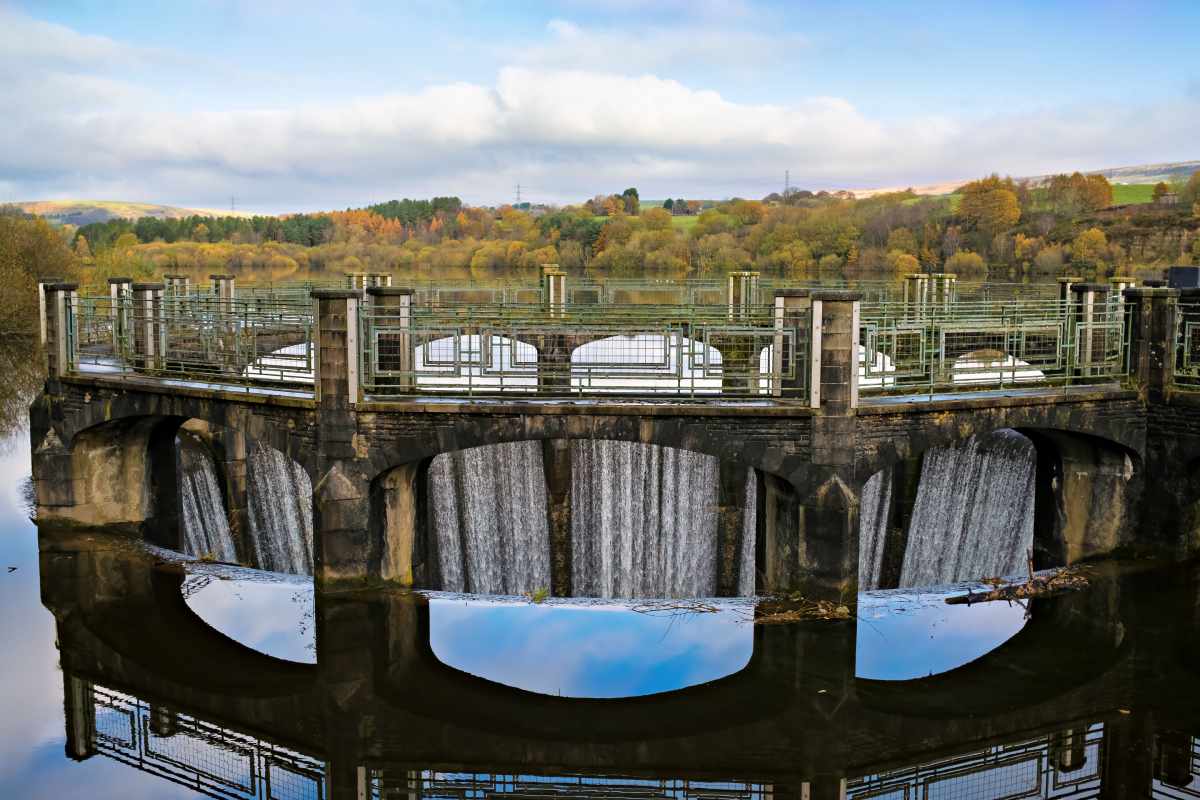
Clean water is the one utility that communities cannot improvise around. Lose power to a hospital and you switch to backup lighting and delay elective procedures. Lose power to a water treatment plant and the entire distribution system serving tens of thousands of people begins to fail — pressure drops, contamination risk rises, and the public health implications escalate within hours. Water districts carry a category of infrastructure responsibility that most utilities don’t. The generators backing up pumping stations, treatment plants, and distribution controls aren’t convenience — they are the last line of defense between a functioning water system and a public health emergency.
What Water District Infrastructure Actually Runs On
The electrical load of a water district spans an enormous range depending on the size of the service area and the complexity of the treatment and distribution infrastructure. Remote booster pump stations serving a small subdivision can operate on 50 kW to 200 kW of backup power — enough for the pumps, telemetry systems, and basic controls that keep pressure in the lines. Scale up to a mid-sized treatment facility serving a regional population and the load profile changes entirely. High-service pumps, aeration systems, chemical dosing equipment, filtration controls, SCADA systems, and facility lighting combined push well into the 750 kW to 1,000 kW range. Large regional water authorities managing multiple treatment facilities and extensive distribution networks may require megawatt-class generation staged across multiple sites with automatic load transfer and redundant architecture.
Water System Components That Depend on Generator Backup
- High-service and booster pump stations
- Water treatment and filtration systems
- Chemical dosing and disinfection equipment
- Aeration and biological treatment processes
- SCADA and remote monitoring infrastructure
- Wastewater lift stations and collection systems
- Distribution pressure control and telemetry
Selecting the Right Generator Capacity for Water District Operations

The sizing calculation for water district generators is driven primarily by pump motor load — and pump motors are among the most demanding loads any generator faces. They draw two to six times their running current at startup, which means a generator sized only for steady-state running load will fail to start the pumps it’s supposed to back up. Every water district generator specification needs to account for the largest motor on the circuit, its locked-rotor amperage at startup, and the sequencing of pump starts if multiple units are involved. Smaller pump stations and remote facilities in the 250 kW range can typically be covered with a single properly-sized standby unit. Mid-size treatment facilities need 500 kW to 750 kW of installed backup capacity. Large regional water infrastructure — the kind serving populations of 50,000 or more — runs on 1,000 kW generators and above, often in parallel configurations with automatic switchover between units.
Active Inventory for Water District Applications
At the output levels water district infrastructure requires, two units currently available in our inventory stand out. The Cummins DQFAD standby diesel generator is a 1,000 kW unit with just 198 hours — essentially new runtime — built to Cummins’ commercial standby specification and suited to the continuous-duty, automatic-start application that water treatment facility backup power demands. For districts seeking a proven Caterpillar alternative at the same output level, the Caterpillar 3512 standby diesel generator delivers 1,000 kW of dependable output from Cat’s 3500 series engine — a platform with decades of proven reliability in critical infrastructure applications including municipal water systems.
Output Ranges for Water District Generator Procurement
Remote booster stations and small pump facilities typically fall within our 100kW–249kW generator range or our 250kW–374kW range depending on pump load. Mid-size treatment facilities serving regional populations belong in our 500kW–669kW and 670kW–839kW ranges. Large regional water authorities with full treatment plant infrastructure and extensive distribution systems should be looking at our 1,000kW–1,199kW generators — output levels that provide the capacity to sustain high-service pumping, full treatment processes, and facility infrastructure simultaneously without load shedding.
Customized Power Solutions for Water Districts
Water district procurement operates under public agency rules, budget cycles, and regulatory requirements that private sector purchasing doesn’t. Turnkey Industries has supplied generator equipment to municipal water authorities and understands what that process involves — documentation requirements, inspection records, load bank test data, and the kind of responsive communication that public works teams need when they’re managing an infrastructure project on a timeline set by a board or regulatory deadline. Every unit we sell ships with complete inspection documentation and is backed by our 30-day IronClad warranty.
Buying and Selling Water District Generator Equipment
Infrastructure upgrade cycles and system expansions regularly create surplus generator assets at water districts — units that were spec’d for an earlier system configuration and are no longer needed at their current site. If your district has decommissioned equipment, get a valuation here. For procurement of replacement or additional backup power capacity, speak with our team about what’s currently available at the output levels your infrastructure requires.
Generator Types Available for Water District Applications
Water district applications almost universally call for permanently installed standby diesel generators with automatic transfer switching — configurations where the generator starts without operator intervention the moment utility power fails. We stock these alongside trailer-mounted units for temporary deployment during planned outages or emergency response, used generators with documented service histories for budget-constrained public agency procurement, and new units for projects requiring clean hours and full OEM documentation. If the specific output or configuration your district requires isn’t currently listed, contact us — we source high-capacity equipment continuously and can often locate what you need faster than standard procurement channels allow.
Renting a Generator for Water District Emergency Response
Planned maintenance shutdowns at treatment facilities, emergency generator failures during active storm events, and temporary pump station power during infrastructure upgrades — these are the scenarios where water districts need rental capacity deployed fast and sized correctly for pump motor loads. Stag Rentals provides high-capacity industrial generators for water district rental applications, with units at the output levels that treatment plant and pump station backup demands require. For water districts in Gulf Coast Texas markets, Stag’s contingency power planning program is particularly critical — pre-season rental agreements allow districts to commit generator capacity to their highest-priority pump stations and treatment facilities before a storm makes landfall, rather than competing for whatever rental inventory remains after a hurricane hits and every municipality in the region is making emergency requests simultaneously. Stag’s water district rental program is specifically designed for the pump load, transfer switch compatibility, and deployment speed requirements that water infrastructure emergency response demands. Emergency generator rentals are available for unplanned failures requiring immediate dispatch to keep distribution pressure and treatment processes running.
Frequently Asked Questions: Generators for Water Districts
What EPA and state regulatory requirements govern emergency generator use at water treatment facilities?
Water treatment facilities are subject to EPA National Primary Drinking Water Regulations under the Safe Drinking Water Act, which require that treatment processes — including disinfection — remain continuous. A power failure that interrupts chlorination or UV disinfection may trigger a regulatory reporting obligation and a boil water notice requirement depending on the duration and the state’s specific regulations. The generator system itself is subject to EPA air quality regulations — stationary emergency generators above 100 HP (approximately 75 kW) must comply with 40 CFR Part 63 NESHAP (National Emission Standards for Hazardous Air Pollutants) Subpart ZZZZ, which establishes requirements for engine testing, oil analysis, and operational hour limits for emergency use engines. State environmental agencies may impose additional requirements beyond federal minimums. Water district facilities managers should coordinate with their state drinking water program and environmental compliance team before commissioning new generator installations to ensure both the treatment continuity and air quality compliance requirements are addressed.
How do we size a generator for a wastewater lift station without causing sewage overflow events during outages?
Wastewater lift station generator sizing is governed by the station’s peak wet weather flow capacity — not average daily flow. During heavy rain events, lift station inflow rates can be 3 to 5 times dry weather averages, and power outages most commonly occur during exactly those storm conditions. Size the generator to run all installed pumps simultaneously at their maximum duty point on the pump curve, not just the lead pump at normal operating conditions. Factor in the motor control center, SCADA telemetry, site lighting, and any aeration or odor control equipment at the station. A lift station that overflows during a power outage because the generator can’t start the backup pump under wet weather inflow conditions creates a sanitary sewer overflow (SSO) event — an EPA reportable incident under the Clean Water Act with potential enforcement consequences. The cost of proper generator sizing is trivial compared to the regulatory and cleanup cost of a single SSO event.
What SCADA system considerations affect generator specification for a water district with remote monitoring across multiple sites?
SCADA systems introduce several generator specification considerations that purely mechanical pump station applications don’t face. Communications infrastructure — radios, cellular modems, fiber network equipment — must remain powered for the SCADA system to function during an outage. Confirm that all SCADA communication equipment at each site is on a protected circuit that transfers to generator power. SCADA RTUs (Remote Terminal Units) and PLCs are sensitive to power quality — voltage transients during generator startup and ATS transfer can corrupt program memory or trigger fault states that require manual reset. Ensure that SCADA electronics at each generator-backed site are behind a UPS with adequate battery runtime to bridge the ATS transfer cleanly. Finally, if your district’s SCADA system runs on a central server that itself requires backup power, that server’s generator backup must be addressed separately from the field site generators — a field generator keeping pumps running while the SCADA server is dark is a partial solution at best.
How should a water district approach generator procurement under FEMA BRIC or HMGP grant programs?
FEMA’s Building Resilient Infrastructure and Communities (BRIC) program and Hazard Mitigation Grant Program (HMGP) both fund generator installations at critical infrastructure facilities including water and wastewater systems. BRIC is a pre-disaster program with annual application cycles; HMGP is triggered by presidentially declared disasters and available to affected jurisdictions. For water districts pursuing these grants, several documentation requirements affect generator procurement: the generator specification must be documented in the grant application and the purchased equipment must match that specification; cost reasonableness documentation is required, typically including multiple quotes; and the generator installation must include commissioning documentation and testing records that FEMA may request during grant compliance audits. Used generators are eligible under both programs provided the equipment meets the functional specifications in the approved grant application. Coordinate with your state hazard mitigation officer early in the application process — grant timelines are long and procurement must occur within the grant performance period.
What are the consequences of a water treatment facility losing power during a disinfection process and how does generator design prevent them?
Interruption of disinfection — whether chlorination, UV, or ozone treatment — creates an immediate public health risk. Unchlorinated or inadequately treated water that reaches distribution can expose consumers to pathogens including Giardia, Cryptosporidium, and bacterial contamination. Most state drinking water regulations require a boil water advisory when disinfection continuity cannot be verified, and a distribution system that has received inadequately treated water may require flushing and re-testing before the advisory can be lifted — a process that takes days and affects every customer in the service area. Generator design prevents this by ensuring that chemical dosing pumps, UV lamp power supplies, and chlorine injection systems are all on protected circuits that transfer automatically to generator power within the 10-second window required for critical processes. The generator must be sized to run these systems simultaneously with high-service pumps — treating them as co-equal priority loads, not secondary loads to be added if capacity allows.
How do water districts manage generator fuel logistics across geographically distributed pump stations and lift stations?
Water districts with distributed infrastructure — multiple pump stations, lift stations, and booster stations spread across a service area — face a fuel management challenge that centralized facilities don’t. Each remote site’s fuel tank must be monitored, refueled on a schedule, and protected from contamination and theft. The practical approach is tiered: high-criticality sites (master pump stations, treatment plant generators) receive priority fuel delivery attention and maintain larger on-site reserves; lower-criticality remote booster stations can operate with smaller tanks and less frequent service. Telematics-integrated fuel monitoring that reports tank levels to a central dashboard allows operations staff to prioritize fuel delivery runs without visiting every site. Establish a priority fuel delivery contract with your commercial diesel supplier before hurricane season that specifies which sites receive priority restocking in the event of regional supply disruption — and get that priority in writing, because verbal agreements don’t hold when every customer is competing for the same tanker trucks after a major storm.