
Why Hotels Can’t Afford a Power Outage

A guest checks in at 11pm after a delayed flight. The key card system is down. The elevator isn’t running. The room is dark and the HVAC is off. They leave a one-star review before they’ve even unpacked. That’s the best-case scenario of a hotel power outage. The worst case involves food spoilage across a commercial kitchen, a flooded basement because sump pumps went offline, and a fire suppression system that failed its weekly test because nobody noticed the generator hadn’t been serviced. Hotels run on power. Every guest-facing system, every safety system, every revenue-generating amenity — all of it requires continuous electricity. Backup generators aren’t an amenity. They’re operational infrastructure.
What Powers a Hotel During an Outage?
The load profile of a hotel is more complex than most facility managers initially estimate. Guest rooms are the obvious priority — lighting, HVAC, phone charging, TV. But the back-of-house load is where the real numbers are. Commercial kitchen refrigeration alone can draw substantial continuous wattage. Add elevators, the property management system servers, key card infrastructure, pool and spa equipment, security cameras, exterior lighting, and emergency egress systems and the total load climbs fast. A full-service hotel with 150+ rooms and active food and beverage operations typically needs somewhere between 200 kW and 350 kW of backup capacity to sustain essential operations — not every amenity, but everything that keeps guests safe, comfortable, and checked in rather than demanding refunds at the front desk.
Essential Hotel Systems That Require Generator Backup
- Guest room HVAC, lighting, and power outlets
- Commercial kitchen refrigeration and cooking equipment
- Elevators and emergency egress lighting
- Property management system servers and key card infrastructure
- Security cameras and access control systems
- Pool, spa, and fitness center equipment
- Exterior signage and parking structure lighting
Sizing a Generator for Hotel Applications
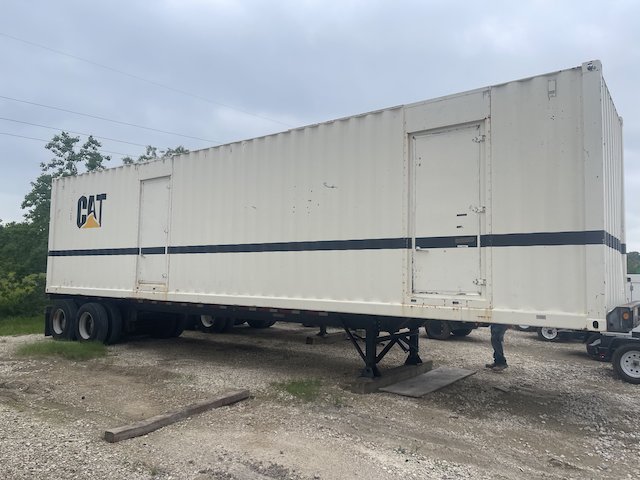
Boutique properties and smaller independent hotels with limited food service and 50 to 80 rooms can often cover essential backup load with a 100 kW generator — enough for guest safety systems, front desk operations, refrigeration, and partial HVAC. Mid-size full-service properties need significantly more. A 200-room hotel with a full restaurant, banquet facilities, and a fitness center is looking at 250 kW to 350 kW to sustain the systems that matter most during an extended outage. Large convention hotels and resort properties with high-density amenity loads, multiple food and beverage outlets, and expansive common areas can push well above that threshold. The right starting point is always a facility load study — not a rule of thumb based on room count alone.
Two Models Worth Considering for Hotel Backup Power
For mid-size hotel properties where a compact, permanently installed standby unit is the right configuration, the Cummins C200D6D standby diesel generator delivers 200 kW of clean, reliable output well suited to sustaining guest room power, kitchen refrigeration, elevator operation, and security systems through an extended outage. Properties with higher simultaneous load demands — full-service hotels with active banquet and food service infrastructure — are better matched to the Kohler 400REOZDD standby diesel generator, a 400 kW unit that provides the headroom needed to run a full hotel operation through a multi-day grid outage without load shedding or guest-facing service interruption.
Browse Hotel Generators by Output Range
Smaller independent hotels and boutique properties are well served by units in our 100kW–249kW generator range. Larger full-service hotels, resort properties, and convention facilities with higher simultaneous load requirements should explore our 250kW–374kW generators — and properties with the most demanding load profiles, including large-scale resort and conference center operations, may find the right fit further up in our 375kW–499kW range.
Turnkey Industries: Powering Hospitality Operations Nationwide
Hospitality buyers have specific requirements that set them apart from other commercial purchasers. Speed matters — a hotel can’t wait eight weeks for equipment delivery after a generator fails mid-season. Reliability documentation matters — ownership groups and brand flags expect maintenance records and test data. And presentation matters — generators installed in mechanical rooms adjacent to guest spaces need sound attenuation that industrial sites don’t worry about. Turnkey Industries supplies inspected, load bank tested units that ship fast from Texas and arrive ready for immediate installation. Every unit is backed by our 30-day IronClad warranty.
Buying and Selling Hotel Generator Equipment
Hotel renovation cycles and brand flag transitions create a regular market for both generator procurement and surplus equipment disposal. Whether you’re sourcing a unit for a property undergoing a renovation and upgrade, or offloading equipment from a facility that’s been rebranded and re-specified, Turnkey Industries handles both sides of that transaction. Browse our used generator inventory for immediately available units, explore new generator options for properties with specific warranty and documentation requirements, or submit your surplus equipment for a valuation. Questions about a specific property’s power requirements? Talk to our team directly.
Renting a Generator for a Hotel or Resort Property
A generator failure during peak season — summer beach markets, holiday weekends, major convention bookings — is the worst possible timing for a capital equipment procurement process. Hotels need replacement backup power deployed within hours, not weeks. Stag Rentals provides industrial generators for hotel and hospitality rental applications at the output levels full-service properties require, with rapid deployment across Texas. For coastal resort properties and hotels in hurricane markets, Stag’s contingency power planning program is worth serious consideration — a pre-season rental agreement guarantees equipment availability and pre-positioning before a storm, so that when a hurricane threatens your market, your property’s backup power is already committed rather than competing with every other facility in the region for whatever rental inventory remains. Emergency generator rentals handle the unplanned scenarios — same-day or next-day deployment when a permanent unit fails and the property needs to stay operational for guests already in house.
Frequently Asked Questions: Generators for Hotels and Hospitality Properties
What life-safety systems in a hotel must remain powered during an outage regardless of generator capacity?
Building and fire codes — primarily IBC, IFC, and NFPA 101 (Life Safety Code) — mandate that certain systems remain operational during a power failure regardless of whether a backup generator is present. Emergency egress lighting and exit signs must transfer to battery backup or generator power within 10 seconds and remain lit for a minimum of 90 minutes. Fire alarm and notification systems must have backup power, typically through battery backup integral to the panel. Sprinkler system pressure monitoring and elevator recall systems must also remain operational. These systems are non-negotiable — they exist independently of the hotel’s choice to invest in full-facility generator backup. A hotel can choose not to back up guest room HVAC or the restaurant, but it cannot legally choose to let egress lighting and fire alarm systems go dark.
How do we prevent food safety incidents in the commercial kitchen when the generator doesn’t cover full kitchen load?
If your generator doesn’t have the capacity to run cooking equipment during an outage, prioritize refrigeration and freezer circuits absolutely. Walk-in cooler and freezer compressors are non-negotiable — the food safety and liability exposure from a refrigeration failure during a multi-hour outage is substantially greater than the cost of generator capacity to cover it. If the generator load budget requires shedding non-essential kitchen circuits, shed cooking equipment, ventilation hoods over cold prep areas, and dishwashing before refrigeration. Document your kitchen load priority in your emergency operations procedures and brief kitchen management so that staff know exactly which equipment can and cannot be operated during generator-backed power. A load shedding plan developed in advance prevents ad hoc decisions during an outage that inadvertently overload the generator.
What sound attenuation requirements should hotel facilities teams specify for a generator installed adjacent to guest rooms?
Standard generator enclosures are rated at approximately 72 to 75 dB at 23 feet — acceptable for industrial settings but problematic adjacent to guest sleeping areas. Sound-attenuated enclosures reduce this to approximately 65 dB at 23 feet, which is more manageable but still audible in adjacent spaces. For generators installed in mechanical rooms below or adjacent to guest floors, the room construction itself provides additional attenuation — concrete block or CMU walls with no direct air paths between the mechanical room and guest spaces are significantly better than metal stud and drywall. Anti-vibration isolation mounts between the generator base and the structure prevent low-frequency vibration transmission through the building, which guest rooms perceive as a low rumble even when airborne sound is adequately attenuated. Get the generator enclosure dB rating at 23 feet from the manufacturer and model the sound propagation through your specific mechanical room construction before finalizing placement.
How do brand flag standards affect hotel generator requirements for franchised properties?
Major hotel brands — Marriott, Hilton, Hyatt, IHG, and others — publish Property Improvement Plan (PIP) standards and brand standards documents that specify backup power requirements for franchised properties. These requirements vary by brand and tier but commonly specify minimum generator runtime capability, which systems must be covered (at minimum: egress lighting, fire alarm, elevators, front desk, and key card systems), testing frequency documentation, and maintenance record retention. Brand standards are enforced through Quality Assurance inspections — a non-compliant generator installation can result in a QA deficiency that must be remediated on the brand’s timeline or risk franchise agreement consequences. Review the current brand standards document for your flag before specifying generator capacity and configuration; standards are updated periodically and your brand’s current requirements may differ from what was required when the property was originally built.
How should a hotel handle the transition from utility power to generator during a live event or banquet?
The ATS transfer time — typically 10 to 30 seconds from utility failure to generator assumption of load — is long enough to cause noticeable disruption in a live event or banquet setting. Lights go out, audio systems drop, the room goes dark. This is unavoidable with a standard ATS configuration. For properties that regularly host events where power interruption would be severely disruptive, an uninterruptible power supply (UPS) on event venue circuits provides seamless bridging through the ATS transfer window — the event continues without interruption while the generator starts and stabilizes. This is not a standard hotel configuration but is common in convention center hotels and properties that generate significant revenue from high-profile events. Discuss this requirement with your electrical engineer during generator system design — adding event venue UPS after the fact is significantly more expensive than integrating it during initial installation.
What is the typical return on investment timeline for a hotel backup generator, and how do ownership groups evaluate the capital expenditure?
Hotel ownership groups and asset managers typically evaluate generator investment against two financial metrics: avoided loss from a single significant outage event, and insurance premium reduction. A 200-room full-service hotel losing revenue for 24 hours during a peak weekend can represent $40,000 to $100,000 or more in direct revenue loss plus food spoilage, guest compensation, and reputational damage. In hurricane markets, insurers increasingly offer premium reductions for properties with documented backup power systems — coordinate with your property insurer before purchasing to quantify the premium impact. The ROI calculation also differs significantly by property type: a $150/night limited-service property and a $400/night full-service property have very different loss exposure per outage hour, which changes the payback period considerably. Most ownership groups in coastal or severe weather markets view the generator as risk mitigation infrastructure with a payback period of 5 to 10 years rather than a revenue-generating capital expenditure.