

Reliable Generator Power for Telecom Infrastructure
Network downtime is measured in seconds before it becomes a headline. Cell towers, base stations, fiber switching centers, and data transmission hubs operate on the assumption that power is always there — and when it isn’t, the cascade is immediate. Dropped calls. Lost data sessions. Emergency communications that don’t connect. Telecom infrastructure doesn’t get the luxury of a brief outage the way a retail store does. Industrial generators keep that infrastructure live — whether that means automatic backup transfer when grid power fails at a base station, or continuous primary power at a remote tower site that’s never been near a utility line.
Where Generators Fit in Telecom Networks
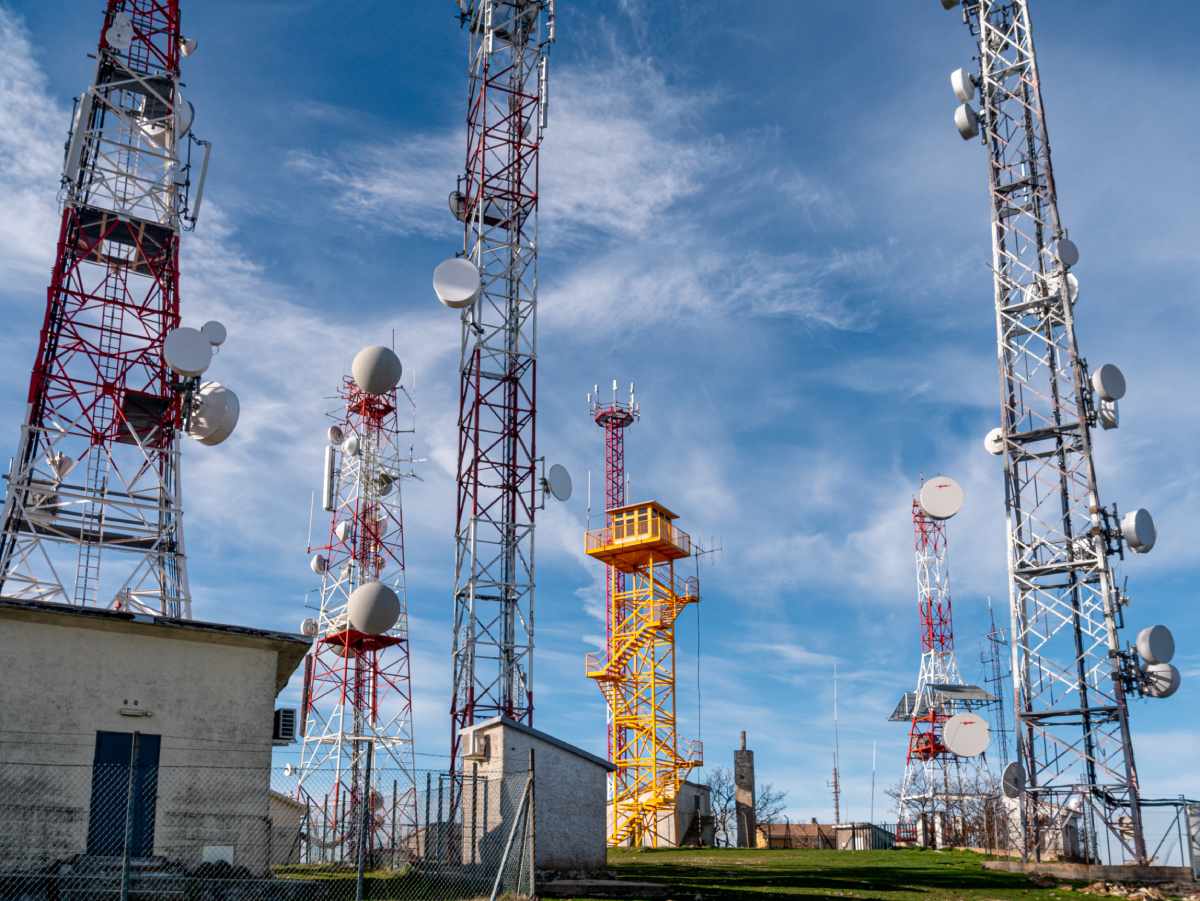
The range of telecom applications that depend on generator power is broader than most people realize. A rural cell tower on a hilltop with no grid access runs on a generator 24 hours a day. An urban base station in a dense market runs on grid power with a generator staged for automatic backup. A regional switching center serving hundreds of thousands of subscribers needs multi-unit redundant generator architecture that can sustain full facility load indefinitely. A fiber hub at a highway interchange needs something compact, reliable, and low-maintenance that a technician visits once a month. Each of these scenarios calls for a different specification — different output, different form factor, different fuel logistics.
Telecom Systems That Depend on Continuous Generator Power
- Cell towers and base transceiver stations (BTS)
- Remote radio units and distributed antenna systems
- Fiber optic network hubs and switching facilities
- Data transmission and backhaul network sites
- Emergency communication infrastructure and public safety networks
- Off-grid and rural communication installations
Getting the Output Right: Generator Sizing for Telecom Sites
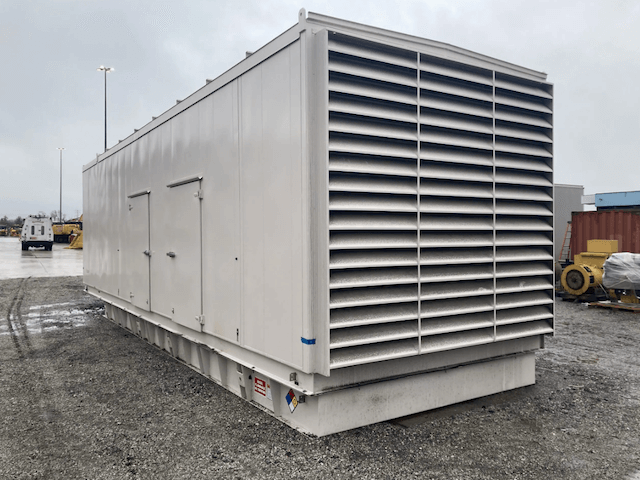
Individual cell towers and remote communication units are relatively modest loads — typically in the 20 kW to 80 kW range depending on the number of active carriers, the equipment generation, and whether the site includes active cooling. Get this wrong in either direction and you pay for it: too small and the generator struggles under load during peak traffic periods; too large and fuel consumption climbs while the engine runs chronically underloaded, accelerating wear in ways that don’t show up until a failure at the worst possible moment.
Medium-sized telecom facilities — regional network hubs, urban switching centers, co-location sites serving multiple carriers — carry a substantially higher load and need 100 kW to 200 kW generators to maintain consistent performance across all active systems. Major switching centers and high-density network infrastructure supporting large subscriber bases push into the 250 kW to 500 kW range and above, often with N+1 redundancy configurations that keep the facility live even if one generator unit requires service. Use our power calculator as a starting point, then confirm with a site-specific load study before procurement.
Generator Models That Fit Telecom Applications
For individual cell tower sites and remote telecom installations where a compact, reliable diesel unit with low maintenance requirements is the priority, the Caterpillar XQ60 trailer-mounted diesel generator delivers 60 kW of dependable output in a sound-attenuated, weather-resistant enclosure well suited to unattended remote site operation. For medium-scale network facilities requiring a permanently installed standby unit with automatic transfer capability, the Cummins DQCA standby diesel generator is a proven mid-range unit that handles the continuous standby demands of telecom network infrastructure with the reliability that Cummins’ commercial standby line is built around.
Output Ranges for Telecom Generator Procurement
Individual cell towers, remote BTS sites, and small communication installations are well served by units in our 25kW–49kW and 50kW–74kW ranges. Regional network hubs and mid-size switching facilities with higher concurrent system loads belong in our 100kW–249kW generator range. Major telecom infrastructure — high-density switching centers, large co-location facilities, and public safety communication networks — should be looking at our 250kW–374kW generators and above, where output capacity supports full redundancy architecture across all active systems.
Why Telecom Providers Source Generator Equipment from Turnkey Industries
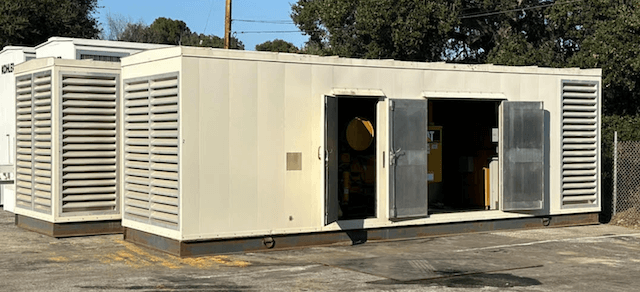
Telecom infrastructure teams deal with one consistent procurement pressure: the network expansion timeline doesn’t wait for equipment lead times. New tower sites go live on a schedule, and the generator needs to be there and running when the carrier equipment goes active. Turnkey Industries maintains a substantial in-stock inventory of inspected, load bank tested units ready for immediate shipment from Texas. We stock the compact, trailer-mounted diesel units that cell site deployments require, and we carry the mid-to-large standby configurations that network facility upgrades demand. Every unit is backed by our 30-day IronClad warranty and arrives ready for commissioning — not ready for service first.
Buying and Selling Telecom Generator Equipment
Network modernization cycles and tower decommissioning programs regularly produce surplus generator equipment across the telecom sector. If your company is sitting on units coming off decommissioned sites or replaced during an infrastructure upgrade, get a valuation on your surplus generators here. For active procurement needs — whether a single replacement unit or a multi-site fleet acquisition — browse our used generator inventory or reach out to our team to discuss availability and specifications.
Generator Types Available for Telecom Applications
Telecom deployments demand specific configurations that general industrial inventory doesn’t always cover. Our stock includes compact trailer-mounted units for rapid site deployment, permanently installed standby generators with automatic transfer capability for network facilities, used units with documented service histories for budget-conscious tower programs, and new generators for projects requiring clean hours and full OEM documentation. Both diesel and natural gas configurations are available depending on site fuel logistics. If the specific unit your project requires isn’t currently listed, contact us — we source equipment continuously and can often locate what you need faster than standard procurement channels.
Renting a Generator for Telecom Infrastructure
Tower buildout programs running ahead of permanent power infrastructure, planned generator changeouts at active network sites where the site can’t go dark during the swap, emergency replacement when a remote BTS generator fails during a storm event — these are the scenarios where telecom infrastructure teams need rental equipment fast and configured correctly for unattended remote operation. Stag Rentals provides industrial generators for telecom infrastructure rental applications, with compact trailer-mounted units suited to cell tower deployments and larger configurations for network facility applications. For telecom operators managing tower infrastructure in Gulf Coast and hurricane-exposed Texas markets, Stag’s contingency power planning program allows network operators to pre-commit rental generators to critical tower sites and switching facilities before storm season — keeping the network live through weather events that routinely knock out utility power across entire regions for days at a time. Stag’s telecom rental program is built around the fast-deployment and remote-operation requirements that tower and network infrastructure demands, with emergency generator rentals available for unplanned failures at active network sites.
Frequently Asked Questions: Generators for Telecom Infrastructure
What FCC and carrier requirements govern backup power for cell towers and BTS sites?
The FCC has issued rules under 47 CFR Part 12 (Continuity of Communications) that establish backup power requirements for certain communications infrastructure, including requirements for covered 911 service providers to maintain backup power at cell sites and central offices. Following major hurricanes that disrupted communications networks, the FCC strengthened its focus on network resilience and backup power documentation. Individual carrier network reliability standards — internal requirements from AT&T, Verizon, T-Mobile, and other carriers — often exceed FCC minimums and specify backup power runtime requirements for different site classifications (macro sites, small cells, priority sites). Tower companies (AMT, Crown Castle, SBA) that lease to multiple carriers may have their own backup power standards for hosted sites. Review both FCC requirements and your specific carrier or tower company standards before specifying backup power at any site — the requirements vary by carrier relationship, site classification, and whether the site supports 911 or FirstNet public safety communications.
How do we calculate the correct generator size for a 5G macro site with multiple active radio units and active cooling?
5G macro sites carry significantly higher power loads than legacy 4G sites — active antenna units (AAUs) for massive MIMO 5G radio draw 1,000 to 3,500 watts per unit, and a typical macro site may have 3 to 12 AAUs depending on sector configuration and frequency bands deployed. Add baseband processing units, transport and backhaul equipment, site controller, DC power plant charging current, battery backup infrastructure, and active cooling (HVAC for equipment shelter or active cooling for outdoor cabinet) and a fully loaded 5G macro site can draw 15 to 30 kW of continuous load compared to 4 to 8 kW for a legacy 2G/3G site. For generator sizing, start with the site’s total DC plant input current at full charge rate plus AC load for cooling, multiply by the DC plant input voltage, and add 25% headroom. A well-loaded 5G macro site with active cooling typically requires a 30 to 50 kW generator — a unit that would have been oversized for the same site before 5G densification.
What are the fuel logistics challenges for maintaining diesel generators at a large portfolio of remote tower sites?
Remote tower site fuel management is one of the most operationally complex aspects of tower portfolio generator maintenance. Sites in rural areas may have delivery access limitations — seasonal road conditions, weight restrictions on rural bridges, or physical access constraints at the tower base that limit tank size. The standard approach is to size on-site fuel storage for the maximum anticipated outage duration at that site’s historical grid reliability level — sites in areas with frequent or extended outages need more storage than urban sites with reliable grids. Telematics-integrated fuel level monitoring allows fleet managers to trigger deliveries based on actual tank level rather than calendar schedule, significantly reducing both emergency delivery calls and unnecessary delivery trips. Establish fuel delivery contracts with suppliers who can service your tower geography — rural tower portfolios often require relationships with multiple local suppliers rather than a single regional contract, because a single supplier’s service area rarely covers an entire tower portfolio.
How should telecom operators handle generator maintenance at remote, unattended tower sites where technician visits are infrequent?
Remote site generator maintenance requires a planned visit schedule rather than reactive maintenance — by the time a failure is detected at an unattended site, the battery backup has depleted and the site is down. Establish a preventive maintenance visit schedule based on generator operating hours and calendar time: oil and filter changes per OEM interval, air filter inspection and replacement, coolant condition check, battery condition check, and a full function test including simulated utility failure to verify ATS transfer. Telematics systems that monitor engine hours, oil pressure, coolant temperature, fuel level, and battery voltage remotely allow fleet managers to identify developing issues between physical maintenance visits and prioritize which sites require attention. For tower portfolios with hundreds of sites, consider a managed maintenance contract with a generator service company that has geographic coverage across your tower footprint — the cost is typically lower than maintaining in-house technician capacity for remote site generator service.
What transfer switch specifications are most appropriate for unattended remote cell tower generator applications?
Unattended cell tower sites require automatic transfer switches (ATS) that initiate and complete transfer without operator intervention — this is standard for tower applications. The specific requirements for tower ATS differ from facility applications in several ways. Tower site ATS units are typically rated for smaller loads (30A to 200A) than facility applications and must be compatible with the site’s DC power plant input voltage (typically 48VDC systems in telecom). The ATS must be rated for outdoor or NEMA 3R/NEMA 4X environmental protection at exposed sites. Transfer time requirements for tower applications are driven by battery backup runtime — if the site battery backup provides 4 to 8 hours of runtime, a 30-second ATS transfer time is acceptable; if battery backup is minimal or absent, faster transfer is required to prevent equipment shutdown. Specify ATS units with event logging capability so that transfer history is available for network operations center review without requiring a technician site visit after each utility event.
How do public safety network requirements (FirstNet, P25) affect generator specifications at tower sites supporting emergency communications?
Tower sites supporting FirstNet (First Responder Network Authority) infrastructure or P25 public safety radio networks carry a higher criticality classification than standard commercial wireless sites. FirstNet’s network reliability requirements specify minimum backup power runtime — typically 72 hours of on-site fuel storage at full load for priority sites, substantially more than the 8 to 24 hours common at standard commercial tower sites. During a major disaster, FirstNet sites are expected to remain operational after extended grid outages while emergency responders depend on them for critical communications. Generator specifications for FirstNet-supporting sites should address: fuel storage for minimum 72-hour runtime, automatic fuel level monitoring with remote alerting, priority fuel delivery agreements, redundant generator capacity at the most critical sites, and documented testing protocols that satisfy FirstNet’s network resilience reporting requirements. Coordinate with your FirstNet network operations team and AT&T (the FirstNet network operator) to confirm the specific backup power standards applicable to sites in your portfolio that carry FirstNet traffic.