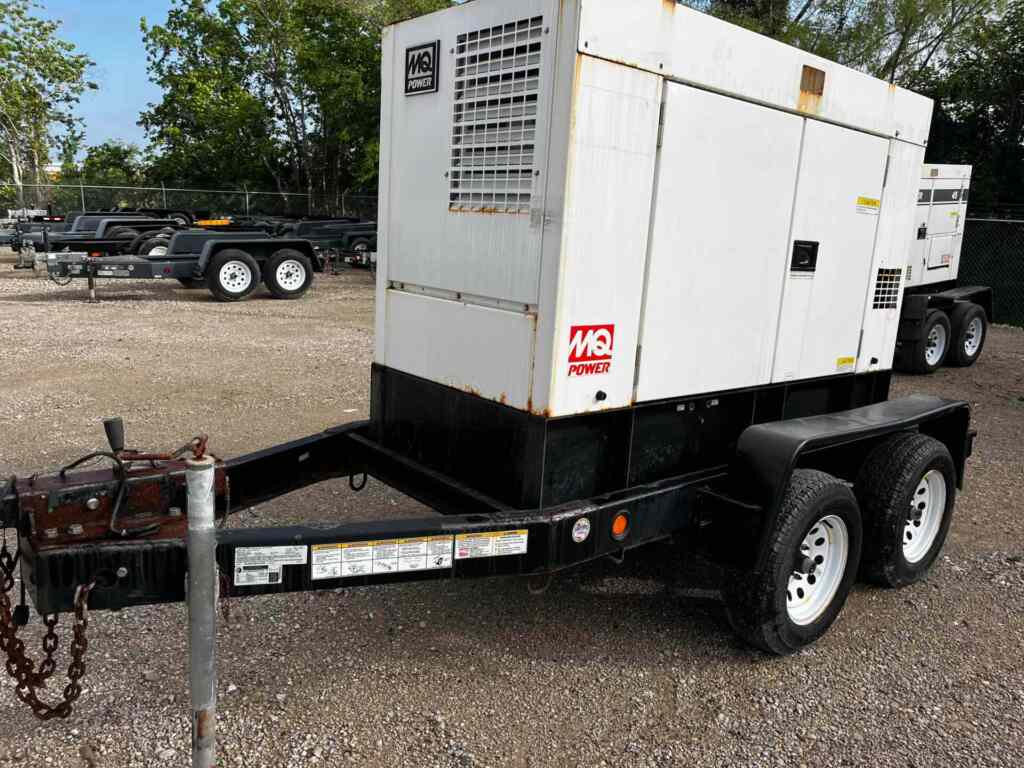
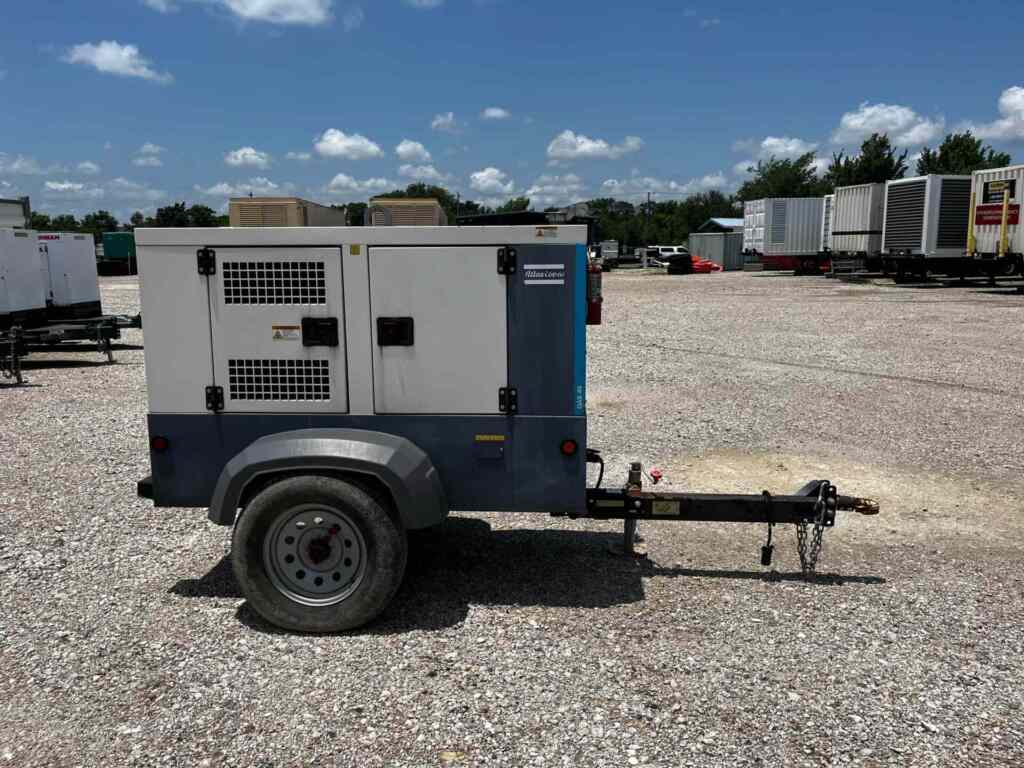
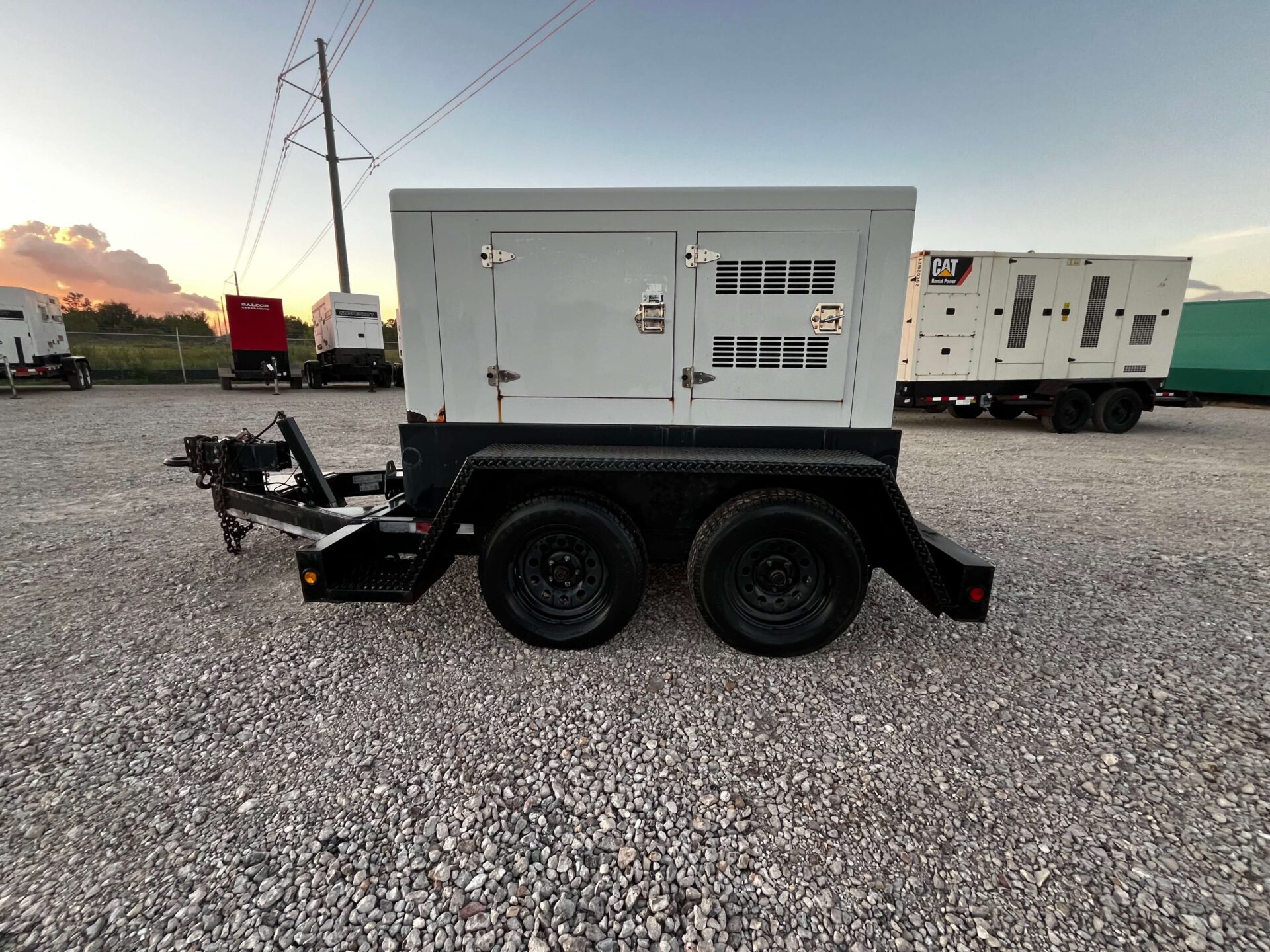
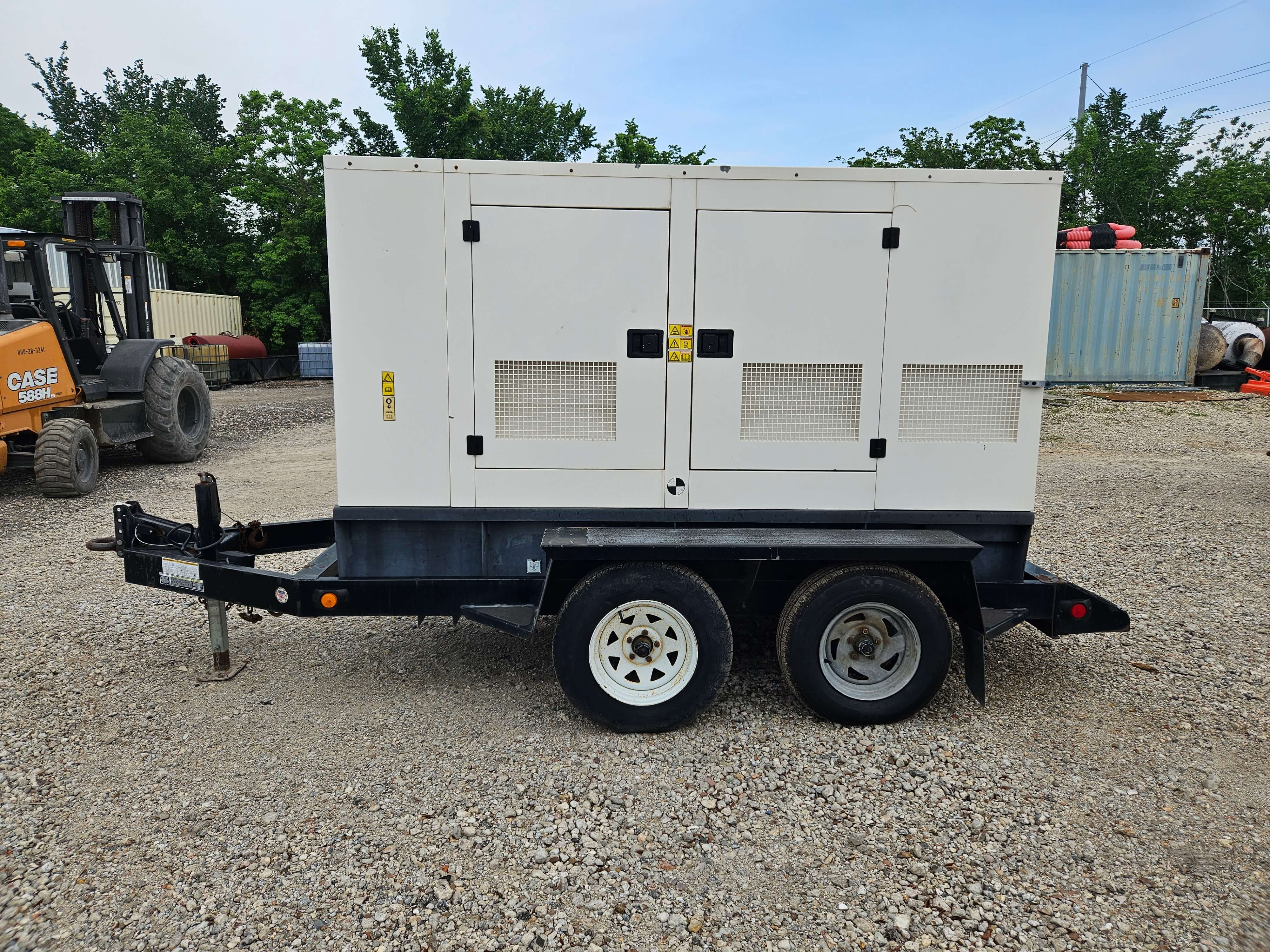
Industries That Use 25 kW to 49 kW Generators
Nobody in this range is backing up a whole facility. Buyers are backing up the circuits that matter, or powering a site that has no service at all, on a machine small enough to tow and buy outright.
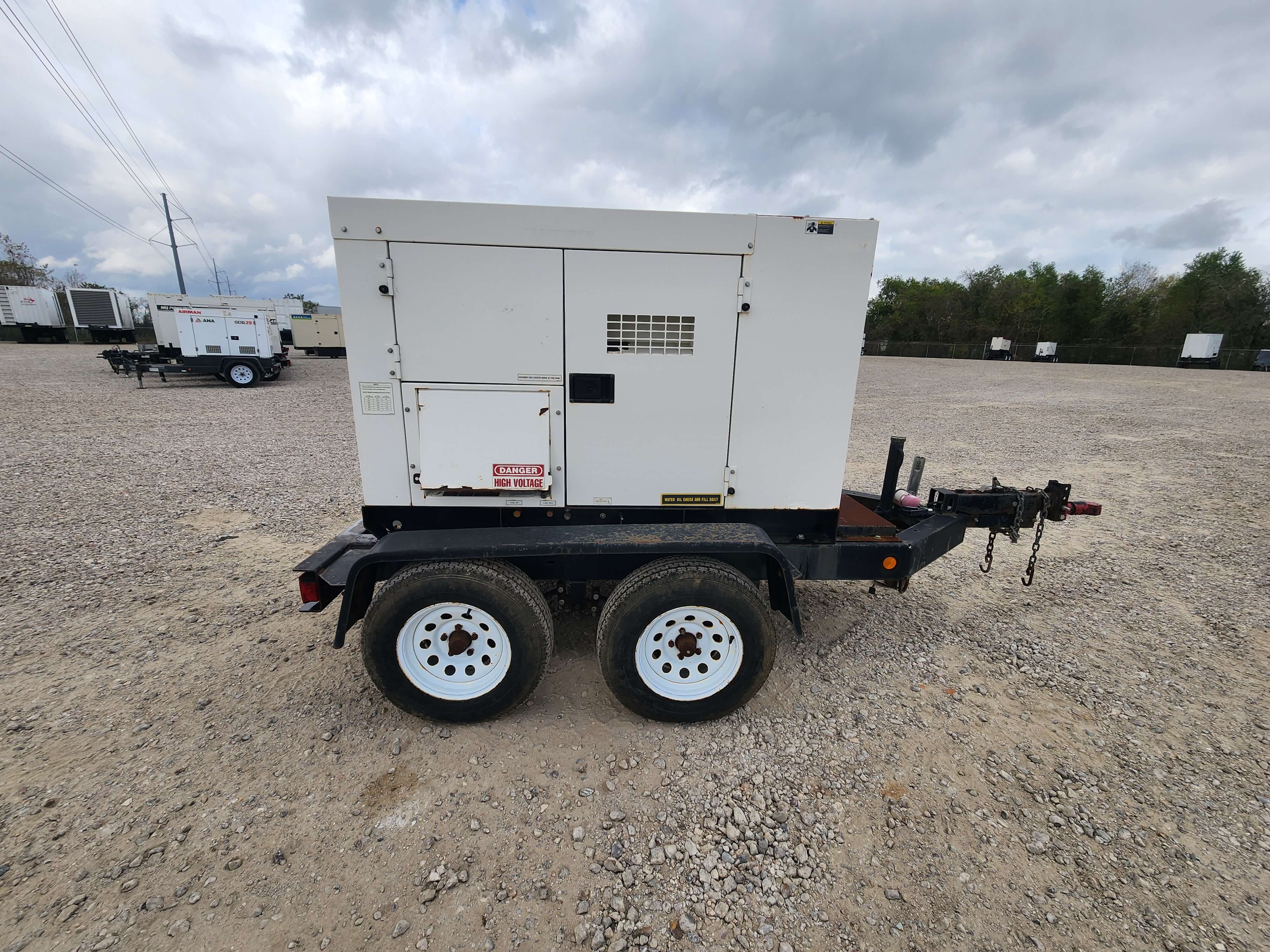
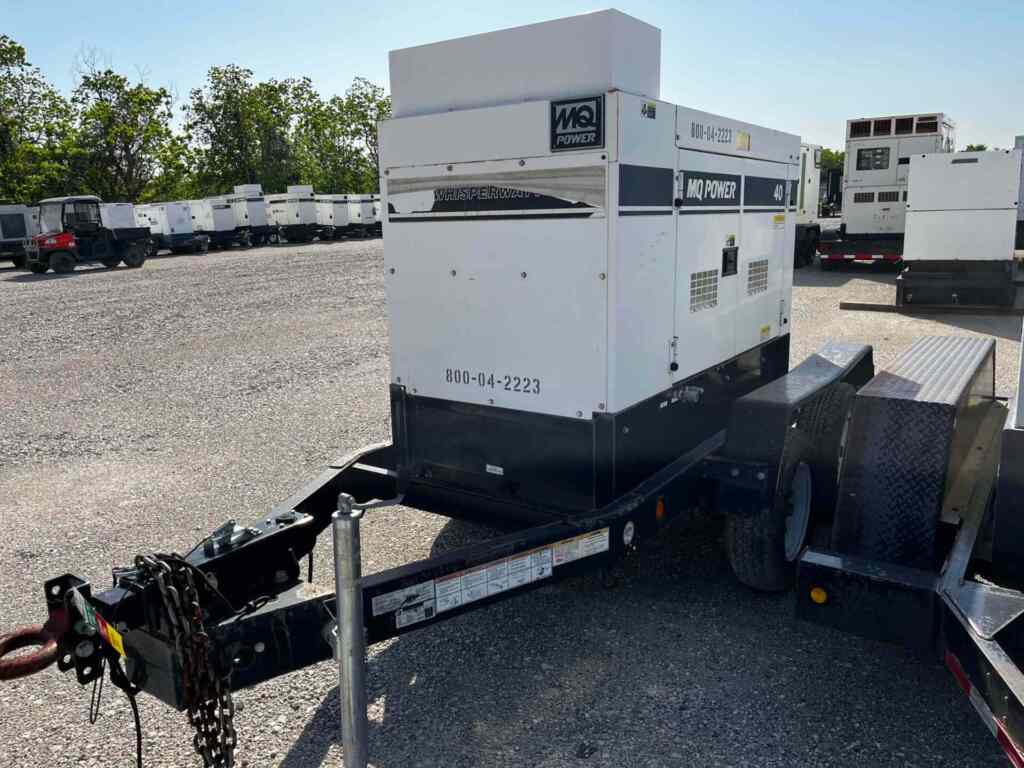
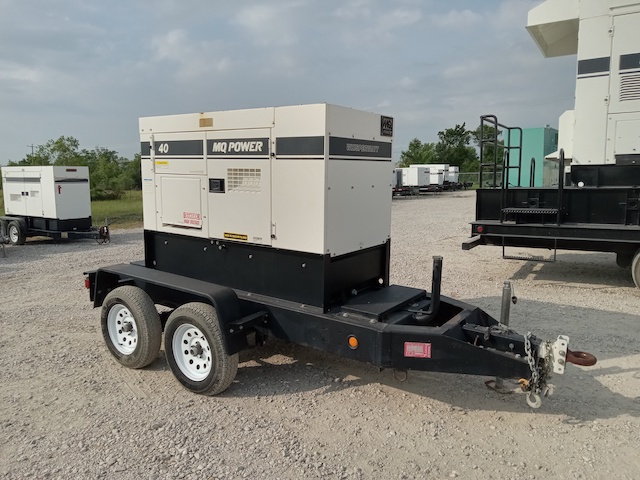
- Construction: Trailer units in the 36 kW to 40 kW class are the daily drivers on a jobsite, running lighting, tools, welders, and the site office.
- Rental fleets: Rental companies buy these by the batch and cycle them out, which is where much of the used supply at this size comes from.
- Banks and small commercial: Bank branches, restaurants, clinics, veterinary offices, and strip retail, sized against the essential panel rather than the full service: registers, coolers, egress lighting, maybe a server closet. Most land in the lower half of the range.
- Farms: Grain handling, irrigation pumps, dairy parlors, and barn ventilation. Single-phase and PTO come up more here than anywhere else.
- Telecom and remote sites: Cell sites, repeater shelters, and microwave huts. Nobody’s standing there when the unit runs, so tank size and runtime matter more than anything else.
- Water districts: Lift stations and booster pumps are mostly motor load, so water district specs land at the top of this range.
- Cities and municipalities: Signal cabinets, salt barns, and small pump houses, which often need less than 35 kW.
What this range won’t do is back up a hospital or a data hall. Those start a few hundred kilowatts higher, which is why our hospital generator page points at bigger frames. Sizing notes by sector are on our industries served pages.
25 kW to 49 kW Generators at a Glance
- Apparent power: 31 to 61 kVA at 0.8 power factor.
- Current, three-phase: about 38 to 68 A at 480V and 87 to 156 A at 208V from 25 kW to 45 kW.
- Diesel burn at full load: 2.9 gal/hr at 30 kW and 4.0 gal/hr at 40 kW on our chart; 2.93 to 3.1 gph on current Multiquip and Generac sheets.
- Towable weight: 2,625 lb (Atlas Copco QAS 45 ID, ready to run) to 4,030 lb wet (Multiquip DCA45SSIU4F on its trailer).
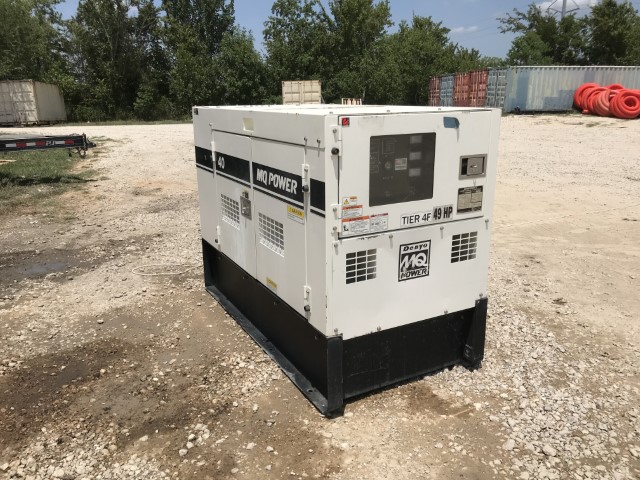
- Most common format: trailer-mounted diesel, usually named in kVA, so a “45” is often 36 to 40 kW.
- Typical buyers: jobsites, rental fleets, restaurants and clinics, farms, telecom sites, and small pump stations.
The Number in the Model Name Is Usually kVA, Not kW
Towable generators in this class are mostly named for their apparent power in kVA. Multiquip’s DCA45SSIU4F, for example, takes its name from 45 kVA prime, which works out to 36 kW prime and 40 kW standby. Multiply the number in the name by 0.8 and you have a rough kW figure, then check the listing for whether that kW is a prime or standby rating.
Here’s how that played out on units that have come through our yard in this range, with the kW we listed each one at:
| Model | Number in the name | kW as listed | Mount |
|---|
| Multiquip DCA40SSKU, SSKU4F, SSKU4F2 | 40 | 30 to 31 kW | Trailer (one standby) |
| Magnum MMG45 | 45 | 31 kW | Trailer |
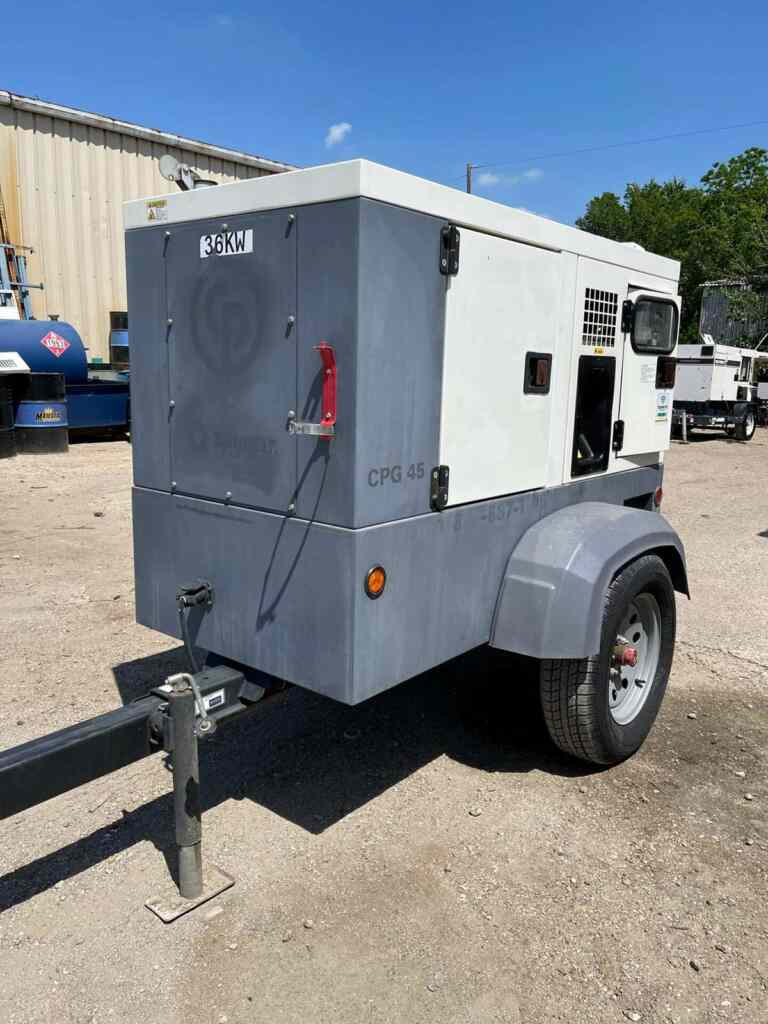
| Chicago Pneumatic CPG45 | 45 | 36 kW | Trailer |
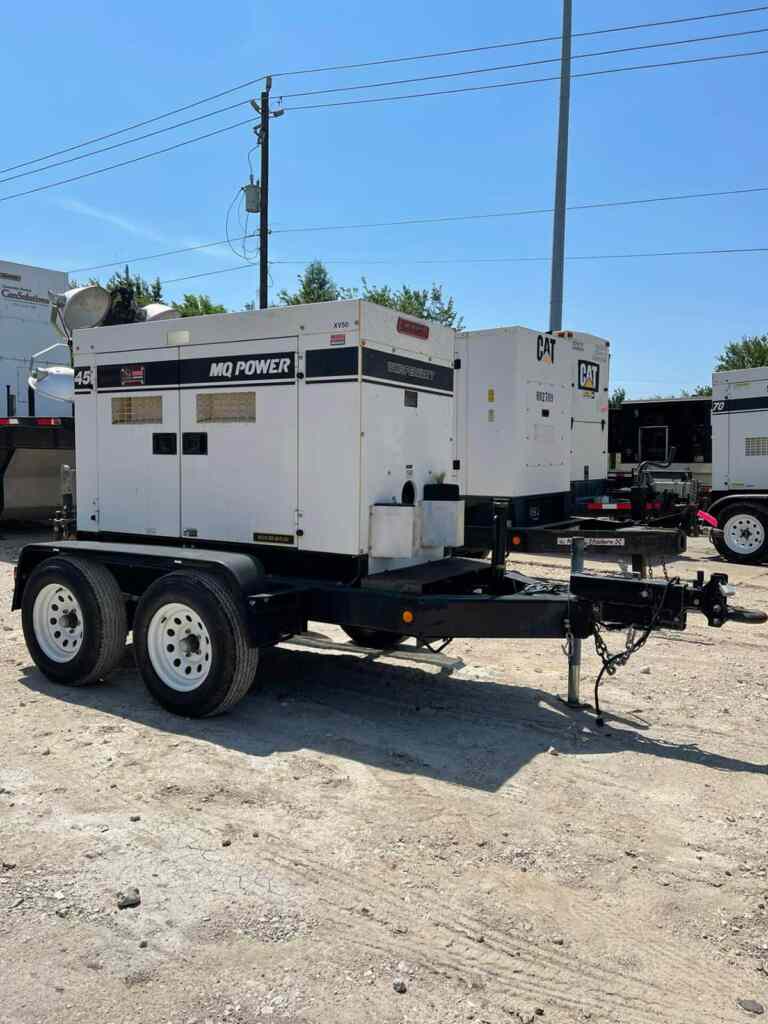
| Multiquip DCA45SSIU3, SSIU4F, USI2 | 45 | 37 to 40 kW | Trailer |
| Atlas Copco QAS45 | 45 | 40 kW | Trailer |
| ECHO DGK45F | 45 | 40 kW | Trailer |
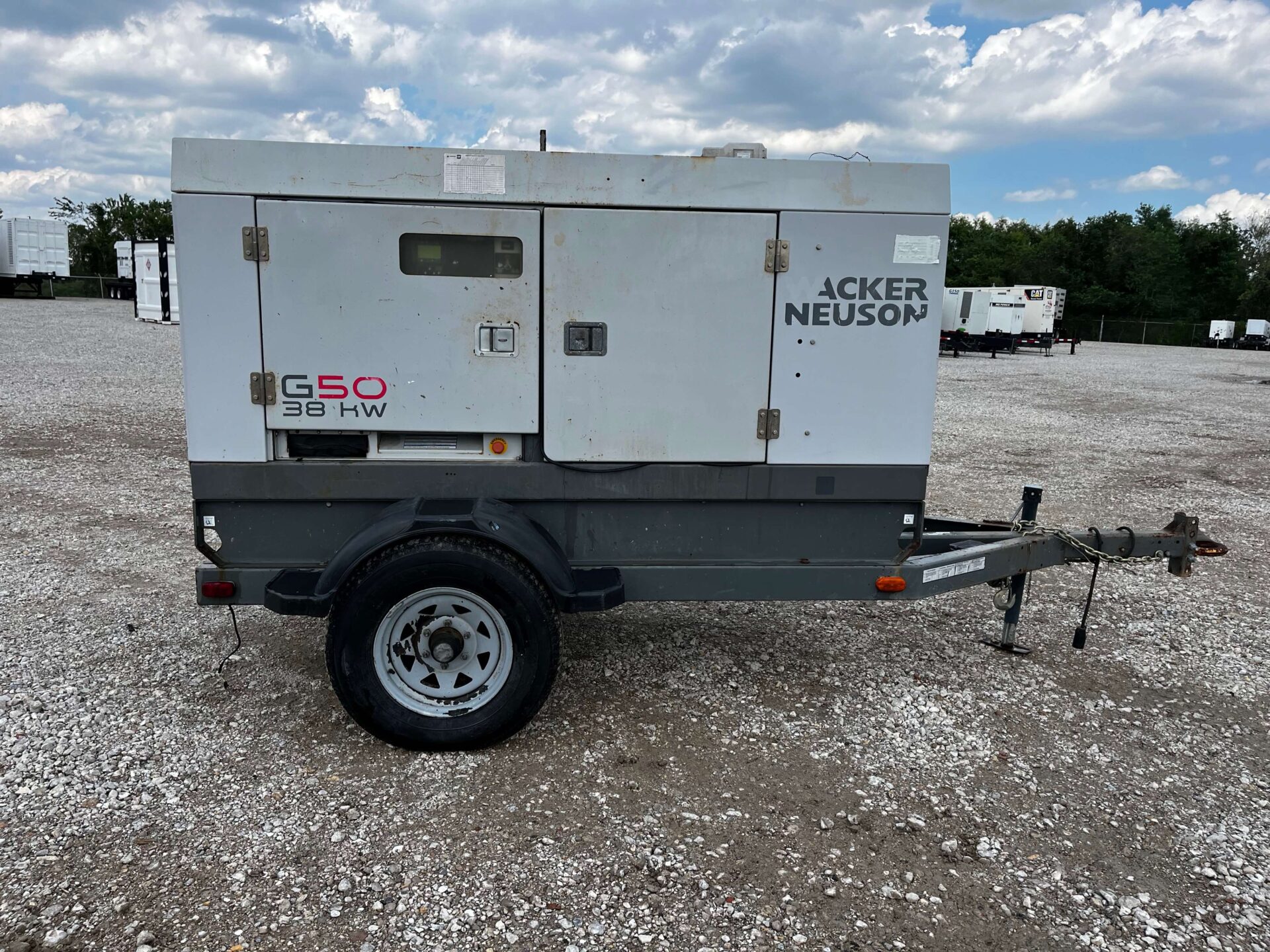
| Wacker Neuson G50 | 50 | 38 kW | Trailer |
| Doosan G50 | 50 | 38 kW | Trailer |
| Hipower HRYW50T6 | 50 | 44 kW | Trailer |
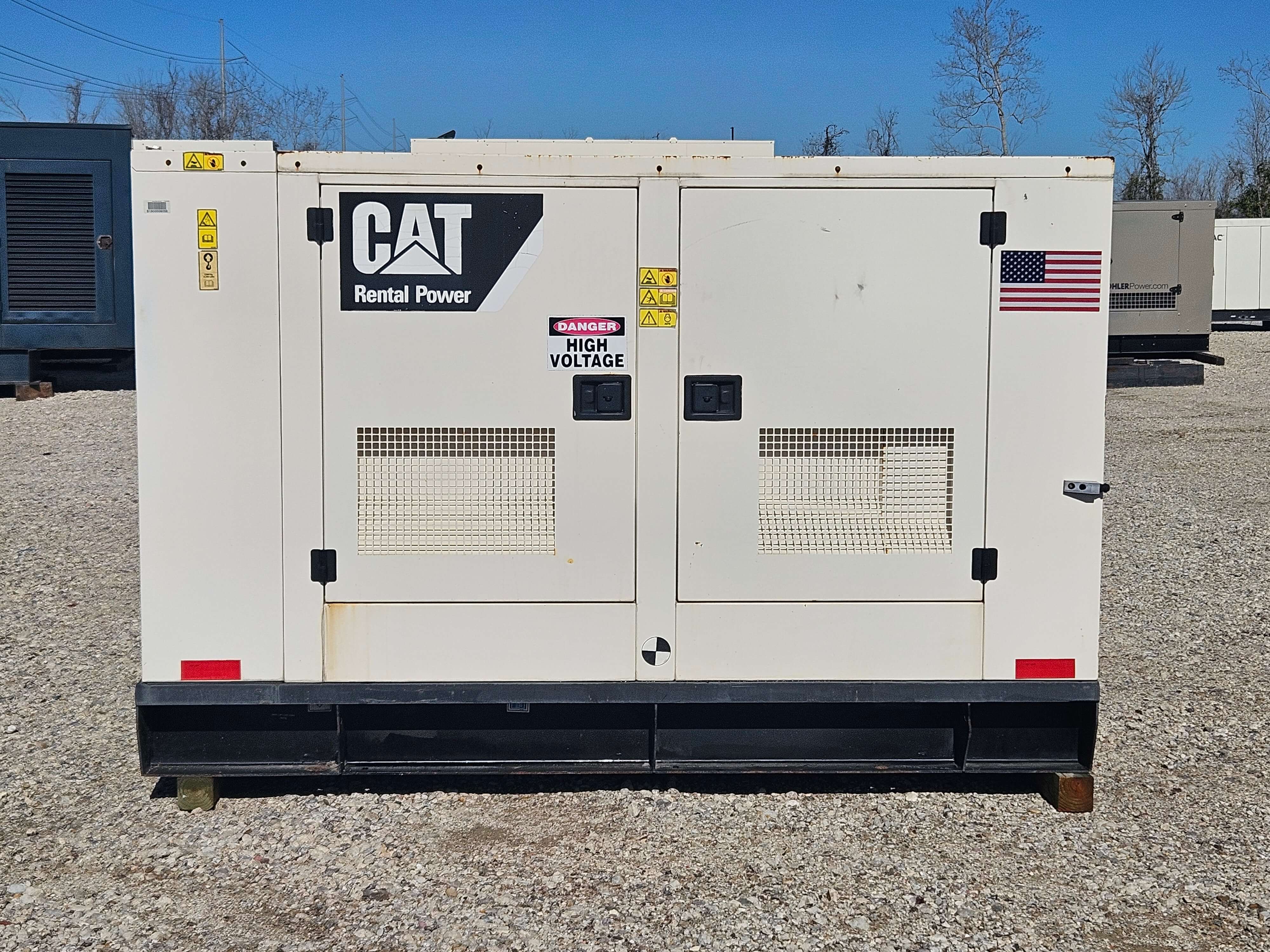
| Caterpillar XQ30 | 30 | 30 kW | Standby |
| Caterpillar XQ45 | 45 | 45 kW | Trailer |
Two things stand out. A “45” can mean anything from 31 kW to 45 kW depending on the maker and the rating behind it, so compare kW, not model numbers. And nearly everything that reaches us at this size is a trailer-mounted diesel. Stationary standby sets exist in this range, but they’re the minority of what we see.
Brand matters more here than on a big stationary frame, because this equipment gets towed, dropped, and run hard:
- Multiquip. A staple of rental fleets and construction trailers. Parts are easy to find and operators already know the controls.
- Airman. Portable and trailer-mounted units built for site work, common on crews that move between jobs weekly.
- Doosan and Wacker Neuson. Both build a G50 towable, and both show up where units take the most abuse.
- Cummins, Kohler, and Generac. More often the stationary standby side of this range, wired to a transfer switch at a restaurant, clinic, or small office.
Whatever is on the ground today is in the listings above and on our shop by brand page.
Five Spec Sheets That Span 25 kW to 49 kW
These are the published figures for five models that cover the band from both sides: towable diesels for site work and stationary sets, diesel and natural gas, for standby. Each one is covered in more depth on our 35 kW and 45 kW pages.
| Model | Fuel and mount | Standby / prime | Full-load fuel | Tank and runtime |
|---|
| Generac SD035 | Diesel, stationary | 35 kW / 32 kW | 3.1 gph | 54 gal (17 hr) to 300 gal (96 hr) |
| Kohler 38RCLC | Natural gas, stationary | 38 kW / standby only | 492 cfh | Utility line, 5 to 11 in. water column |
| Atlas Copco QAS 45 ID | Diesel, towable | 40 kW / 36 kW | Not listed at full load | 73 gal, 30 hr at 75% load |
| Multiquip DCA45SSIU4F | Diesel, towable | 40 kW / 36 kW | 2.93 gph | 79.2 gal |
| Generac SG045 | Natural gas, stationary | 45 kW / 41 kW | 554 scfh (standby) | Utility line, 5 to 14 in. water column |
The two towables, the QAS 45 ID and the DCA45SSIU4F, are both rated 40 kW standby and 36 kW prime on Isuzu Tier 4 Final engines, which is why they’re the reference point for a “45” trailer unit. The stationary sets are the ones rated by standby kW on the nameplate, and they’re the ones that go on a pad behind a restaurant, clinic, or small office with a transfer switch.
Fuel Burn From 20 kW to 60 kW on Our Chart
Our diesel fuel consumption chart brackets this range with four rows. There is no 35, 45, or 50 kW line, so read the rows on either side of your size:
| Size | 1/4 load | 1/2 load | 3/4 load | Full load |
|---|
| 20 kW | 0.6 gal/hr | 0.9 gal/hr | 1.3 gal/hr | 1.6 gal/hr |
| 30 kW | 1.3 gal/hr | 1.8 gal/hr | 2.4 gal/hr | 2.9 gal/hr |
| 40 kW | 1.6 gal/hr | 2.3 gal/hr | 3.2 gal/hr | 4.0 gal/hr |
| 60 kW | 1.8 gal/hr | 2.9 gal/hr | 3.8 gal/hr | 4.8 gal/hr |
The chart is a planning estimate, and current spec sheets often come in under it. Multiquip publishes 1.04, 1.60, 2.20, and 2.93 gph for the DCA45SSIU4F at the same four load steps, against 4.0 gal/hr at full load on the chart’s 40 kW row. Generac’s SD035 lists 1.0, 1.7, 2.4, and 3.1 gph. Use the chart to size a tank or a fuel budget, then use the sheet for the exact unit to tighten it.
The chart covers diesel only. Natural gas sets are rated in cubic feet per hour on their own sheets: the Kohler 38RCLC uses 205 cfh at 25% load and 492 at full load, and the Generac SG045 uses 195 scfh at 25% and 554 at full standby load.
Diesel or Natural Gas at 25 kW to 49 kW?
Diesel for anything that moves, natural gas for standby on a building that already has a gas line. Propane fills in where there’s no gas service.
Diesel picks up load fastest and carries its fuel with it, which is why the towables at this size run on it. The tradeoff is fuel on site, occasional fuel polishing, and whatever emissions tier applies to where you run it. Natural gas takes fuel storage and refueling off your hands, which matters on a unit that may sit for months between runs. It picks up load more slowly than diesel, but on a building already served by gas it’s usually the easier machine to own. Diesel units are listed under industrial diesel generators and gas units under industrial natural gas generators.
Amps at 208V and 480V Across the Band
Three-phase current at each standard output, at 0.8 power factor. The 25, 30, and 40 kW rows come from our generator amperage chart. The chart has no 35 or 45 kW row, so those figures are from the Generac SD035 and SG045 sheets, with the 45 kW at 208V calculated.
| Output | kVA | Amps at 208V | Amps at 480V |
|---|
| 25 kW | 31.3 kVA | 87 A | 37.8 A |
| 30 kW | 37.5 kVA | 104 A | 45.2 A |
| 35 kW | 43.8 kVA | 121 A | 53 A |
| 40 kW | 50 kVA | 139 A | 60 A |
| 45 kW | 56.3 kVA | 156 A | 68 A |
The same 45 kW set draws more than twice the current at 208V that it does at 480V, and conductors, breakers, and the transfer switch all follow that number. Three-phase at 208V or 480V is what you want for motors, compressors, and lifts, since they run cooler and pull less current on it.
Single-phase is still common through this range for rural service, farm buildings, and small retail on a 240-volt service. Current climbs fast there: a 45 kW set at 240V single-phase draws about 234 A at 0.8 power factor, or about 188 A on a set rated at unity power factor, which many single-phase units are. Above roughly 50 kW nearly everything is three-phase. If you’re replacing a unit, match the voltage and phase your transfer switch and service already use.
35 kW or 45 kW: Let the Motors Decide
The split inside this band is simple. A 35 kW class unit covers lighting, hand tools, welders, a site office, or a small building’s essential panel with no large motors. A 45 kW class unit buys the starting headroom that compressors, well pumps, walk-in coolers, and lifts need, since a motor can pull several times its running current while it comes up to speed.
- Mostly resistive load you know well. Start with our 35 kW generators, which covers the Generac SD035, Kohler 38RCLC, and the towable closest to that size.
- One or more motors on the list. Go to our 45 kW generators, which covers the Multiquip DCA45SSIU4F trailer package and the Generac SG045.
- Growth expected, or more than one large motor. Look at our 50 kW generators and the 50kW – 74kW range instead of running a 45 at its limit.
If it’s a close call, go up. An oversized unit burns a little extra fuel. An undersized one fails early and takes your load with it.
Before you pick, list everything that runs at the same time, put each motor’s starting figure beside its running figure, and allow for heat and altitude, which both cut engine output. Duty cycle matters too: four hours a month of exercise is a different machine from ten hours a day under load. Our power calculators will check the total, and we run load calculations at no charge.
Trailer Weights, Axles, and Hitches at This Size
A towable in this range is light enough for a pickup, but the trailer package matters as much as the generator. A typical package is the set on a trailer frame with a base fuel tank, an enclosure, and lifting points, so it can be towed in and set down wherever there’s room. The two spec sheets we work from most often:
- Atlas Copco QAS 45 ID. 2,625 lb ready to run on its trailer, 129.5 x 54 x 66 inches. One torsion axle rated 3,500 lb with brakes and 3,000 lb without, hydraulic or electric brakes, and an adjustable-height pintle with a 3-inch lunette as standard. The skid and trailer mounts can be swapped.
- Multiquip DCA45SSIU4F on the TRLR45. 3,391 lb dry and 4,030 lb wet, not counting options. The trailer has a 7,000 lb GVWR on a tandem-axle frame with 3,500 lb axles, surge hydraulic drum brakes as standard, and a choice of 2-inch ball, 2-5/16-inch ball, or 3-inch pintle eye coupler.
Your tow vehicle’s rating and hitch need to cover the wet weight plus any options, and the coupler on the trailer has to match your receiver. Units already on running gear are under trailer-mounted generators. If the set won’t move more than a few times a year, a pad-mounted unit wired to a transfer switch is the better buy, and those are under industrial standby generators.
Standby or Prime: Read the Rating Before the Price
Two listings that both say “40 kW” can be different machines. Generac rates the SD035 at 35 kW standby and 32 kW prime, and ties its warranty to the rating: 2 years limited on standby-rated units and 1 year on prime. Atlas Copco and Multiquip sell their towables on the prime figure, 36 kW, with 40 kW standby. If the unit will run long hours on a jobsite, compare prime ratings. If it will sit behind a building and run during outages, standby is the number that applies.
On used equipment, hours and age vary widely at this size, because so many of these units come out of rental fleets. Units in this range that have passed through our yard run from 2006 builds to new 2025 stock, and from about 200 hours to more than 11,000. Emissions tier varies the same way, from Tier 2 on older units to Tier 4 Final on current Isuzu-powered towables. A permitted install or a job spec that names a tier settles that question before price does.
New is the answer when a spec requires a factory warranty, a current tier, or new equipment outright, which comes up often in municipal and water district work. Browse used industrial generators and new industrial generators side by side.
Beyond rating, hours, and tier, the price of a unit at this size moves with trailer against stationary, enclosure and sound rating, and whether a transfer switch or switchgear comes with it. Freight is a line item too, though it’s modest at this weight.
Buy or Rent a 25 kW to 49 kW Generator?
Rent for a single project with an end date. Buy once rental payments over a year start approaching the cost of an inspected used unit, which happens quickly at this size because the purchase price is low.
Contractors running a unit across back-to-back jobs reach that point fast. Standby buyers reach it faster still, since a generator that sits 360 days and runs five is something you own rather than something you keep paying for. Owning also means the unit is yours during a regional outage, when every rental fleet is already committed. For short jobs, our rental side, Stag Power Rentals, works out of the same inspected fleet. If the obstacle is capital rather than the math, our generator financing options spread the cost without giving up the asset.
Too Small or Too Large for 25 kW to 49 kW?
If your total comes in under 24 kW with no real motor start, drop a band and put the difference toward installation. If it’s over 49 kW, step up rather than run a unit at its limit.
| Range | kVA | What it usually powers |
|---|
| 20kW – 24kW | 25 to 30 kVA | Outbuildings, light standby, no motor load |
| 25kW – 49kW (this range) | 31 to 61 kVA | Jobsites, rental fleets, small commercial standby, farms, telecom |
| 50kW – 74kW | 63 to 93 kVA | Larger retail, schools, mid-size pump stations |
| 75kW – 99kW | 94 to 124 kVA | Light manufacturing, municipal buildings |
| 25kW – 99kW | 31 to 124 kVA | The whole light-to-mid industrial span in one place |
| 100kW – 499kW | 125 to 624 kVA | Facility standby, production floors, cold storage |
A unit that runs undersized fails early, and the repairs outrun whatever you saved buying small. You can also browse every output we carry on shop by kW.
Inspected, Load Tested, and Backed After the Sale
Every unit in this range goes through a 22-point inspection and load bank testing before it ships, which matters most on ex-rental towables with high hours. We’ve been buying and selling industrial generators for over a decade. New or used, each purchase carries our 30-day IronClad warranty, our service and maintenance team handles repairs and scheduled service afterward, and we stock parts and accessories for what we sell.
Ready to Buy a 25kW – 49kW Generator?
Tell us what you’re running, whether it moves, and what voltage it needs, and we’ll match it to a unit by kW rather than model number, then show you what’s on the ground in new and used. Look through our used industrial generators and new industrial generators, or contact us and we’ll work the load calculation with you.
25kW – 49kW Questions: Model Names, Fuel, and Towing
Why does a “DCA45” or “G50” generator make less than 45 or 50 kW?
Most towables in this class are named in kVA. Multiquip’s DCA45SSIU4F is 45 kVA prime, which is 36 kW prime and 40 kW standby. Multiply the number in the name by 0.8 for a rough kW figure, then confirm the rating on the listing or spec sheet.
How much diesel does a generator in this range burn?
Our chart lists 2.9 gal/hr at full load for 30 kW and 4.0 gal/hr for 40 kW. Current spec sheets often run lower: Generac lists 3.1 gph at full load for the 35 kW SD035, and Multiquip lists 2.93 gph for the DCA45SSIU4F.
How heavy is a towable generator at this size?
Atlas Copco lists the QAS 45 ID at 2,625 lb ready to run on its trailer. Multiquip lists the DCA45SSIU4F at 4,030 lb wet on its TRLR45 trailer, which has a 7,000 lb GVWR. Check your tow vehicle’s rating against the wet weight plus options.
What size generator does a small commercial building need?
Most small commercial buildings come in between 25 kW and 60 kW once you calculate against the essential panel instead of the full service. Offices and retail without much motor load sit in the lower half of that span. Restaurants and clinics with refrigeration or HVAC compressors land in the upper half.
Will a 35 kW generator start a 35 kW motor load?
No. Starting current runs several times running current, so a 35 kW motor needs a good deal more generator behind it. Size against starting kVA rather than the motor nameplate, and send us the equipment list if you’re not sure.
Can I get natural gas in this range?
Yes, on stationary standby sets. The Kohler 38RCLC is rated 38 kW standby and the Generac SG045 45 kW standby, both on a utility gas line. Towables at this size are almost all diesel.
Can I get single-phase in this range?
Yes, through most of it. Expect high current on single-phase: a 45 kW set at 240V draws about 234 A at 0.8 power factor. Above roughly 50 kW three-phase is the standard, and single-phase there usually means a transformer or a specified alternator.
Can I add capacity later instead of buying larger now?
Paralleling smaller units is possible but rarely worth it at this size once you price the switchgear and controls. If you expect to grow within five years, buying into the 50kW – 74kW range is usually cheaper than doing it twice.
What should I check on a used unit at this size?
Hours and service records first, since ex-rental units can run past 11,000 hours. Then the emissions tier, the rating behind the kW figure, and the condition of the trailer, brakes, and enclosure. Everything we sell is inspected and load bank tested and carries the same 30-day warranty as a new machine.