
BUY New & Used Commercial Backup Generators 2600kW-3000kW GENERATORS FOR SALE
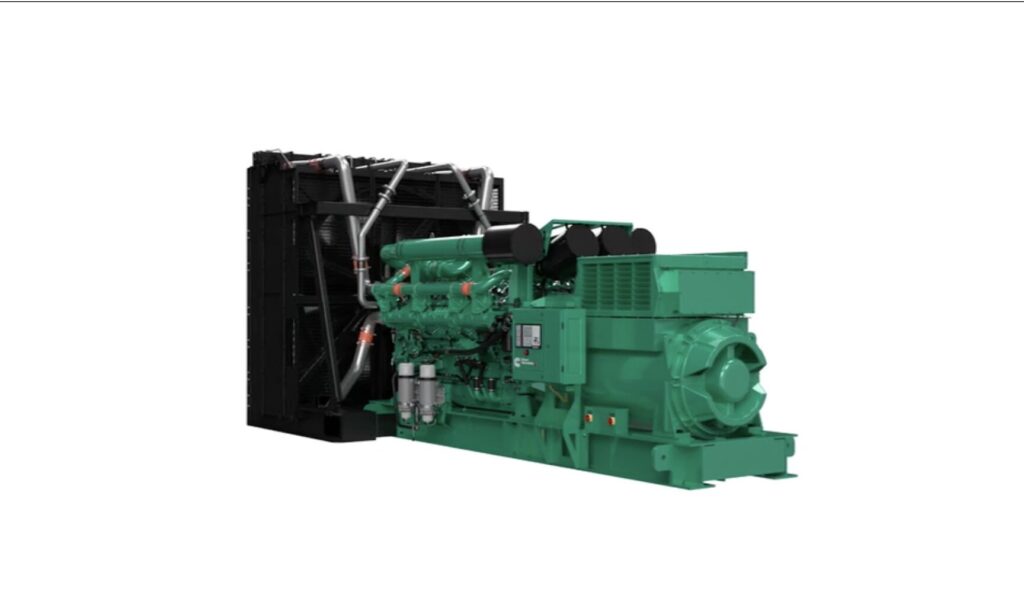
These 2600kW – 3000kW commercial generators represent the pinnacle of backup and continuous power solutions, delivering unmatched scale for the world’s most demanding operations. Built with industrial resilience in mind, they are capable of supporting entire campuses, grid-dependent infrastructure, and vast production facilities. By combining durability with extraordinary output, this generator range ensures that even the largest organizations maintain uninterrupted performance under any conditions.
Filter

Not finding what you’re looking for? Let us help!
GENERATOR SERVICE & REPAIR
Keep your equipment running peak performance with preventive maintenance and repair.
Subscribe For Inventory Updates
We promise not to blow up your
inbox! 
What Can a 2600kW – 3000kW Generator Power?
A 2600kW – 3000kW generator sits at the practical ceiling for standard-production industrial gensets. Buyers arrive here for one of two reasons. Either a single unit at this output genuinely covers the load, which describes large petrochemical sites, utility peaking applications, metropolitan infrastructure, and major processing facilities. Or the unit is one leg of a multi-machine plant, which is how the largest campuses and hospital systems approach backup power. Those two paths lead to very different specifications from the same nameplate, which is why the conversation at this size starts with configuration rather than capacity.2600kW – 3000kW Generators for Sale: Largest Size in This Range
At the upper limit of industrial generator capacity, our 3000 kW generators represent the top of what this range offers. They are sourced almost exclusively by large utility providers, major petrochemical complexes, and mission-critical infrastructure projects where three full megawatts of dependable generation is a baseline requirement rather than a ceiling. The manufacturer field narrows to a handful at this output. Caterpillar generators account for the largest share of what trades in this class, with Cummins generators close behind. Our shop by brand page covers the full lineup.Buying One Unit Versus Building a Plant
This is the question that decides most projects at this scale, and it is worth working through before comparing spec sheets. A single 3000 kW unit is the simpler purchase. One pad, one fuel system, one exhaust path, one control interface, one maintenance contract. Capital cost is lower than an equivalent paralleled arrangement because you are not buying switchgear and synchronization controls. The exposure is concentration: everything the generator protects depends on one engine, one alternator, and one starting system. For applications where an extended outage is survivable, that tradeoff is often acceptable. A paralleled plant distributes the risk. Two 1500 kW units, or three 1000 kW units, mean a single failure degrades capacity rather than eliminating it. Each machine also runs closer to its efficient load band instead of loafing at a fraction of nameplate, which matters for engine health over a long service life. Maintenance can be performed on one unit while the others remain available. The cost is paralleling switchgear, synchronization controls, more complex commissioning, and a larger equipment footprint. What usually decides it is not economics but obligation. If your insurer, your regulator, or your customer contracts specify N+1 redundancy, the paralleled plant is the only compliant answer regardless of what a single unit costs. If no such requirement exists and the load is steady, one machine is frequently the better value. We can price both configurations against your load profile before you commit to either.Where Rental Fits at Three Megawatts
Rental at this output is a specialized business, and the reasons for it are specific: plant turnarounds, temporary generation during a utility interconnection delay, emergency replacement after a catastrophic failure, or short-term peaking. Our rental division, Stag Power Rentals, handles projects in that category. For permanent generation the case flips completely. The pad, bulk fuel system, switchgear, and permitting at this scale represent a substantial investment that gets made regardless of whether the machine on top of it is owned or rented, and paying rental rates against that infrastructure across decades of standby duty is not a serious plan. If timing rather than justification is the problem, our generator financing options keep the project moving while the capital request works through its cycle.Sizing at the Top of the Catalog
The fundamentals hold: catalog concurrent loads, separate resistive from inductive, and account for starting surge. At this output, three variables carry disproportionate weight. Single-step load acceptance often governs the specification outright. A facility that must pick up a large block of load in one step imposes a harder constraint than total steady-state demand, and this requirement alone can push a project into the top band. Derating comes next, since altitude and sustained ambient temperature reduce available output, and a modest percentage at 2800 kW represents more capacity than most facilities own in total. Finally, fuel logistics move from a design detail to a governing constraint. Consumption at this scale means bulk storage with its own containment, permitting, and refueling access planning, and our diesel fuel consumption chart is the place to start on that. Our team runs load studies at no charge, including comparisons of single-unit and paralleled approaches.Is 2600 kW More Than You Need?
Oversizing carries real cost at this scale, and not only in capital. An engine held well below its designed load accumulates unburned fuel in the exhaust system, and the resulting maintenance is avoidable with accurate sizing. If your study lands between two and 2.6 megawatts, 2300kW – 2599kW generators and 2000kW – 2299kW generators cover that span. Facilities below two megawatts should start with 1500kW – 1999kW generators. For a view of the full top tier in one place, the 2000kW – 3000kW category covers everything above two megawatts.What Turnkey Industries Brings to a Project This Size
Every generator we sell clears a 22-point inspection and load bank testing before shipment. At three megawatts, that verification is what separates a commissioning schedule that holds from one that does not, because a fault discovered after the crane departs is a different problem entirely. We have supplied industrial power equipment for more than a decade. Every purchase is backed by our 30-day IronClad warranty, and our service team supports scheduled testing, emergency service, and repairs once the unit is running.Ready to Buy a 2600kW – 3000kW Generator?
Bring us the load profile and the redundancy requirement and we will tell you whether one machine or a plant is the right answer, then show you what is obtainable. Review our full inventory of industrial generators, see the sectors we support on our industries served page, or contact us to discuss your specification.Frequently Asked Questions
Is 3000 kW the largest generator available?
It is the practical ceiling for standard-production industrial gensets, and the point where most projects transition to paralleled plants. Larger single machines exist in utility and marine applications, but availability, lead time, and transport complexity make them impractical for most facility installations.How long does it take to get a unit this size commissioned?
The equipment is rarely the constraint. Engineered pad work, bulk fuel infrastructure, switchgear, and permitting typically run longer than sourcing, particularly when new production lead times are avoided by taking an inspected used unit. Starting the civil and electrical design early is the single largest schedule lever.What does transport involve at this weight?
Permitted oversize load with a route survey, and crane or heavy rigging waiting at the destination. Timelines vary by the states crossed and by site access. We coordinate logistics as part of the sale rather than leaving it to you.Can a unit this large run as prime power rather than standby?
Some can, but the rating determines it and prime duty produces a lower kilowatt figure from the same engine. Emissions permitting also differs sharply between standby and prime applications, and some jurisdictions restrict prime power operation outright. Confirm the intended duty before comparing units.Does used equipment make sense at three megawatts?
Frequently, and availability is often better than new production schedules. Standby units at this output sometimes accumulate remarkably few hours across long service lives. Engine hours, alternator condition, and control system generation determine value, which is why everything is inspected and load bank tested first. The IronClad warranty applies regardless of condition.Shop Industrial Generators By kW
- 20kW-99kW Industrial Generators
- 100kW-499kW Industrial Generators
- 500kW-999kW Industrial Generators
- 1000kW-1499kW Industrial Generators
- 1500kW-1999kW Industrial Generators
- 2000kW-3000kW Industrial Generators
- See All Sizes >