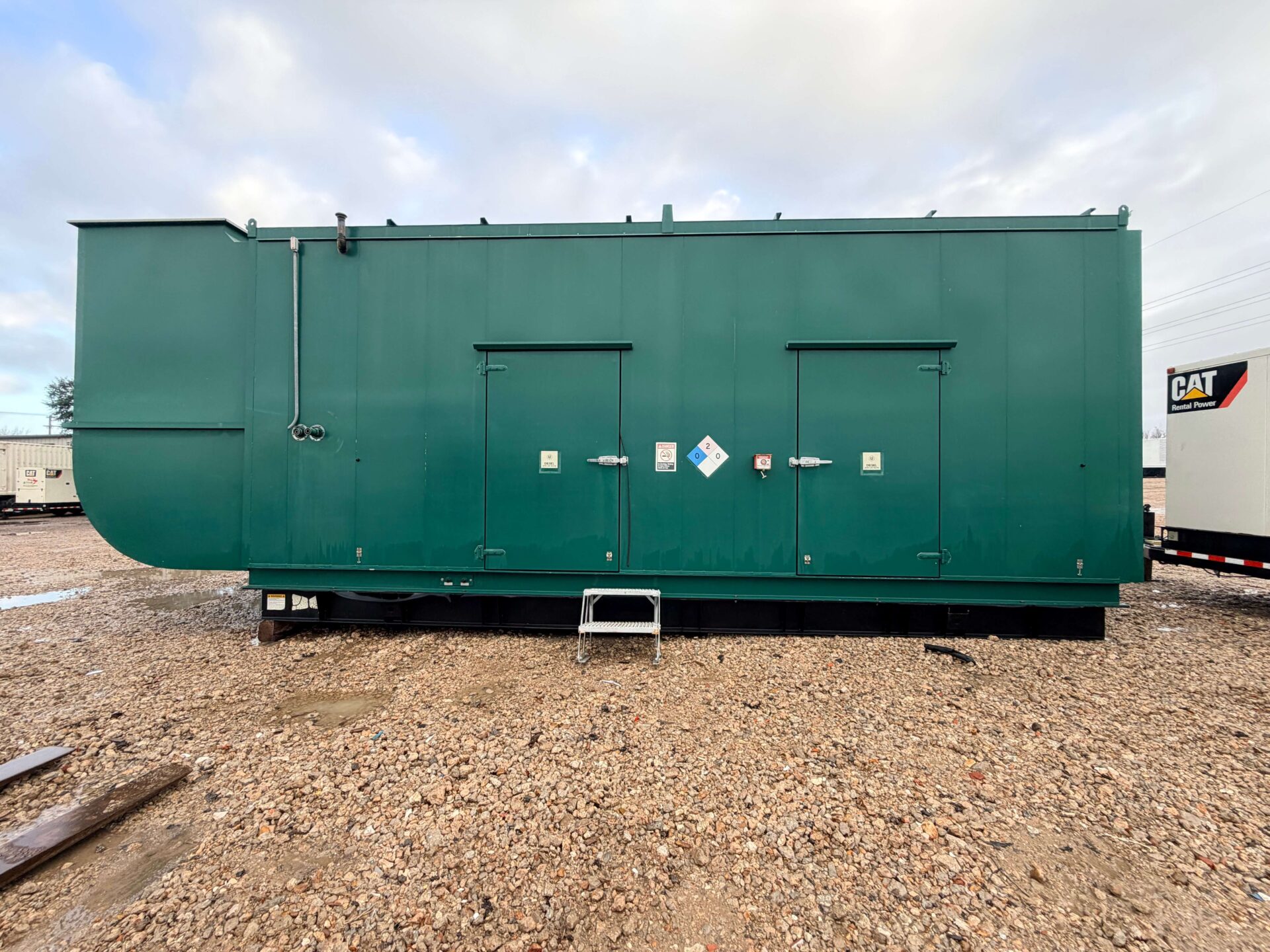
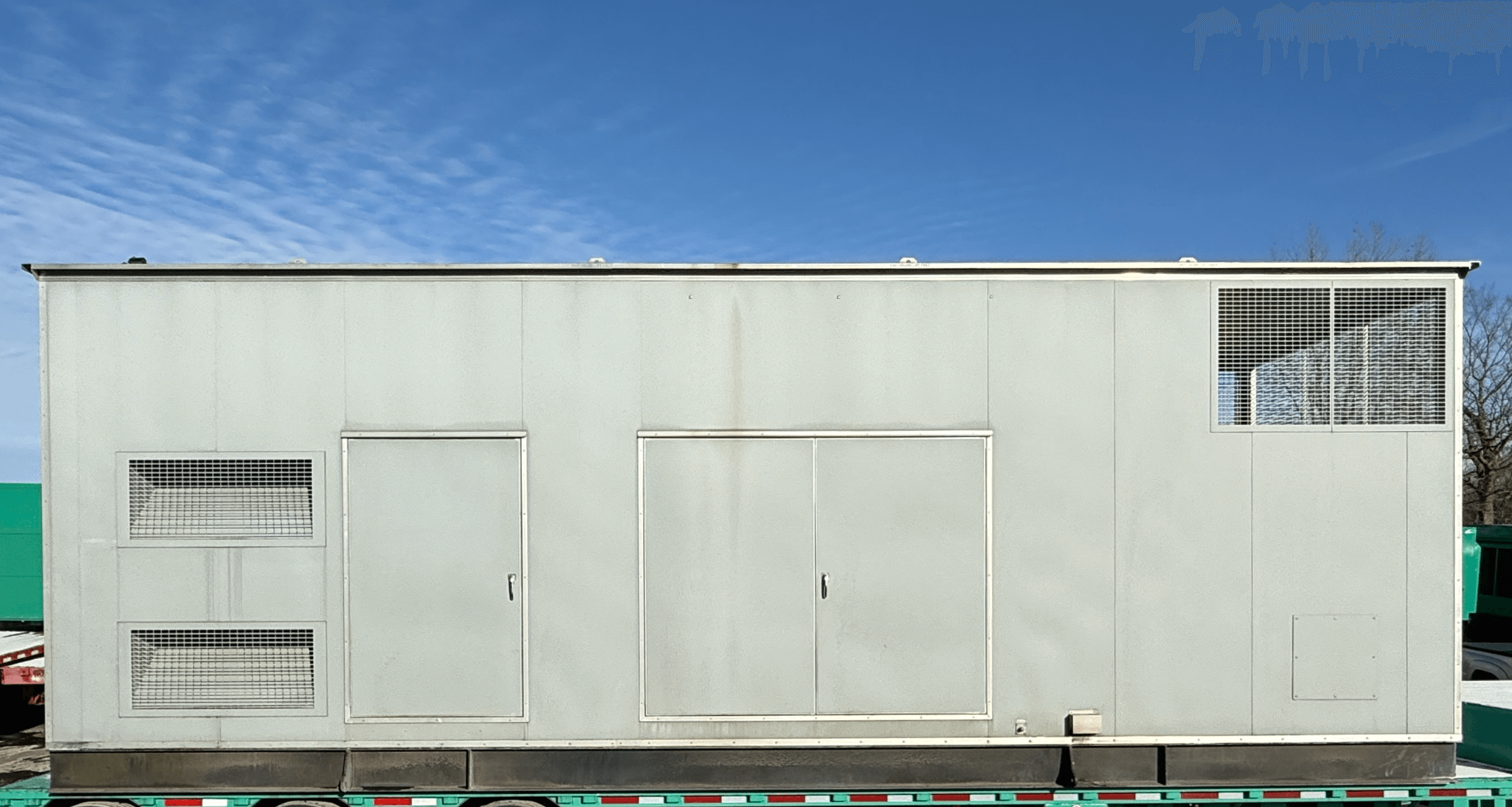
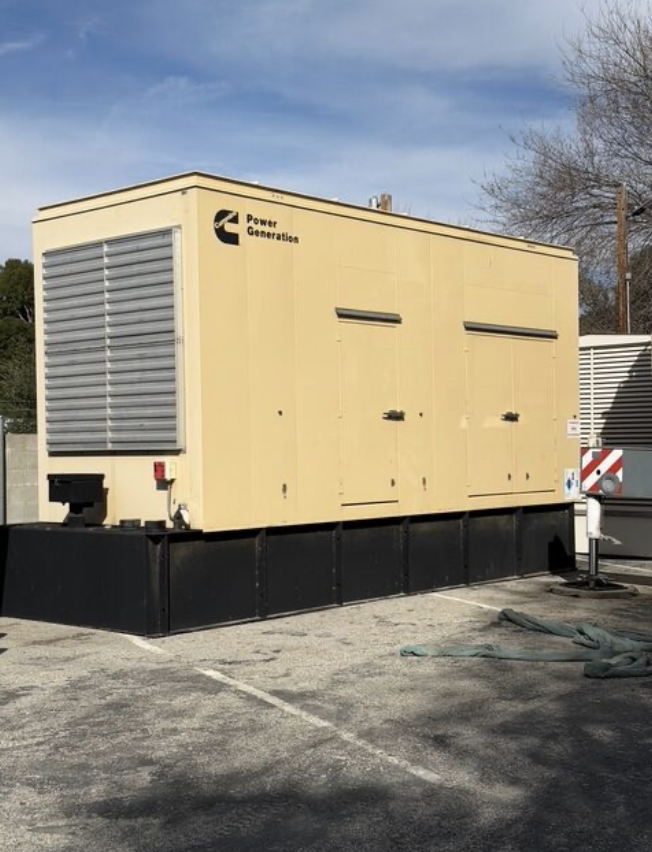
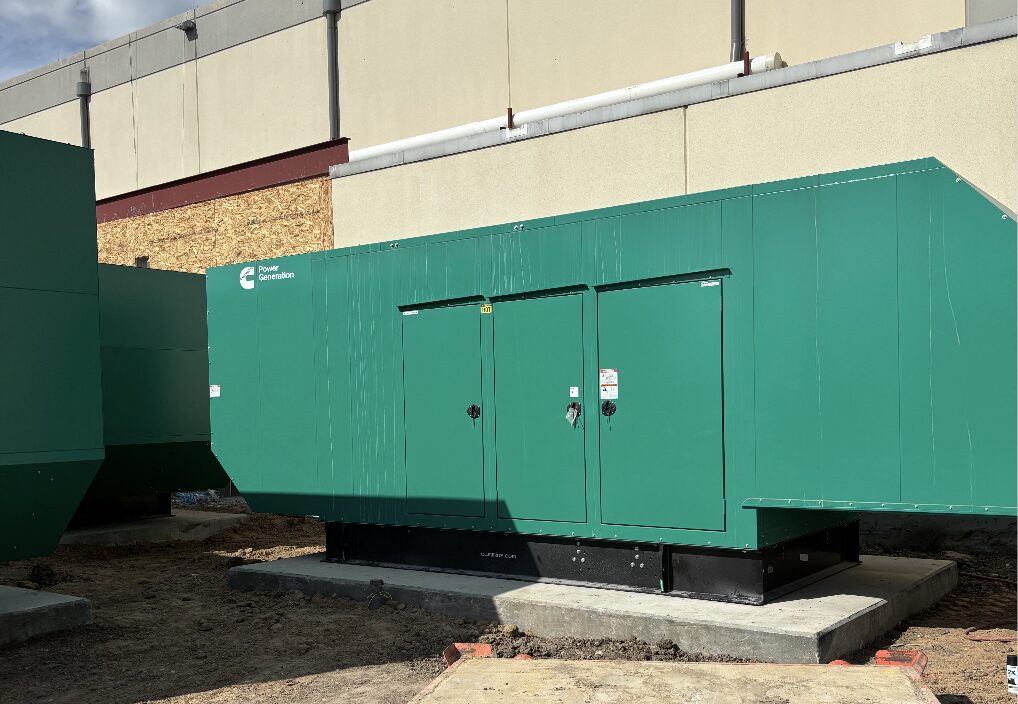
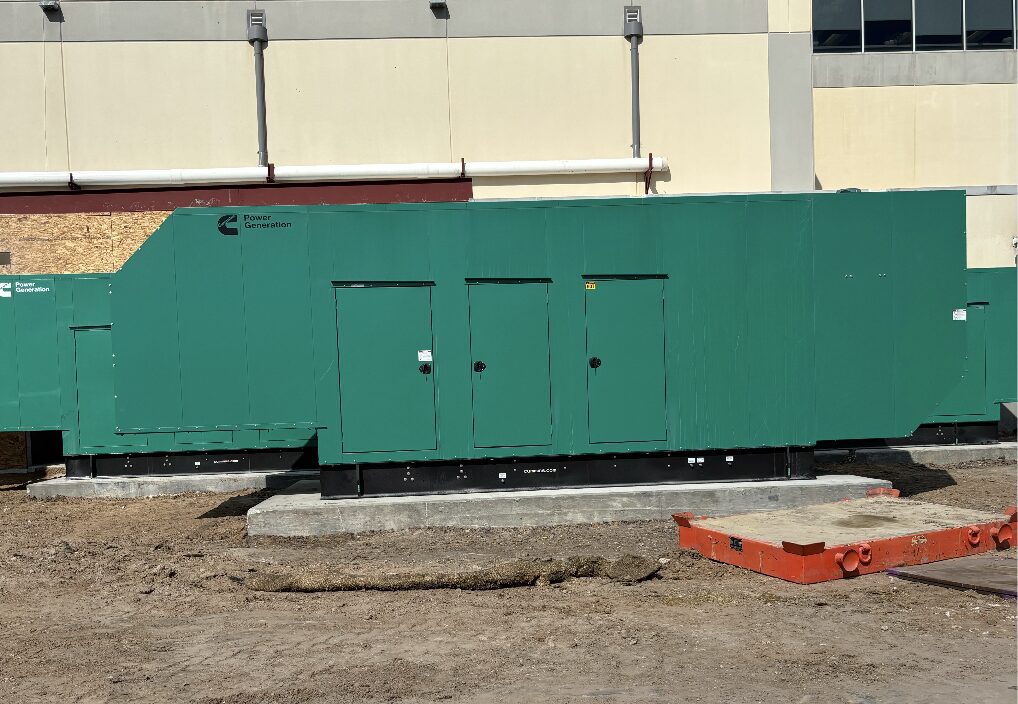
Industries That Use 1200 kW to 1399 kW Generators
Facilities that land between 1.2 and 1.4 MW are usually past the point where one megawatt covers them and short of a reason to buy 1.5 MW.
- Data centers: Enterprise and colocation halls whose service commitments push them toward two or more paralleled units rather than a single machine.
- Hospitals: Healthcare campuses where the set often serves as one unit in a redundant arrangement, sized against the essential system plus planned additions.
- Universities and campuses: District central plants feeding several buildings, some of which double as shelters during regional outages.
- Hotels and resorts: Large properties carrying elevators, kitchens, HVAC, and guest systems together.
- Water districts: Municipal treatment plants and large pump stations, where a permit sets the required runtime.
- Cold storage and distribution: Refrigeration that cannot drop without product loss, with compressor banks cycling all day.
- Heavy manufacturing: Plants where the generator has to start large motors, not just carry them once they are running.
Sector-specific sizing guidance lives on our industries served pages.
1200 kW to 1399 kW Generators at a Glance
- Apparent power: 1,500 to 1,749 kVA at 0.8 power factor.
- Current, three-phase: 1,885 A at 480V and 218 A at 4160V on our chart’s 1250 kW row, and calculated at about 1,804 to 2,103 A at 480V across the band.
- Diesel burn at full load: 88.8 gal/hr at 1250 kW on our chart, about 2,131 gallons a day, between 71.1 gal/hr at 1000 kW and 106.5 gal/hr at 1500 kW.
- Weight, one frame or two: 18,766 to 20,463 lb for an open Generac SD1000 below the band, 28,443 lb wet for an open Kohler KD1500 above it, and up to 21,540 lb wet for two open Kohler 600REOZVB sets.
- What we list here: 1,250 kW Cummins and Baldor diesel units, EPA Tier 2, used at 100 to 649 hours, plus new Cummins C1300N6 natural gas standby sets at 1,300 kW.
- Decision that drives cost: one frame or a paralleled pair, because switchgear, controls, and commissioning scale with the number of machines.
This band sits inside our 1000kW – 1499kW generators category. We have no single-size page inside it, so the closest are our 1000 kW generators just below and 1500 kW generators just above.
The 1,250 kW Cluster in Our Current Listings
These are the units listed in this band today, at the kW we listed each one:
| Model | Listed output | Fuel and package | Year | Condition |
|---|
| Cummins DQGAA | 1,250 kW | Diesel standby, Tier 2 | 2010 | Used, 640 hours |
| Cummins DQGAA | 1,250 kW | Diesel standby, Tier 2 | 2010 | Used, 649 hours |
| Cummins DQGAA | 1,250 kW | Diesel standby, Tier 2 | 2013 | Used, 100 hours |
| Cummins DQGAA | 1,250 kW | Diesel standby, Tier 2 | 2015 | Used, 357 hours |
| Baldor IDLC1250-2M | 1,250 kW | Diesel power module, Tier 2 | 2009 | Used, 556 hours |
| Cummins QSK50 | 1,250 kW | Diesel power module, Tier 2 | 2006 | Used, 513 hours |
| Cummins C1300N6 | 1,300 kW | Natural gas standby | 2025 and 2027 | New, two units |
Four of these are the same model. Cummins DQGAA standby sets at 1,250 kW make up half the list, which matters for anyone building a matched pair: two units of one model share controls, parts, and service procedures. Nothing listed sits between 1,301 and 1,399 kW, so a requirement in that span is either a 1,300 kW gas set, a pair of smaller machines, or a step to the 1400kW – 1499kW listings.
One Large Frame Against Two Smaller Ones on Paper
We have no spec sheet at 1,250 kW, so this table sets the single frames on either side of the band against pairs built from the 600 kW and 750 kW sheets on our single-size pages. Pair figures are two units added together.
| Configuration | Bracket | Standby / prime | Full-load diesel | Open-set weight |
|---|
| One Generac SD1000 | Below the band | 1,000 kW standby | 70.9 gal/hr | 18,766 to 20,463 lb |
| Two Kohler 600REOZVB | Pair, 1,200 kW | 1,200 kW / 1,110 kW | 85.4 gal/hr | Up to 21,540 lb wet |
| Two Generac SD750 | Pair, 1,500 kW | 1,500 kW / 1,350 kW (prime not offered in the U.S.) | 99.4 gal/hr | 20,936 to 21,826 lb |
| One Kohler KD1500 | Above the band | 1,500 kW / 1,350 kW at 480V | 105.9 gal/hr | 28,443 lb wet |
Two things stand out. A pair of 750 kW sets reaches the same 1,500 kW standby figure as one KD1500 on slightly less published fuel, and the two together weigh less than the single frame’s 28,443 lb wet, though each needs its own pad space, exhaust, and connections. And the two 600 kW Kohlers land almost exactly on the bottom of this band, so a 1,200 kW load on that pair leaves no margin if either one trips. Details for each sheet are on our 600 kW, 750 kW, 1000 kW, and 1500 kW pages.
Diesel Burn Centered on the 1250 kW Row
Our diesel fuel consumption chart has one row inside this band, at 1250 kW. The 1000 and 1500 kW rows bracket it, and the pair rows add two chart lines together:
| Size | 1/4 load | 1/2 load | 3/4 load | Full load |
|---|
| 1000 kW (below) | 21.6 gal/hr | 36.4 gal/hr | 52.1 gal/hr | 71.1 gal/hr |
| 1250 kW (in band) | 26.9 gal/hr | 45.3 gal/hr | 65.0 gal/hr | 88.8 gal/hr |
| 1500 kW (above) | 32.2 gal/hr | 54.3 gal/hr | 77.8 gal/hr | 106.5 gal/hr |
| Two 600 kW sets | 26.4 gal/hr | 44.0 gal/hr | 63.0 gal/hr | 85.6 gal/hr |
| Two 750 kW sets | 32.6 gal/hr | 54.8 gal/hr | 78.6 gal/hr | 106.8 gal/hr |
At the same total output the chart shows almost no fuel penalty for splitting the load across two machines. Where a pair can save fuel is at light load, when one unit shuts down and the other runs nearer its rating: around 600 kW of demand, one 600 kW set at full load burns 42.8 gal/hr on the chart, against 45.3 for a 1250 kW set at half load.
Runtime math changes with a pair too. A 1250 kW set at full load burns about 2,131 gallons a day, or about 6,394 gallons over 72 hours. Kohler offers the 600REOZVB with a 3,052-gallon tank sized for a 72-hour state code, so two of them carry 6,104 gallons between them, each under its own unit.
Amps per Machine and on the Shared Bus
Three-phase current at 0.8 power factor. Rows marked chart are taken from our generator amperage chart. It skips 1200 and 1399 kW, so we worked those band edges out from kVA and labeled them calculated.
| Output | kVA | 480V | 600V | 4160V |
|---|
| 1000 kW (chart) | 1,250 kVA | 1,504 A | 1,202 A | 174 A |
| 1200 kW (calculated) | 1,500 kVA | about 1,804 A | about 1,443 A | about 208 A |
| 1250 kW (chart) | 1,563 kVA | 1,885 A | 1,503 A | 218 A |
| 1399 kW (calculated) | 1,749 kVA | about 2,103 A | about 1,683 A | about 243 A |
| 1500 kW (chart) | 1,875 kVA | 2,260 A | 1,805 A | 261 A |
A pair splits the current at each generator but not on the bus. Our chart lists a 600 kW set at 902 A at 480V, so each machine in a 600 kW pair gets a breaker and cable run sized for about 900 A, while the paralleling bus and the feeder to the facility still carry the combined 1,804 A. A single 1250 kW set puts 1,885 A through one generator breaker instead. At 4160V the per-unit figure on a 600 kW set drops to 104 A on our chart, which is one reason medium voltage gets priced when a paralleling bus is in the plan. Run your own load through our power calculators first.
Single 1250 kW Set or a Paralleled Pair?
One 1,250 kW set when the load fits and nothing in the spec demands redundancy; two machines when losing a generator cannot mean losing the facility.
The phrase “paralleled pair” covers two very different purchases. In load sharing, two units split the demand, so a 1,200 kW load runs on two 600 kW machines with no spare capacity if one drops. In N+1, each unit carries the full critical load alone, so the same facility buys two 1,250 kW sets, 2,500 kW of nameplate for a 1,200 kW load. Code, insurance, and customer contracts decide which applies.
Our listings make the second option practical at this size: the four Cummins DQGAA sets at 1,250 kW mean a matched pair of one model can come from the same yard, with service records for both.
What Switchgear and Controls Add to Two Machines
A second generator is the smaller part of a paralleled plant; the synchronizing switchgear, controls, and commissioning are the larger part.
Paralleling gear matches voltage, frequency, and phase before closing each unit onto the common bus, then shares load between them while they run. Each generator also needs a controller that can talk to the other unit and to the gear, a specification item rather than an assumption. Commissioning grows from proving one machine starts and holds voltage to proving synchronization, load sharing, and the right response when either unit drops out.
If a second machine is a future plan rather than a current purchase, say so at the start. Bus capacity, pad space, conduit, and controls sized for two from day one make the second unit a straightforward addition; retrofitting them means reworking the switchgear.
Diesel Standby or a Gas Unit for 1.2 to 1.4 MW?
Diesel for emergency standby on a site that has to carry its own fuel, natural gas where a utility line can feed the full flow and the set may run long hours.
Our listings split along that line: the 1,250 kW units are Tier 2 diesel standby sets and power modules, and the 1,300 kW units are new Cummins C1300N6 natural gas standby sets. On gas, the meter and service line become the sizing problem, and a pair doubles it. Generac’s SG1000 alone draws 11,243 scfh at full load on a 14 to 28 inch water column supply. Two Cummins C600N6 sets, 1,200 kW standby together, would draw 19,114 CFH at full load at 14 to 20 inches, and two Generac SG750 sets, 1,500 kW together, 16,740 scfh. Have the gas utility check pressure and flow against the exact units before you commit.
Pick one fuel for a pair. Diesel and gas engines accept load at different rates, which complicates synchronization and load sharing. Browse both fuels: industrial diesel generators and industrial natural gas generators.
Buying Used 1,250 kW Sets for a Pair
Used works well here, provided the controls on both units can synchronize with each other and with the gear you specify.
The diesel units in this band show standby-duty hours, from 100 on a 2013 DQGAA to 649 on a 2010 unit, all EPA Tier 2. On a standby set that age, a low meter is expected, so the service file and the controller generation carry as much weight as the hours; a panel that is sound for single-unit duty may need a retrofit before it can parallel. Buy new if the project names a factory warranty term, a current emissions tier, controls that must match existing switchgear, or unused equipment; healthcare and municipal specs often do. Compare used industrial generators with new industrial generators before deciding.
Our rental side, Stag Power Rentals, covers short gaps such as a failed unit awaiting replacement, while our generator financing options fit cases where the configuration is settled but the capital timing is not.
Too Small or Too Large for 1200 kW to 1399 kW?
Settle redundancy first, since N+1 can change the per-unit size even when the facility load stays the same.
| Range | kVA | What it usually powers |
|---|
| 1000kW – 1199kW | 1,250 to 1,499 kVA | One-megawatt standby sets, the entry to the megawatt class |
| 1200kW – 1399kW (this range) | 1,500 to 1,749 kVA | 1,250 kW diesel standby sets and modules, 1,300 kW gas standby, paralleled pairs |
| 1400kW – 1499kW | 1,750 to 1,874 kVA | Gas power modules and loads just short of 1.5 MW |
| 1000kW – 1499kW | 1,250 to 1,874 kVA | Parent category: every listing from 1,000 to 1,499 kW |
If the study comes in under 1,200 kW, the band below runs the set at a healthier load. If motor starts or planned growth push it past 1,400 kW, step up. Other sizes are on shop by kW.
Inspected, Load Tested, and Backed After the Sale
Each unit passes a 22-point inspection and load bank testing before it leaves our yard, so both machines in a pair arrive proven under load. We have bought and sold industrial generators for over a decade. New or used, each purchase is covered by our 30-day IronClad warranty, and our service and maintenance team takes on scheduled testing and industrial generator repair once the units are running.
Ready to Buy a 1200kW – 1399kW Generator?
Tell us the load, the redundancy requirement, the voltage, and the fuel available on site, and we’ll lay out one 1,250 kW set, a load-sharing pair, and an N+1 pair side by side, then point you to matching units. Start with our used industrial generators and new industrial generators, or contact us to run the load study together.
1200kW – 1399kW Questions: Pairs, Gas Units, and the 1,250 kW Set
Are two 600 kW generators the same as one 1200 kW generator?
On capacity, yes; on everything else, no. Two Kohler 600REOZVB sets total 1,200 kW standby and 85.4 gph at full load, but they need paralleling switchgear, and at 1,200 kW of load neither can drop out without shedding load.
Does N+1 at 1,250 kW mean buying 2,500 kW?
Yes. In N+1 each unit must carry the full critical load alone, so a 1,250 kW load needs two 1,250 kW sets plus the gear to parallel them.
How many amps does a 1300 kW generator draw?
About 1,955 A at 480V and 226 A at 4160V, calculated from 1,625 kVA at 0.8 power factor, since our chart skips 1300 kW.
How much diesel does a 1250 kW generator burn in a day?
About 2,131 gallons in 24 hours at full load, from 88.8 gal/hr on our chart, and about 1,087 gallons at half load.
Can we install one unit now and parallel a second later?
Yes, if the first installation is designed for it. Size the bus, pad, conduit, and controls for two machines at the start, or plan on reworking the switchgear later.
Do both units in a pair need to match?
Not strictly, but matched units simplify synchronization, spare parts, and service.
Are there natural gas generators in this range?
Yes. We list new Cummins C1300N6 natural gas standby sets at 1,300 kW. Confirm gas pressure and flow with your utility first.
Is a used 1,250 kW standby set worth considering?
Often. The diesel units listed here carry 100 to 649 hours. Check the controller if the set will be paralleled, and note that every unit we sell is load bank tested and carries our 30-day warranty.