

Who Decides, and What This Page Covers
If you are a district facilities director, a school business officer, a superintendent preparing a board item, or a university director of campus operations or emergency management, backup power eventually becomes your decision to defend. This page covers what that decision involves: how to size a generator for a school or campus, what NFPA 110 requires, what the equipment costs to own, how districts and universities fund and procure it, and how to document testing so the file survives an audit or an insurance review.
Generators for schools range from 40 kW to 600 kW across most K-12 and campus applications, and selecting the right backup power system is critical for maintaining safety during outages. The sections below work from load through code through procurement, in the order the decision usually moves.
Why Do Schools Need Emergency Power?

Schools serve a dual purpose most facilities do not. Day to day they are learning environments. During hurricanes, ice storms, and extended grid failures they become community shelters, communication hubs, and coordination centers. Schools require reliable backup power to support critical operations during grid outages, and that dual role makes it a public safety requirement rather than an academic convenience.
When a power outage occurs during the school day, a building without power backup loses more than lighting. It loses heating or air conditioning, fire alarms, phone systems, computer networks, security systems, and the elevator systems that make the building accessible. Backup power maintains life safety systems during emergencies and ensures continuous operation of communication and security systems, which is the baseline a facilities director is accountable for.
Schools often act as community emergency shelters requiring continuous power for critical services, and generators support that shelter function during severe weather events. For a campus designated as a safe haven, losing power means turning away the residents it was supposed to receive and pushing that load onto another facility that may be equally unprepared.
What Does a Power Outage Cost a School District?
The direct cost is a lost instructional day. Districts that lose power past a threshold have to make the day up, which pushes into summer, disrupts families, and costs transportation and staffing dollars that were never budgeted. Backup generators prevent disruptions to instructional time during outages, and multiplied across several schools in a district, one storm resets the calendar.
The indirect costs are larger. Standby generators prevent food spoilage in school cafeterias during outages, and schools with backup power avoid writing off walk-in coolers after a long weekend. A flooded mechanical room where the sump pumps stopped. Research facilities where a freezer failure destroys years of samples. Students sent home mid-day into the care of parents who had to leave work.
The case that lands with a board is usually operational rather than financial. One documented example: a 300 kW generator kept 840 students safe through a 31-hour outage, covering life safety, climate control, and food service for the duration. That is the scenario a facilities director is being asked to guarantee, and it is easier to fund before an event than after one.
What Systems Need Standby Power in Educational Facilities?
Not every circuit belongs on the emergency bus. Generators should be matched to specific school needs rather than powering the entire campus, and sorting critical systems from the rest is what keeps generator size and fuel cost defensible to a school board.
- Life safety systems — fire alarm systems, emergency lighting, egress lighting, sprinkler controls
- Security systems — access control, cameras, door hardware, intrusion alarms
- Communication systems — phone systems, PA and bell systems, network closets, computer networks
- Climate systems — heating in winter, air conditioning in Gulf Coast heat, HVAC systems for occupied space
- Food service systems — walk-in coolers and freezers, where food safety depends on continuous power
- Building service systems — sump pumps, domestic water pumps, elevator systems
- Instructional systems — classroom technology, interactive whiteboards, server rooms
Generators maintain HVAC systems and keep student comfort intact during an outage, and they support critical systems like security cameras and alarms that a building cannot legally operate without. Fire alarms are the non-negotiable item; they are usually the first circuits a facilities team puts on the generator.
HVAC capacity is what districts most often underestimate. Lighting and security systems are small power loads; a rooftop unit serving a gym is not. Deciding how much HVAC stays live is usually what determines generator size and therefore the whole power budget.
What Does NFPA 110 Require of a School?
Code is where a facilities decision stops being discretionary. NFPA 110 requires Level 1 emergency power systems for schools with occupant loads over 1,000 persons, which captures most high schools, many middle schools, and nearly every university building of consequence.
Level 1 carries a performance standard, not just an equipment standard. Generators must start and accept full load within 10 seconds, and standby generators restore power within 10 seconds to safety systems during an outage. That transfer window drives the specification of both the engine and the automatic transfer switch, and a correctly sized generator behind a slow switch still fails the requirement.
Testing obligations follow. NFPA 110 requires monthly generator testing under load for 30 minutes, and annual load bank testing that must run at least 2 hours. Documented maintenance programs are required by NFPA 110 and by most equipment warranties, so the paperwork is part of compliance rather than an administrative extra.
What Size Emergency Power Generator Does a Campus Need?
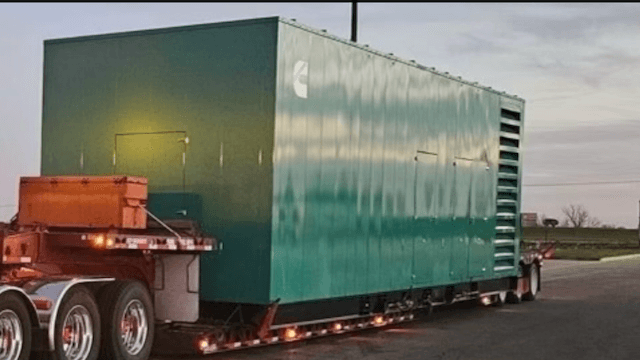
Sizing depends on whether the generator powers the entire campus or only life-safety essentials, and that scope decision belongs to the district and its electrical engineer before anyone calculates kilowatts. Schools typically need 100 kW to 600 kW generators for backup power, with the band running lower for single buildings and higher for central plants.
- 40 kW to 65 kW — portable classrooms, individual departments, small standalone buildings
- 100 kW to 150 kW — an elementary school building covering life safety, security, and partial HVAC
- 150 kW to 400 kW — a full K-12 school or a college building with labs, server rooms, and kitchen
- 500 kW to 2000 kW — a central plant serving multiple buildings, or a building housing research facilities
A 55 kW generator supports essential systems for smaller schools, covering the core power load at a price that works against tight facility budgets. 40 kW generators and 55 kW generators cover that tier. A mid-size school running concurrent systems needs 125 kW generators or 150 kW generators.
Generator sizing should account for peak demand and future expansion needs, not current load alone. A bond-funded addition, a new wing, or electrified kitchen equipment three years out changes the number permanently, and retrofitting capacity costs far more than specifying it once. Size against the largest motor on the emergency panel — usually an HVAC compressor — and allow two to three times its running draw for startup power.
Should a Campus Use One Generator or Several?
Modular power systems use multiple smaller generators for scalability and redundancy, and for university campuses that architecture usually wins. A single large unit serving an entire campus needs extensive distribution to reach every building, introduces one point of failure, and concentrates fuel storage in one place.
Distributed units assigned to specific critical buildings are easier to install and maintain and limit any failure to one area. Modular capacity also lets a district phase purchases across budget years rather than funding everything in one capital request, which is often what makes the project approvable at all.
Diesel, Natural Gas, or a Bi-Fuel System?
Diesel generators are the most common type for schools, and for defensible reasons. Diesel generators are preferred for their quick startup and surge capacity, offering robust immediate power and high reliability. Fuel sits on site, so the unit runs through a multi-day event without depending on a second utility, and diesel engines tolerate the long idle periods between monthly tests that define standby duty in a school.
Natural gas generators connect directly to utility pipelines and eliminate on-site fuel storage needs, which suits buildings where a tank would fail fire code or land-use review. Natural gas generators run cleaner than diesel but may face gas supply interruptions, which is why districts whose schools serve as shelters almost always specify diesel for those buildings and keep natural gas for lower-stakes facilities.
Bi-fuel systems combine diesel or natural gas generators with solar and battery storage, and they are appearing more often on campuses with sustainability commitments written into a master plan. Solar generators reduce dependence on conventional fuels and provide low-emission power, though solar and battery capacity alone will not carry a shelter through a multi-day outage. Treat them as a supplement to a generator rather than a replacement for one.
Portable generators are manually connected and started by hand, which rules them out for life-safety circuits that must transfer in 10 seconds. They remain useful for temporary classroom buildings and for bridging a planned shutdown, and selecting a generator involves weighing fuel availability and operating costs alongside the code requirement.
Noise is worth settling early on a school site. Sound attenuated enclosures bring a running unit down to a level that will not carry into classrooms, and most standby generators in our inventory come with acoustic housing as standard.
How Do Districts and Universities Fund and Procure a Generator?
This is the part that decides whether a correctly specified project happens. Public school districts face competitive bidding thresholds that vary by state, and cooperative purchasing agreements let a district buy without a standalone RFP. BuyBoard, Sourcewell, and OMNIA Partners are the vehicles most districts use, and Texas districts can also purchase through the Texas Local Government Purchasing Cooperative.
Capital funding usually comes from a bond program, a general fund capital line, or a grant. FEMA’s Hazard Mitigation Grant Program has funded generator installations at schools designated as community shelters following a presidentially declared disaster, and a district pursuing that route should coordinate with its state hazard mitigation officer early, since grant timelines run long and procurement must occur inside the performance period.
Confirm with your purchasing officer which cooperative contracts your district has adopted before specifying equipment. We quote on cooperative terms, provide the documentation a purchasing officer needs for the board packet, and can work to a formal bid when that is the required route.
Which Generator Brands Should a District Specify?
Standardizing across a district pays off more than chasing a specific badge. One or two generator brands across all campuses means common parts, one service relationship, one set of procedures, and maintenance staff who already know the equipment. We stock Caterpillar, Cummins, Multiquip, Kohler, and Baldor industrial generators in the output ranges schools buy.
What matters more than the nameplate is whether the engine platform has service coverage in your region and whether parts are on a shelf rather than on order. For a unit that may run twenty hours a year and then be asked to carry a shelter for four days, parts availability is the specification that decides outcomes.
How Should Schools Maintain Backup Generators?
Neglecting maintenance is the leading cause of generator failure, and regular maintenance of generators is crucial for reliability and safety. A generator nobody maintains is a generator that fails on the day it matters.
- Monthly exercise of at least 30 minutes under load, logged with date and conditions
- Annual load bank testing of at least 2 hours to prove the unit carries its full emergency power load
- Oil, filter, and coolant service on the engine manufacturer’s intervals
- Battery condition checked on a schedule, since dead batteries cause most no-starts
- Fuel quality tested and treated, because stored diesel degrades over a school year
Monthly no-load exercise proves a unit starts. It does not prove it will maintain output under full load, which is what annual load bank testing is for. Documented maintenance programs are required by NFPA 110 and by warranty terms, so the log is not optional paperwork.
Centralize the program. Districts where facility managers own the schedule across every campus maintain their equipment properly; districts that leave it to individual building principals do not. For districts running more than five or ten units across multiple buildings, a managed maintenance contract usually costs less than the staff time to maintain them properly in-house.
What Power Do Universities Need That K-12 Schools Do Not?
Universities carry loads schools do not. Residence halls are occupied twenty-four hours a day, so a power failure at 2am is an occupied-building emergency rather than an empty-building inconvenience. Dining operations run at commercial scale. Research facilities hold freezers, incubators, and instruments where a power interruption destroys work that took years, which is why many universities put research buildings on their own dedicated generators ahead of academic space.
Universities also run their own utilities more often than districts do. A central plant, campus-wide distribution, and in some cases a cogeneration set mean power decisions at a university are closer to municipal utility planning than to building-level backup. Those campuses need generators sized against the plant, coordinated through paralleling switchgear, and staged so students in residence halls stay powered even while academic buildings are shed.
The common thread across both K-12 and higher education is that instruction stops when power does. The difference is only in how many systems and how many students are affected at once.
How Does Continuous Power Keep Instruction Running?
Modern classrooms depend on power in ways they did not a generation ago. Interactive whiteboards, networked computers, online assessment platforms, building access control, and digital communication all need continuous power to function. A school without standby power does not just go dark, it loses the infrastructure teaching now runs on.
Generators restore that infrastructure in seconds, letting teachers work from their lesson plans instead of improvising and letting administrative operations continue. That is how a district avoids the closures and make-up days a multi-day power failure otherwise forces.
Are New or Used Generators Better for an Education Facility?
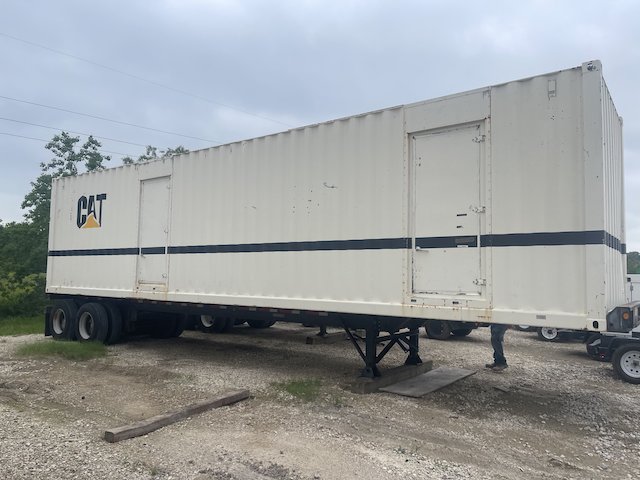
Educational institutions operate under tight budget constraints, and used procurement from a source that tests its equipment is the most effective way to get dependable backup power without new equipment pricing. Standby units routinely come off a building with very few hours on the clock, so cost per kW on a tested used machine is hard to beat.
New makes sense where a permitted installation requires current emissions certification, where full factory warranty is written into the bid, or where the configuration does not exist used. We stock new industrial generators for those cases and used industrial generators for the rest.
Every used unit through our yard in Dickinson, Texas gets a 22-point inspection and is load bank tested before it ships, with our 30-day IronClad warranty behind it. School administrators and business officers get the test documentation with the unit, which is what a board or an auditor asks for later.
Shop Campus Generators by kW Range
Single buildings, portable classrooms, and smaller school facilities land in our 25kW–49kW and 50kW–74kW generators for sale, with 75kW–99kW units covering larger standalone buildings. Mid-size schools and individual university buildings with higher simultaneous power load belong in the 100kW–249kW and 250kW–374kW industrial generator ranges, or 375kW–499kW for a building carrying labs and a commercial kitchen. Central plants and large campus facilities fit 500kW–669kW, 670kW–839kW, and 840kW–999kW units, or 1,000kW–1,199kW and 1,200kW–1,399kW generators.
Looking to Buy or Sell a Used School Generator?
If your institution is upgrading or decommissioning generator equipment, we buy used units outright — find out what your generator is worth here. Surplus equipment sitting behind a maintenance building is working capital for the next project. To discuss available inventory or get help sizing power for a specific campus, get in touch with our team.
What Types of Generators for Schools Are Available?
Our inventory of generators for schools includes used generators, new units, trailer-mounted options for temporary power or emergency deployment, permanent standby systems, diesel, and natural gas configurations across a wide output range. Those power solutions cover a single portable classroom through multiple buildings on one campus, and the right power solutions depend on which systems you have decided must stay live. If the unit your institution needs is not listed, contact us — we source equipment continuously and can often locate the right one faster than traditional procurement channels allow.
When Does a School Need Temporary Power Instead?
Budget cycles, capital approval, and procurement timelines are constants in educational institution operations, and power emergencies do not wait for the next fiscal year. When a permanent generator fails before hurricane season, when a university needs temporary power during a renovation requiring utility disconnection, or when a campus needs backup power capacity for graduation or a large outdoor event, temporary power is the practical answer.
Stag Power Rentals provides industrial generators for short and long-term rental sized for education facilities. For K-12 districts and universities in coastal Texas, Stag’s contingency power planning program matters most: schools designated as community shelters can put generator equipment under contract before storm season, so the facility is powered and ready to receive displaced residents when a storm lands rather than competing for the last available unit. Stag’s educational institution rental program covers planned and emergency deployments, and emergency generator rentals handle unplanned situations needing rapid response.
Frequently Asked Questions: Generators for Schools and Universities
What procurement process do K-12 districts use to buy backup generators?
Public school districts face competitive bidding requirements that vary by state but generally require formal bids above a defined threshold — in Texas that threshold is $50,000 under the Texas Education Code. Districts can avoid the full RFP process by purchasing through cooperative agreements such as BuyBoard, Sourcewell, or OMNIA Partners, which satisfy competitive procurement requirements and shorten lead times considerably. Federal E-Rate funding does not cover generator purchases, but FEMA Hazard Mitigation Grant Program funding has been used by school districts to fund generator installations at facilities designated as community shelters. Coordinate with your state education agency and local emergency management office on eligibility.
Our school is a designated emergency shelter. What does that require beyond normal backup power?
Shelter designation typically requires the generator to sustain the facility’s full occupied load: lighting throughout the building, HVAC for the shelter population, communications, kitchen facilities if meals are served, and medical support areas if your shelter plan calls for them. That is often a substantially larger power load than the school’s normal backup requirement, which may cover only part of the building. Review your shelter operations plan for maximum anticipated occupancy, occupied square footage, and the equipment that must remain operational. Your county emergency management office may have shelter power requirements and funding assistance for upgrades needed to meet them.
How do we handle fuel storage and maintenance on school property with students present?
Diesel fuel storage on school property falls under NFPA 30 and local fire marshal authority. Above-ground tanks must be labeled, secondary-contained, and set at required distances from buildings and property lines, which vary by jurisdiction and tank size. Tank access must be secured against unauthorized entry, a particular concern on a campus full of students. Build a locked enclosure around the generator and fuel system, document the access protocol in facilities procedures, and include the generator area in your security inspection routine. Schedule exercise runs and service visits outside school hours where possible, to minimize disruption and keep students away from running equipment and exhaust.
Should a university use one centralized generator or a distributed approach?
For all but the smallest campuses, distributed generation is more practical and more reliable. A single large generator serving an entire campus needs extensive power distribution infrastructure to reach every building, introduces a single point of failure that takes down everything at once, and concentrates fuel storage in one place. Distributed units assigned to specific critical buildings are easier to install and maintain and limit any failure to one area. Prioritize in order of criticality: emergency operations and communications, health and counseling services, residence halls, dining, then academic and administrative buildings. Not every building needs generator backup — identify which ones truly do and right-size accordingly.
What are the liability implications if our generator fails while we are serving as a shelter?
That is a question for your institution’s legal counsel and insurance carrier rather than a generator supplier. The practical risk management answer is that documented maintenance records, regular testing logs, and a documented maintenance program substantially reduce exposure. Courts and regulators look at whether the institution took reasonable precautions to maintain its emergency infrastructure, and a generator that failed because it was never tested is a very different situation from one that failed despite a documented maintenance program. Retain maintenance records as part of facility documentation, log test results with dates and load conditions, and document any anomaly alongside the corrective action taken.
How should a facilities team manage load across a multi-building campus during an extended outage?
Build a load priority matrix before an outage, not during one. Document which buildings and which circuits within them are critical, which are non-essential, and which fall between. During an extended outage, energize only critical loads first and add others as power capacity allows and fuel supply is confirmed adequate for the expected duration. Track fuel consumption against available supply and projected outage length continuously, and set a resupply plan with your fuel supplier before hurricane and winter storm season. Assign a facilities team member as designated generator operator per shift, with the training and authority to shed load without waiting on an approval chain that may be unreachable during a major emergency.
Can a standby generator run indefinitely during a long outage?
As long as fuel keeps arriving and maintenance intervals are respected, a properly sized unit will run for days. The practical limits are fuel and service rather than the engine. A standby-rated generator assumes limited annual hours, so an outage running a week pushes it well past its design assumption and oil change intervals come due mid-event. Campuses that expect long outages, or buildings carrying shelter duty, should specify prime-rated equipment and plan on-site oil and filter service during an extended run. Confirm your fuel consumption rate at expected load, then verify your tank and your delivery contract cover the duration you are planning for.
How long does it take to get a generator for a school?
New units have been running long lead times, and large-frame equipment can take a year or more depending on configuration and switchgear. For a district that wants power in place before the next storm season, that timeline is often the binding constraint rather than budget. Tested used equipment is what closes that gap: a unit already on the ground in Texas ships in days. If your schools need coverage before hurricane season and the purchase will not land in time, put a rental under contract as the bridge and treat it as planned sequencing rather than a failure.