Industries That Use 1500 kW to 1999 kW Generators
At 1.5 to 2 megawatts the generator covers most or all of a large facility, and the hardest part of the job is usually starting big motors and process equipment rather than holding the running load.
- Hospitals: Larger campuses where life-safety code extends coverage well past critical circuits to surgical suites, imaging, and HVAC for patient care areas, all running at once.
- Data centers: Enterprise halls below hyperscale redundancy requirements, where one set just under 2 MW can still cover the critical load.
- Heavy manufacturing: Plants with large compressors, chillers, and process motors, where motor inrush rather than steady-state demand sets the size.
- Water and wastewater: Treatment plants and pump stations that are mostly motor load, with runtime set by permit rather than by a business case.
- Universities and campuses: Central plants carrying several buildings off one machine, with the load list built zone by zone.
- Hotels and resorts: Large properties backing elevators, kitchens, and HVAC rather than a reduced emergency load.
- Oil, gas, and processing: Field and plant sites, often with long-hour duty, where a natural gas engine sometimes makes sense.
Sector notes are on our industries served pages.
1500 kW to 1999 kW Generators at a Glance
- Apparent power: 1,875 to 2,499 kVA at 0.8 power factor.
- Current: 2,260 A at 480V for 1500 kW and 2,640 A for 1750 kW on our chart, or 261 to 304 A at 4160V. A 2000 kW set jumps to 3,015 A at 480V.
- Diesel burn at full load: 106.5 gal/hr at 1500 kW and 124.2 gal/hr at 1750 kW on our chart.
- Weight: about 28,400 lb wet for an open Kohler KD1500, against about 47,500 lb for an open 2000 kW mtu set.
- Most common format: diesel standby on a pad, EPA Tier 2 for emergency use, usually as a single unit rather than a paralleled plant.
- What sets the size: the largest motor start and the block of load the set must pick up in one step.
Three Bands Between 1500 kW and 1999 kW
Five hundred kilowatts separates the bottom of this range from the top, and the load study usually points to one band once starting loads are on the list.
| Band | kVA | What drives it |
|---|
| 1500kW – 1699kW | 1,875 to 2,124 kVA | The most common entry point, and where nearly all of the used supply we see sits. Campus standby and heavy manufacturing with known motor loads. |
| 1700kW – 1899kW | 2,125 to 2,374 kVA | Chosen when a 1500 kW frame leaves too little margin for motor starting or planned expansion. |
| 1900kW – 1999kW | 2,375 to 2,499 kVA | The last stop for a single unit before a project crosses 2 MW and starts pricing paralleled sets. |
For a single size, see our 1500 kW generators page, with 1000 kW and 2000 kW on either side of this range.
Units We’ve Listed Between 1500 kW and 1999 kW
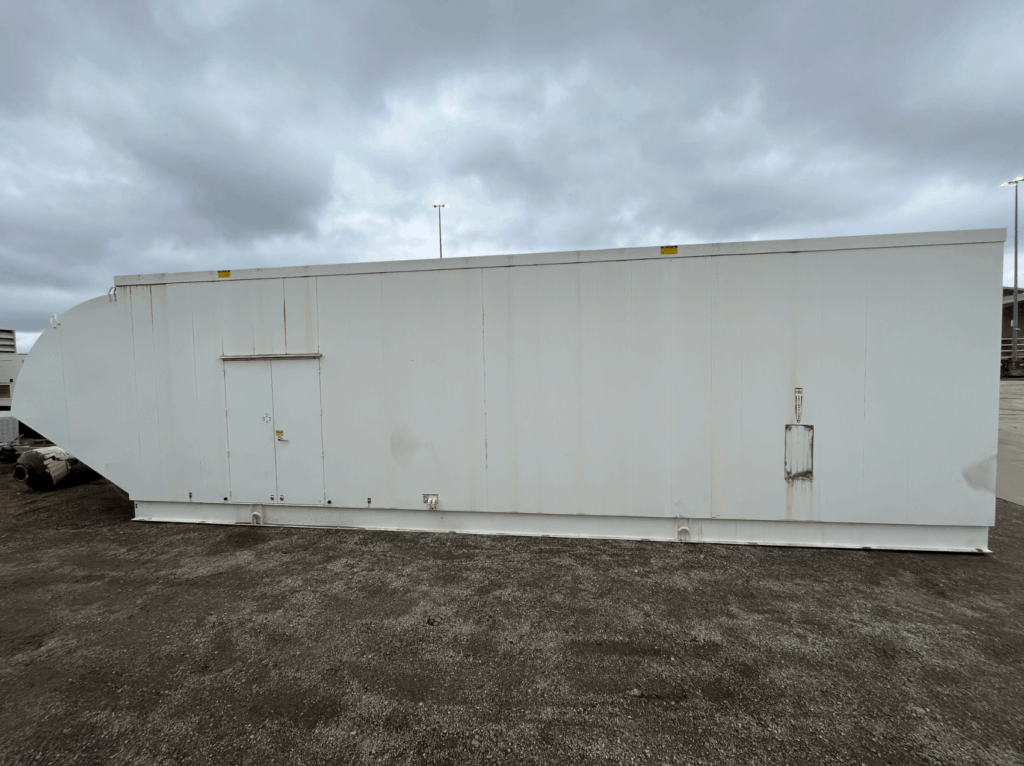
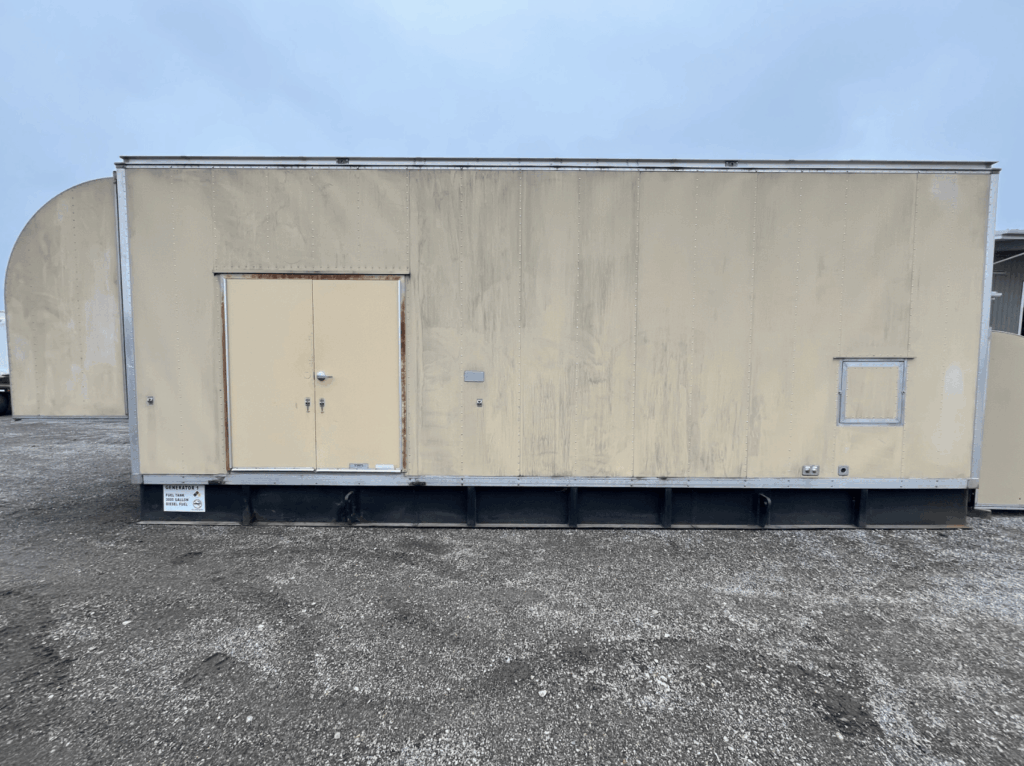
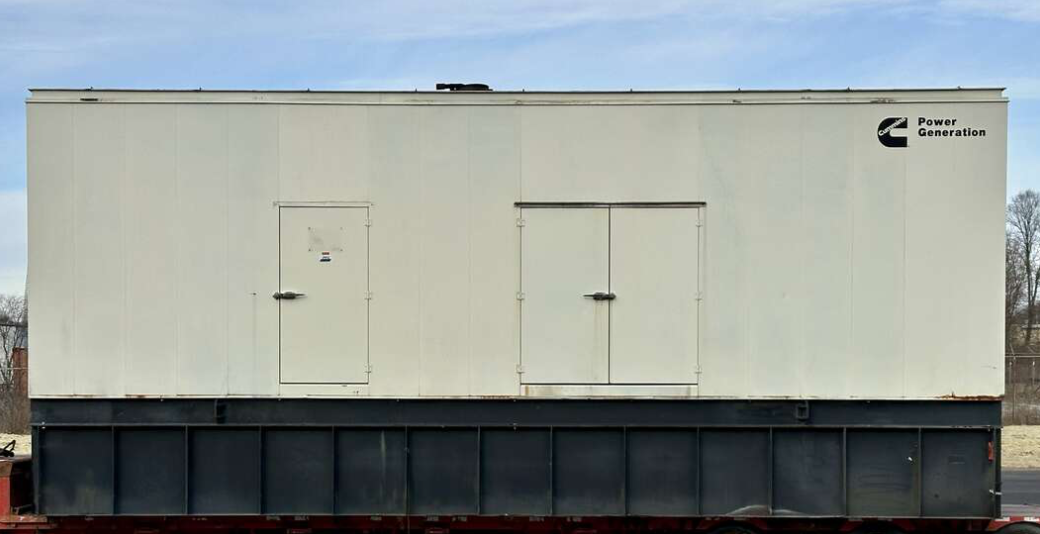
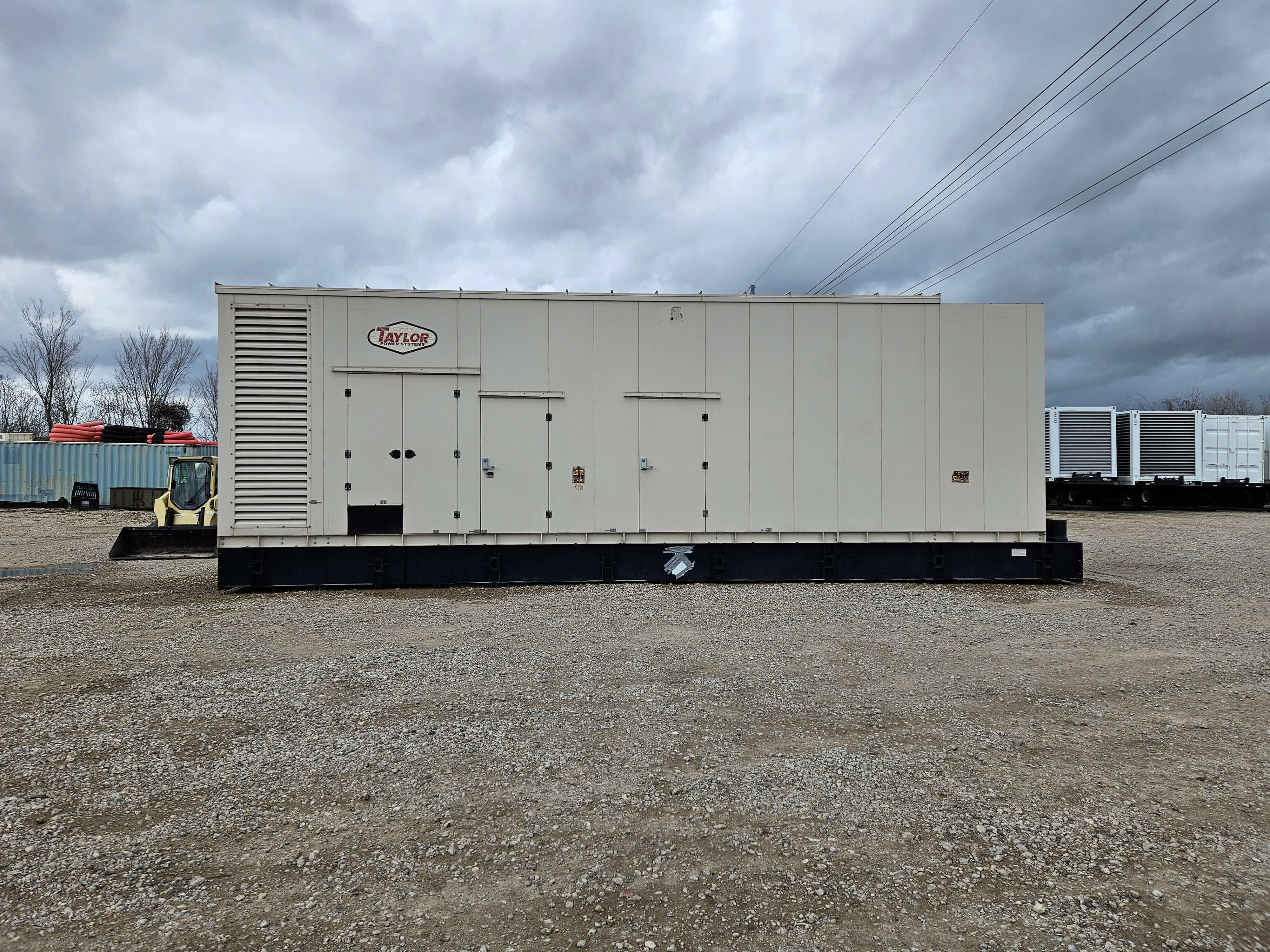
Every unit in this range that we’ve listed has been a used diesel standby set, and almost all of them sit at exactly 1500 kW:
| Model | Output | Condition |
|---|
| Cummins DQGAB | 1500 kW | Used, four units at 228 to 770 hours, 2007 and 2011 builds |
| Caterpillar 3512C | 1500 kW | Used, 219 and 518 hours, 2007 and 2008 builds |
| Detroit Diesel / MTU 1500DSEB | 1500 kW | Used, 573 hours, 2005, Tier 1 |
| Taylor TD1600 | 1600 kW | Used, 187 hours, 2014 |
The pattern is low hours on older frames. Not one of these sets has passed 800 hours, even on 2005 and 2007 builds, because standby units this large run for testing and outages rather than production. The upper two bands had nothing listed when this page was written, so a 1700 kW to 1999 kW requirement is often met new or by stepping to a 1500 kW or 2000 kW unit. Whatever is on the ground today is in the listings above.
Spec Sheets on Both Sides of 2 MW
Published figures for the models we reference most from 1 MW to 2 MW:
| Model | Fuel | Rating | Full-load fuel | Weight, open set |
|---|
| Generac SD1000 | Diesel | 1000 kW standby | 70.9 gal/hr | 18,766 to 20,463 lb |
| Kohler KD1500 | Diesel | 1500 kW standby, 1350 kW prime at 480V | 105.9 gal/hr | 28,443 lb wet |
| Caterpillar G3516C | Natural gas | 1660 ekW continuous | 9,480 Btu/ekW-hr | See sheet |
| Jenbacher J612 | Natural gas | Up to 2,078 kW at 60 Hz | Up to 45.2% electrical efficiency | See sheet |
| mtu 16V4000 DS2000 | Diesel | 2000 kW standby | 143 gal/hr | 47,523 lb |
The jump that matters is between the KD1500 and the DS2000. Going from 1500 kW to 2000 kW adds a third more output but about 19,000 lb of weight, and the open set grows 26.6 inches longer, 15.2 inches wider, and 37.6 inches taller.
Gallons per Hour From 1500 kW to 2000 kW
Our diesel fuel consumption chart has two rows inside this range, plus 2000 kW for comparison:
| Size | 1/4 load | 1/2 load | 3/4 load | Full load |
|---|
| 1500 kW | 32.2 gal/hr | 54.3 gal/hr | 77.8 gal/hr | 106.5 gal/hr |
| 1750 kW | 37.5 gal/hr | 63.2 gal/hr | 90.7 gal/hr | 124.2 gal/hr |
| 2000 kW | 42.8 gal/hr | 72.2 gal/hr | 103.5 gal/hr | 141.9 gal/hr |
Kohler lists the KD1500 at 105.9 gal/hr at full standby load and 58.6 gal/hr at half, close to the chart’s 1500 kW row. At full load a 1500 kW set burns about 2,560 gallons in 24 hours, a 1750 kW set about 2,980, and a 2000 kW set about 3,410.
Kohler’s sub-base tanks for the KD1500 run from 1,549 to 5,808 gallons. At full standby burn that is roughly 15 hours on the smallest tank and 55 hours on the largest, and about 99 hours on the largest tank at half load. Start the tank choice from the runtime your code or continuity plan requires.
Current at 480V, 600V, and 4160V Below 2 MW
Three-phase current at 0.8 power factor, from our generator amperage chart:
| Output | kVA | 480V | 600V | 4160V |
|---|
| 1500 kW | 1,875 kVA | 2,260 A | 1,805 A | 261 A |
| 1750 kW | 2,188 kVA | 2,640 A | 2,106 A | 304 A |
| 2000 kW | 2,500 kVA | 3,015 A | 2,405 A | 348 A |
The chart still lists 208V for 1500 kW, at 5,205 A, but marks it unavailable from 1750 kW up, so 480V is the practical floor in this range. Kohler’s KD1500 sheet gives 2,256 A at 480V and 261 A at 4160V, in line with the chart. Medium voltage cuts current by roughly nine to one, but it brings form-wound alternators, MV switchgear, and cable terminations into the layout from the start. Our power calculators will get you a working load figure before you choose.
Will One Set Under 2 MW Start Your Largest Motor?
Often yes, but the largest motor start decides it, not the running total.
Large compressors, chillers, fire pumps, and process motors pull several times their running current while they come up to speed, and the generator has to absorb that step without dropping voltage far enough to trip other equipment. Build the load list by zone, then flag every large motor, its starting method, and which loads must transfer together. If the steady-state total fits 1500 kW but the starting step does not, the 1700kW – 1899kW band is usually the fix. Send us the motor list and we’ll run it with you.
Crane, Pad, and Truck Planning at 1.5 to 2 MW
A set in this range ships as one heavy piece and is set by crane, and the drawing for the exact configuration should be in hand before the truck or crane is booked.
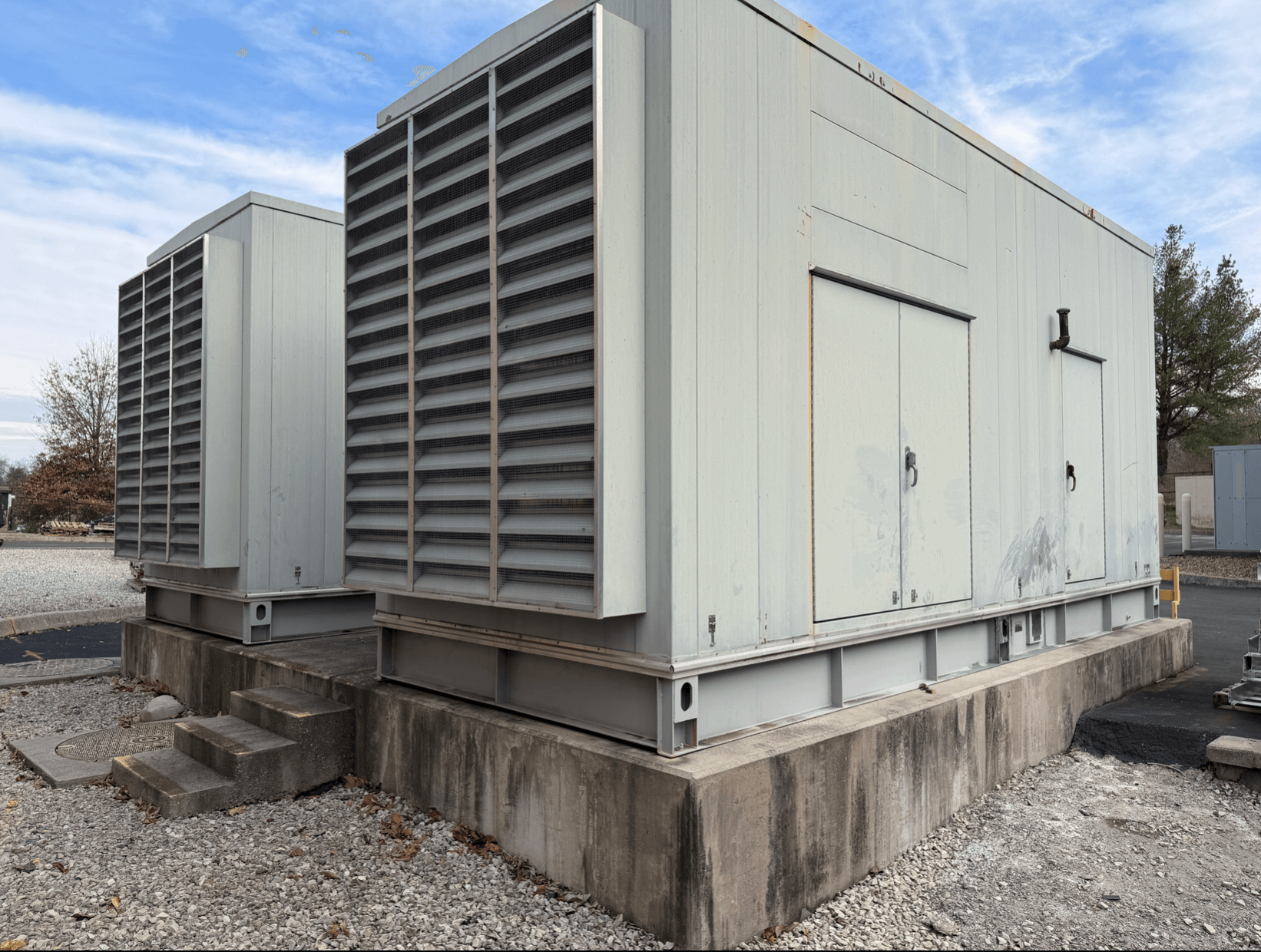
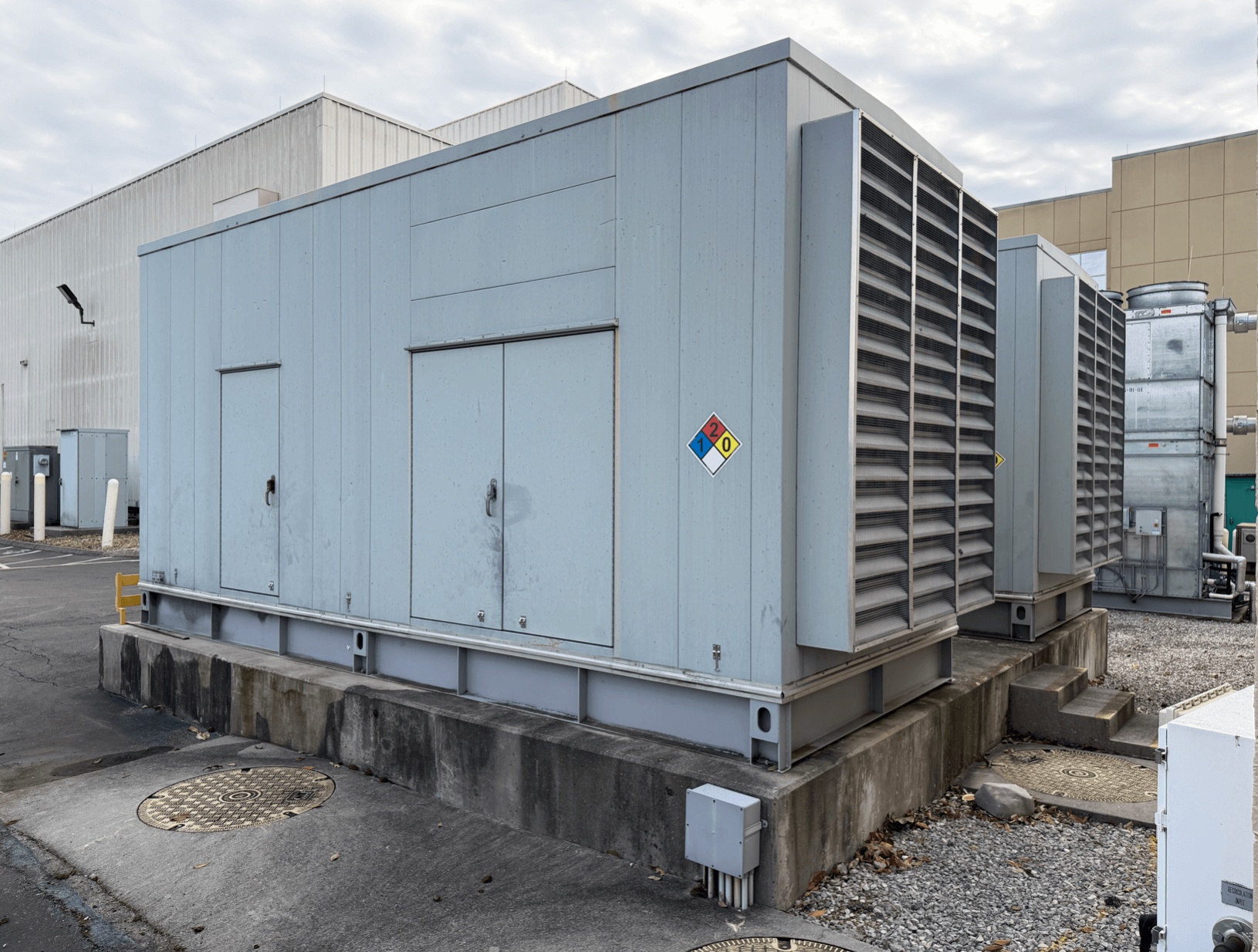
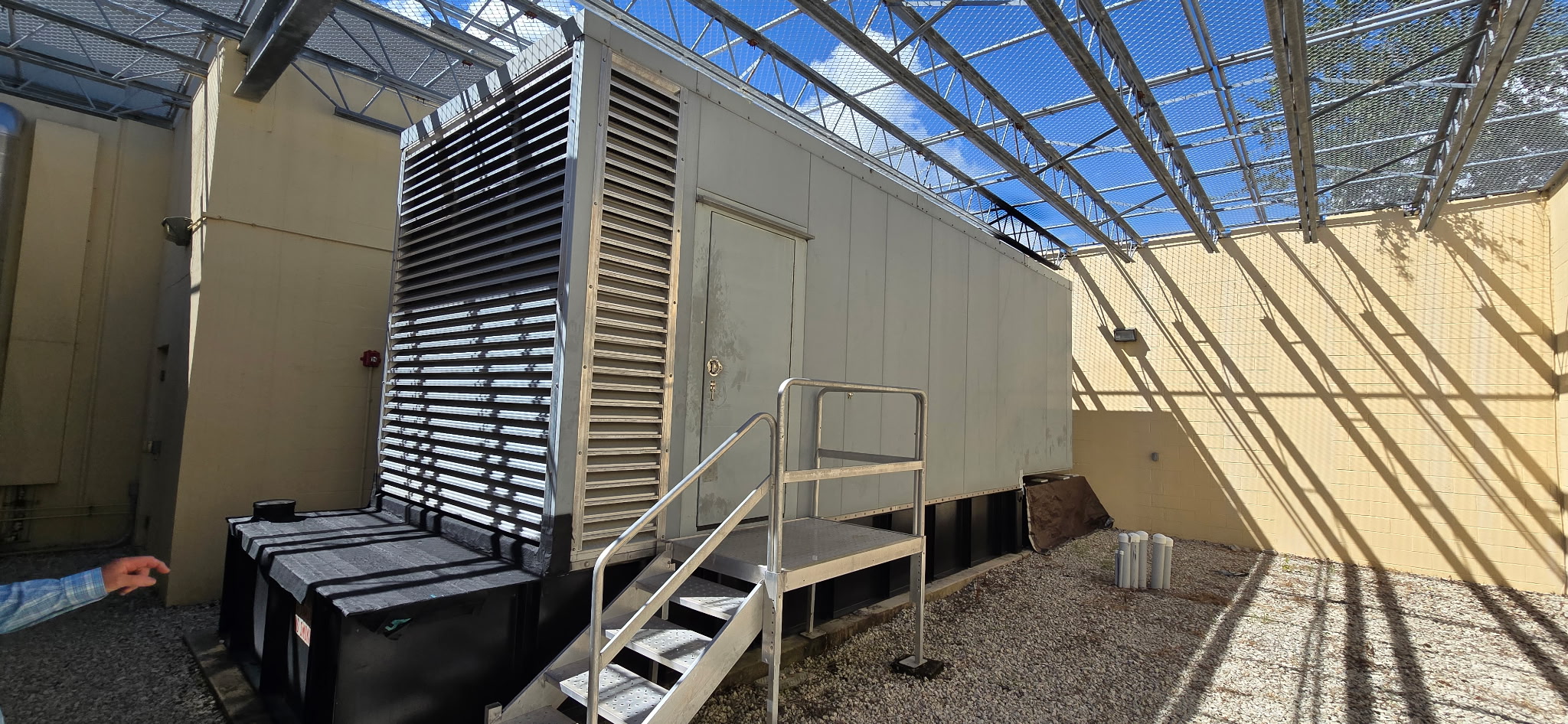
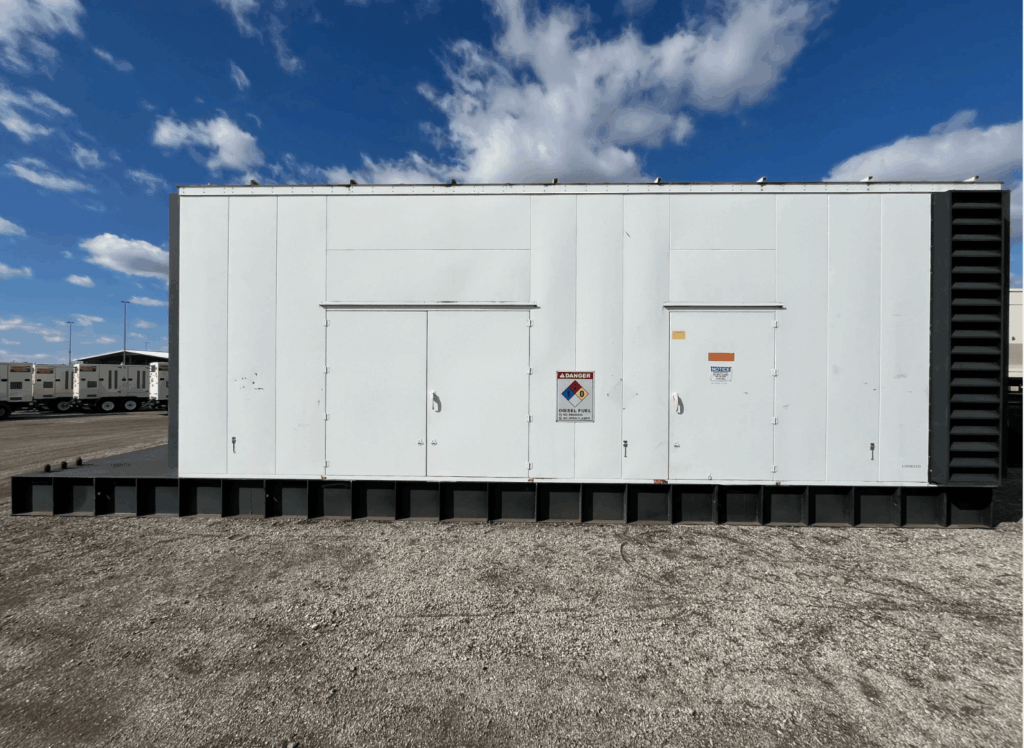
- Footprint and weight: Kohler lists the open KD1500 at up to 228.3 x 84.7 x 97.6 inches and 28,443 lb wet, and states its drawing is for reference only. mtu lists the open DS2000 at 254.9 x 99.9 x 135.2 inches and 47,523 lb.
- Enclosure: The KD1500 comes open or with a Sound Level 1 or Level 2 enclosure and tank package; Level 2 adds up to 2 inches of acoustic insulation, intake baffles, and vertical air discharge.
- Pad and tank: The optional KD1500 sub-base tank is a double-wall UL 142 tank under the skid, so the pad carries the generator and its fuel together. Integral vibration isolation is standard.
- Heat and noise: The KD1500 radiator is rated for 50 °C ambient, and an enclosure with an enclosed silencer lowers that by 5 °C. The open set is rated 97 dB(A) at 7 m. At 2000 kW, mtu’s radiator needs 111,890 SCFM of cooling air.
Shipping terms are in our shipping and returns policy, and we coordinate logistics as part of the sale.
When to Stay Under 2000 kW and When to Step Up
Stay under 2000 kW when one machine covers the load and the starting step and your spec does not require redundancy. Step up, or parallel, when it does.
Staying below 2 MW keeps the installation simpler: one set of controls, one fuel system, and no paralleling switchgear. A 1500 kW set also carries 755 fewer amps at 480V than a 2000 kW set and burns about 35 gal/hr less at full load. Above 2000 kW, the largest data centers more often run several units in parallel with N+1 or 2N redundancy. If N+1 is written into the spec, a single 1900 kW set does not satisfy it no matter how much margin it has, and the conversation moves to a pair of smaller frames or the 2000kW – 3000kW range. Altitude and sustained heat also cut available output, so check derating on a hot or high site.
Diesel or Natural Gas Just Below 2 MW?
Diesel for emergency standby, natural gas for long-hour continuous duty where a gas line is already in place.
Diesel picks up load fastest and keeps its fuel on site, and every unit we’ve listed here has been diesel. Natural gas engines do reach this size: Caterpillar rates the G3516C at 1660 ekW continuous with a full-load heat rate of 9,480 Btu/ekW-hr, which works out to about 15.7 MMBtu/hr, and Jenbacher lists the J612 at up to 2,078 kW. Neither sheet gives a readable supply pressure, so gas pressure and flow must come from the data sheet for the exact unit. Diesel units are under industrial diesel generators, gas units under industrial natural gas generators, and permanent backup sets under industrial standby generators.
Standby or Prime Rating, New or Used Frame
Compare units on the rating that matches how many hours the set will run, then decide new or used by spec requirements.
Kohler rates the KD1500 at 1500 kW standby but 1350 kW prime at 480V and 1340 kW at 4160V, so a set expected to carry load for long stretches is really a 1350 kW machine. mtu approves the DS2000’s standby rating for an average output of up to 85% over 24 hours with no overload capability. The KD1500 is Tier 2 certified for stationary emergency use; older units, like the 2005 Tier 1 set we’ve listed, need a permit check before anything other than emergency service.
Used works well here because frames come out of facilities with a few hundred hours on them. New is the answer when a spec requires a factory warranty, a current tier, or controls that match existing switchgear; mtu’s basic limited warranty on the DS2000 is two years or 3,000 hours. Browse used industrial generators and new industrial generators side by side. For turnarounds or bridging an overhaul, our rental side, Stag Power Rentals, handles short-term work.
Ranges Just Below and Above 1500 kW to 1999 kW
A set run lightly loaded for long stretches develops wet stacking, so oversizing has a maintenance cost as well as a purchase cost.
| Range | kVA | What it usually powers |
|---|
| 1000kW – 1499kW | 1,250 to 1,874 kVA | Mid-size facilities, regional data centers, large institutional |
| 1500kW – 1999kW (this range) | 1,875 to 2,499 kVA | Hospital campuses, heavy manufacturing, treatment plants, single-unit facility backup |
| 2000kW – 3000kW | 2,500 to 3,750 kVA | Data centers, refineries, paralleled plants carrying continuous load |
If the load study and the largest motor start both land below 1500 kW, drop a band and you’ll get a better load factor out of the machine. You can also browse every output we carry on shop by kW.
Inspected, Load Tested, and Backed After the Sale
Every generator we sell goes through a 22-point inspection and load bank testing before it ships, which matters on a used standby frame that has spent years running only for tests. We’ve been buying and selling industrial generators for over a decade. Every purchase carries our 30-day IronClad warranty, and our service team covers scheduled testing, industrial generator repair, and emergency service after commissioning.
Ready to Buy a 1500kW – 1999kW Generator?
Send us your load list with the largest motors flagged, your voltage, and the site access, and we’ll tell you whether one set under 2 MW does the job, then show you what’s on the ground in new and used. Look through our used industrial generators and new industrial generators, or contact us and we’ll run the load study with you.
1500kW – 1999kW Questions: Motor Starting, Rigging, and the 2 MW Line
How many amps does a generator in this range produce at 480V?
About 2,260 A at 1500 kW and 2,640 A at 1750 kW, at 0.8 power factor, per our amperage chart. At 4160V the same sets carry 261 A and 304 A.
How much diesel does a 1500 kW to 1999 kW generator burn in a day?
About 2,560 gallons in 24 hours at full load for 1500 kW and about 2,980 for 1750 kW, based on our chart. At half load a 1500 kW set burns closer to 1,300 gallons a day.
Can one generator under 2 MW carry a whole facility?
Often, as long as it can start the largest motor and your spec doesn’t require redundancy. A single unit is a single point of failure, so N+1 requirements mean two machines regardless of capacity.
Why move from 1500 kW to the 1700 kW or 1900 kW bands?
Usually for motor starting or growth margin rather than running load. If the starting step of your largest motor or block load doesn’t fit 1500 kW, the next band up is the usual fix.
How heavy is a generator at this size?
Kohler lists the open KD1500 at 28,443 lb wet. An open 2000 kW mtu DS2000 is about 47,500 lb, and enclosures and sub-base tanks add to both.
Are natural gas generators available in this range?
Yes. Caterpillar’s G3516C is rated 1660 ekW continuous and Jenbacher’s J612 reaches 2,078 kW. Diesel remains the norm for emergency standby, and every unit we’ve listed here has been diesel.
Is used equipment a good buy at this size?
Often. The used sets we’ve listed here have run under 800 hours, even on 2005 to 2011 builds. Every unit is inspected and load bank tested and carries our 30-day warranty.