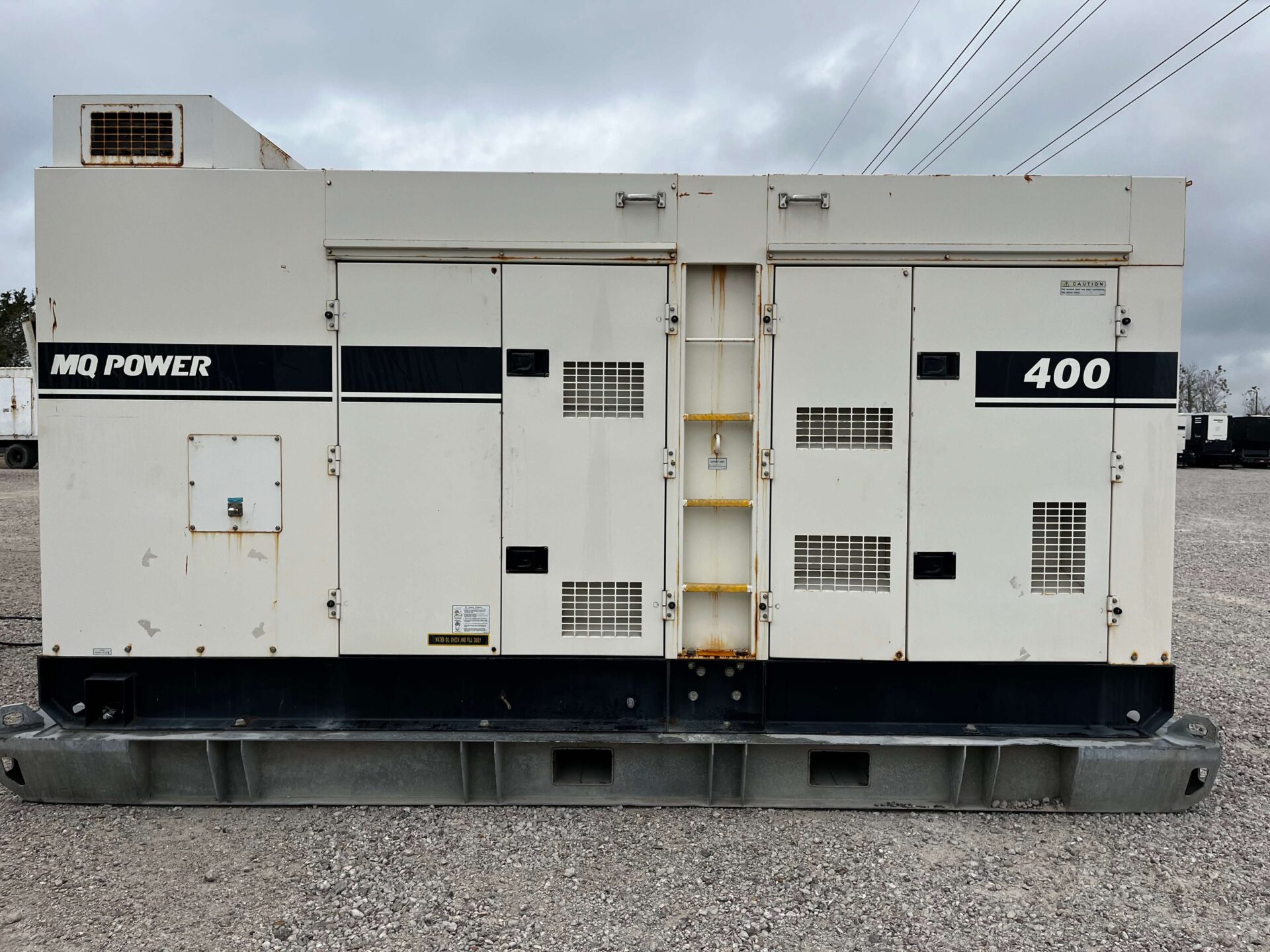
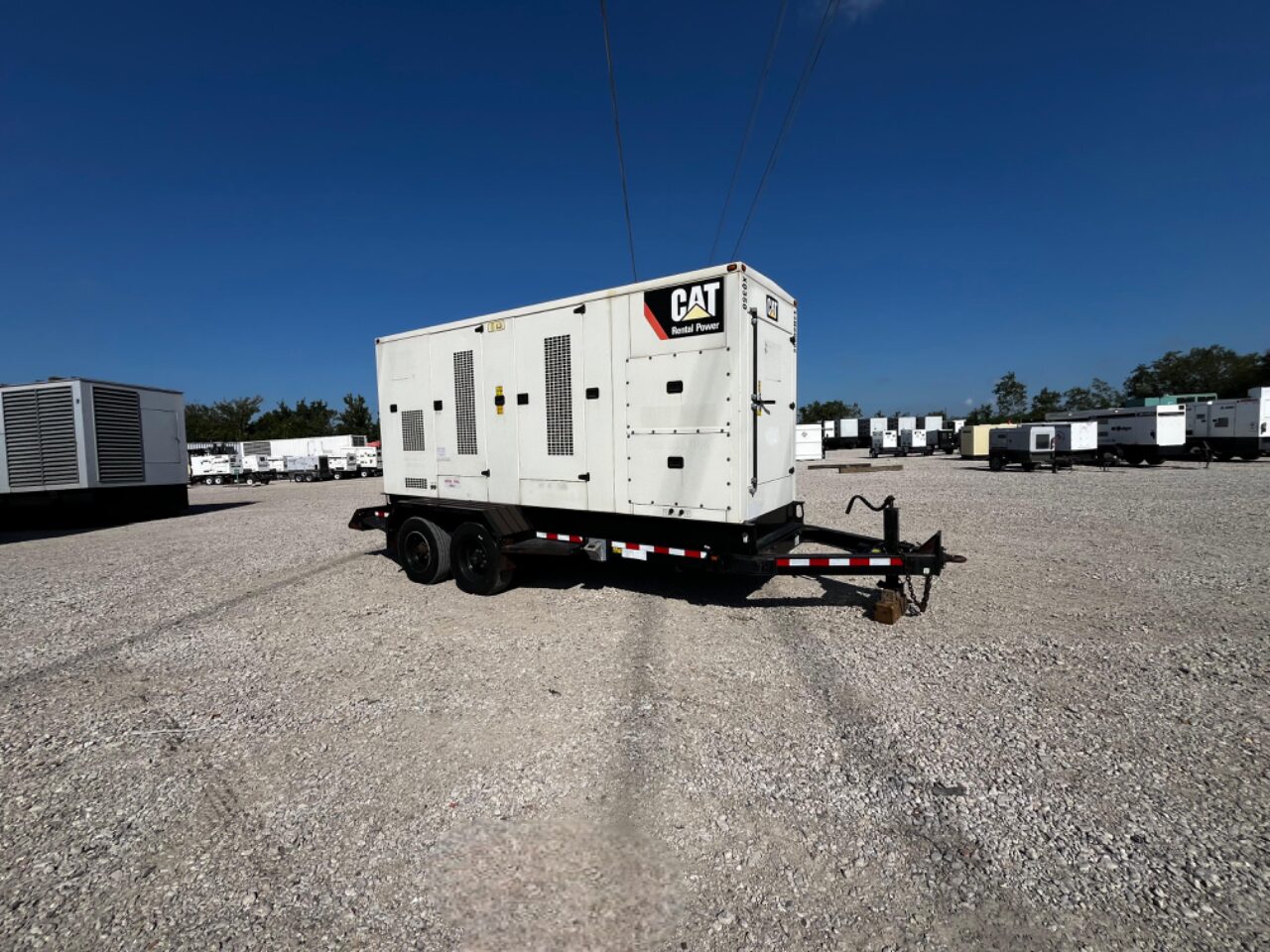
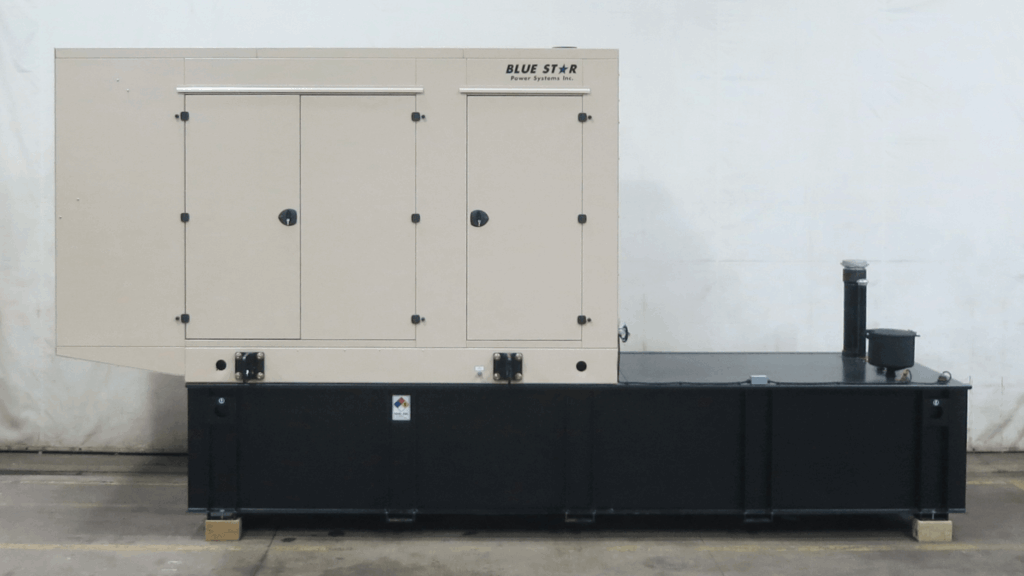
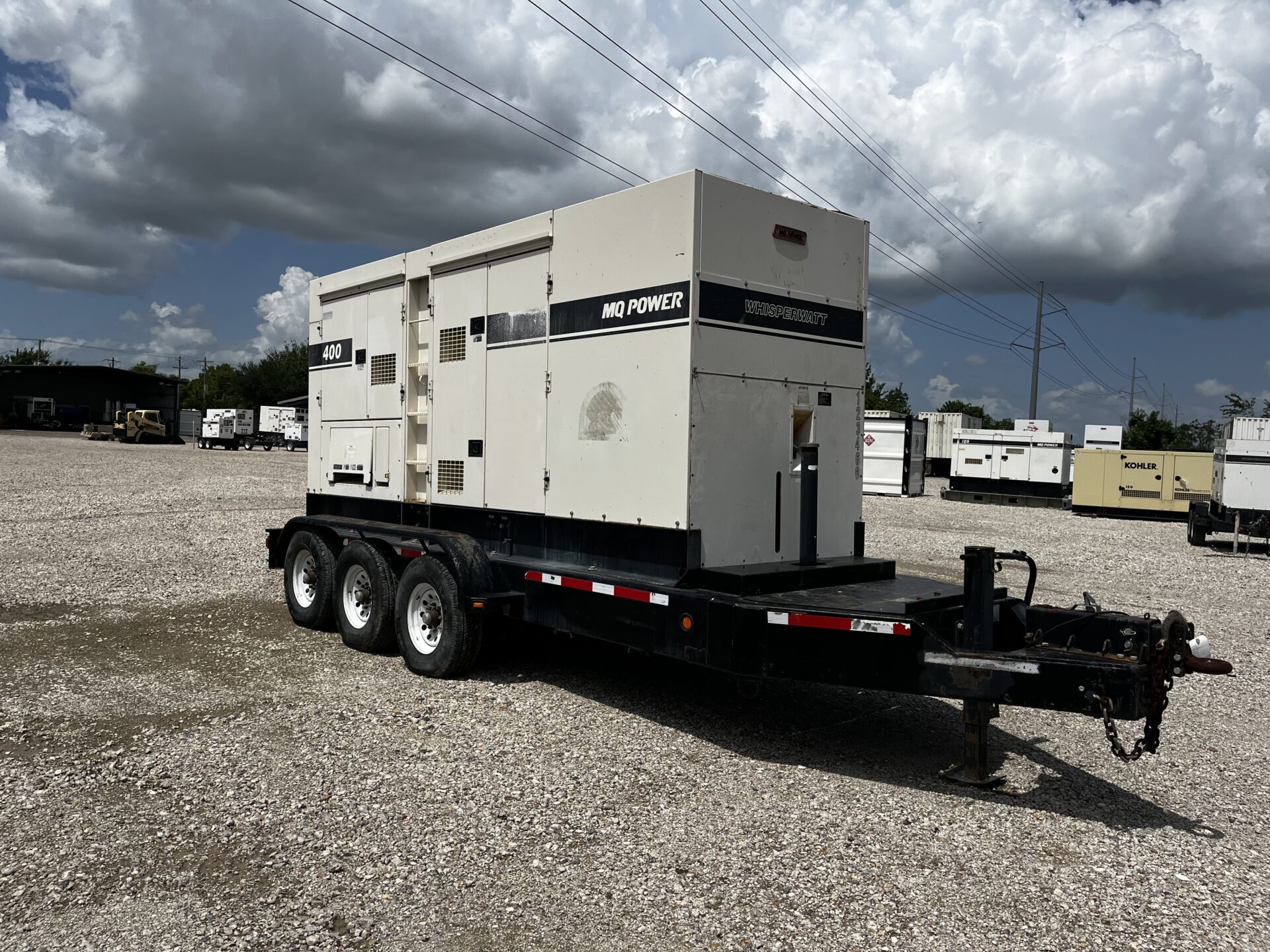
Industries That Use 100 kW to 499 kW Generators
Here a generator stops covering one system and starts covering an operation, whether that is a building through an outage or a jobsite from a trailer.
- Hospitals and clinics: 100 kW is a common minimum for small clinics covering critical circuits; mid-size medical buildings often land at 150 kW or above.
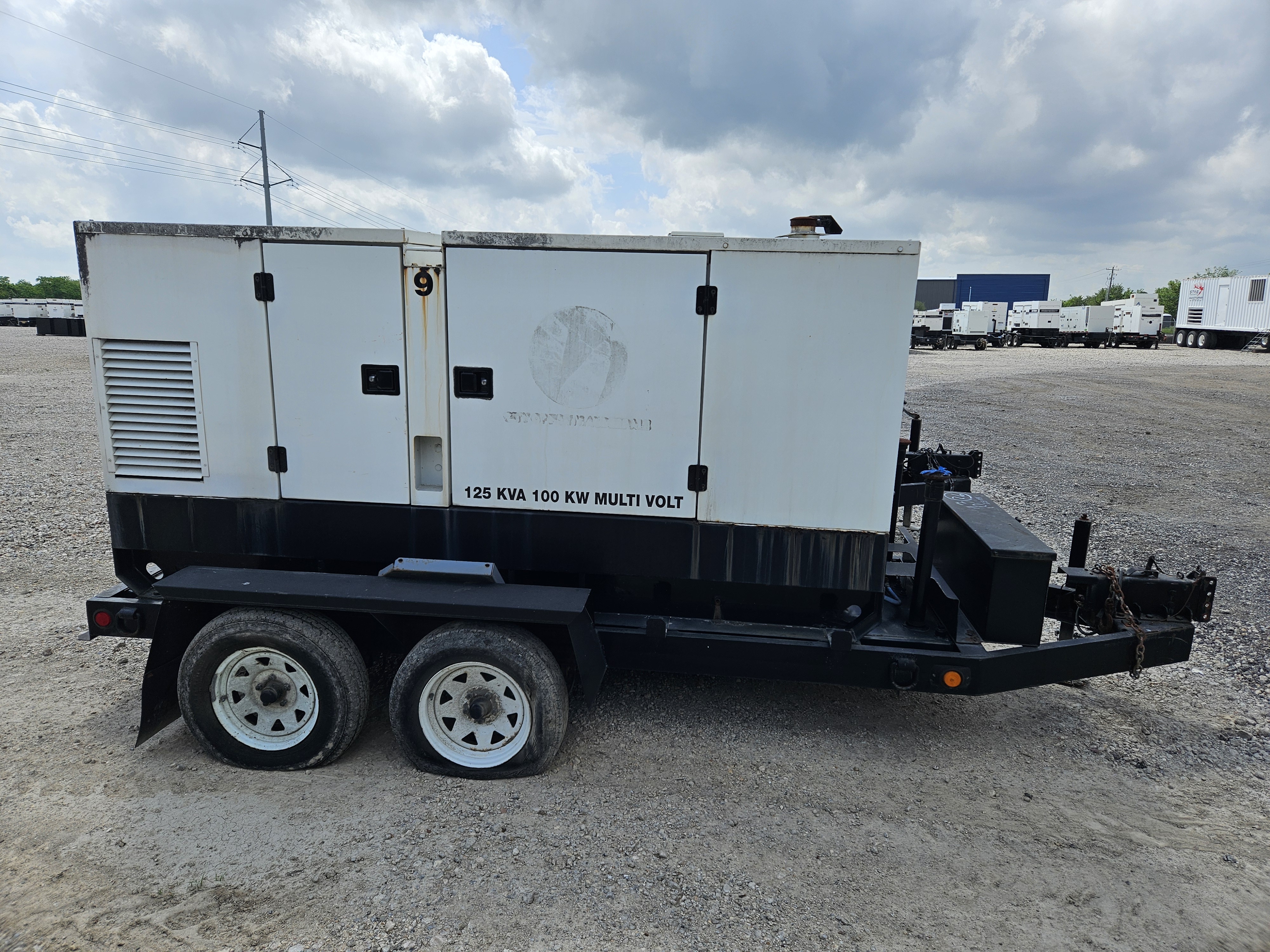
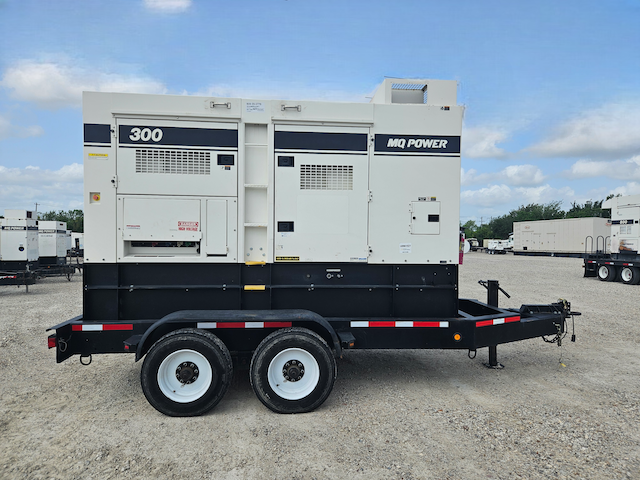
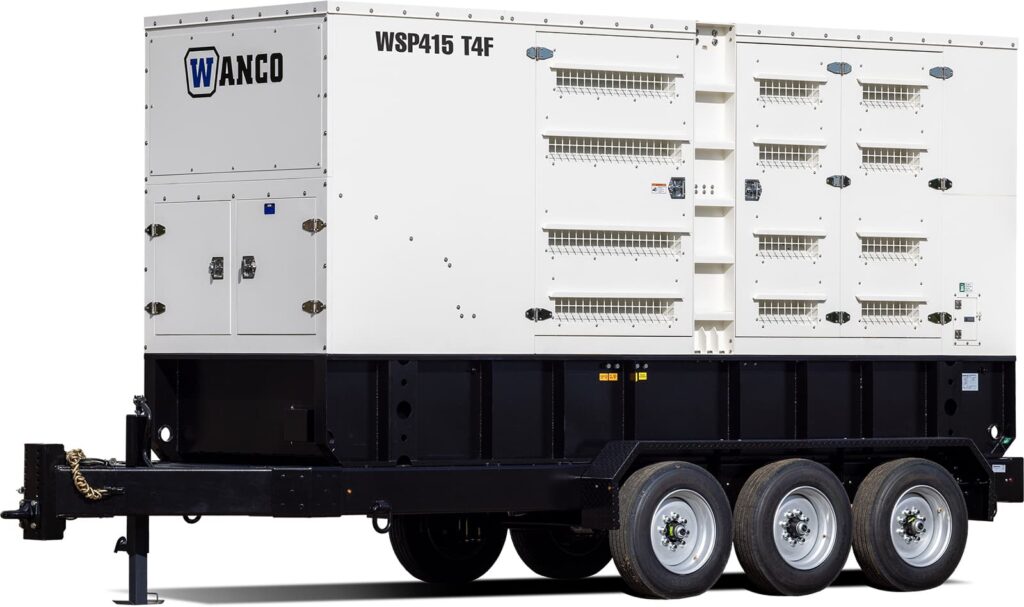
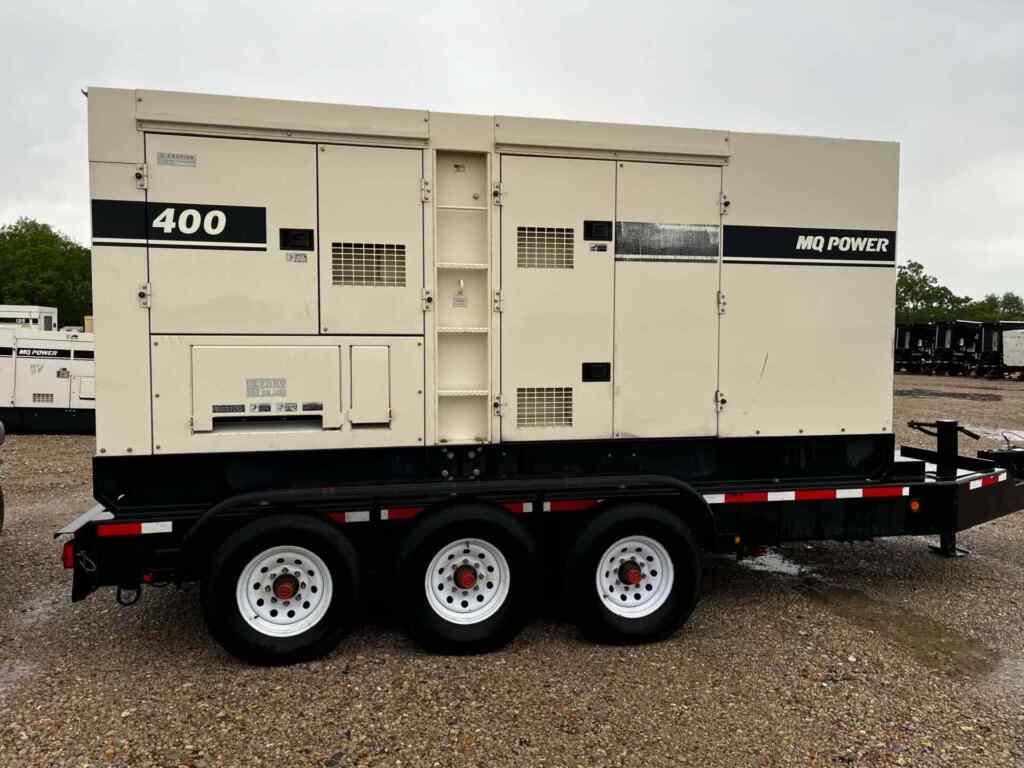
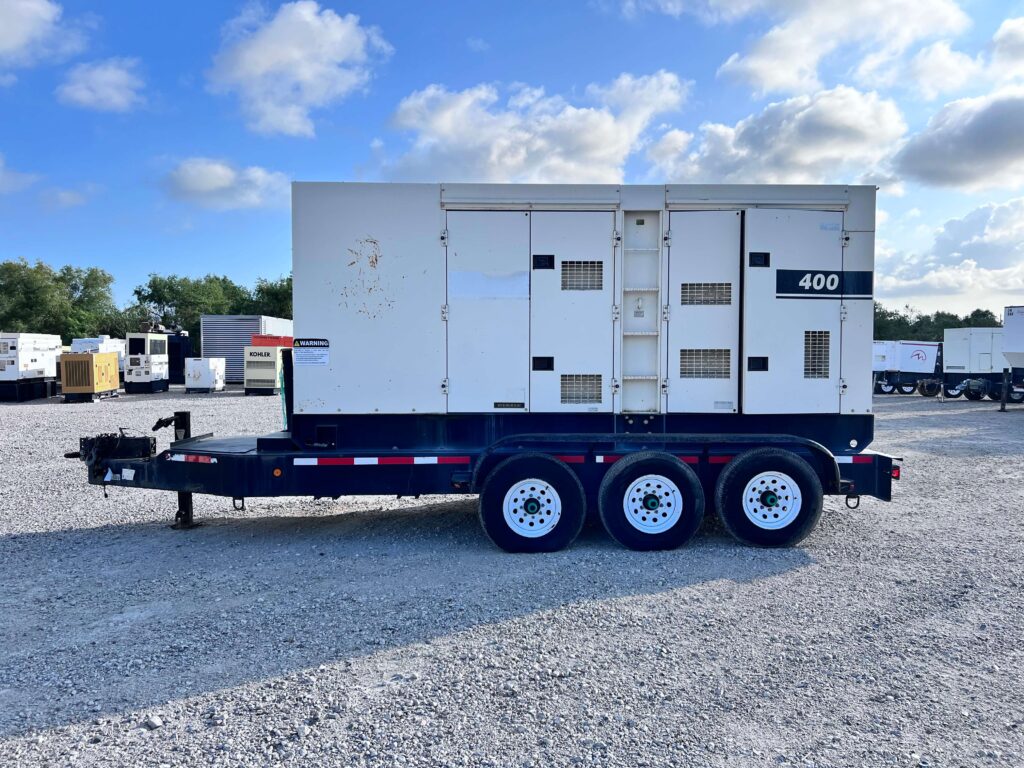
- Construction: Towables running several major pieces of equipment at once, then moving to the next job.
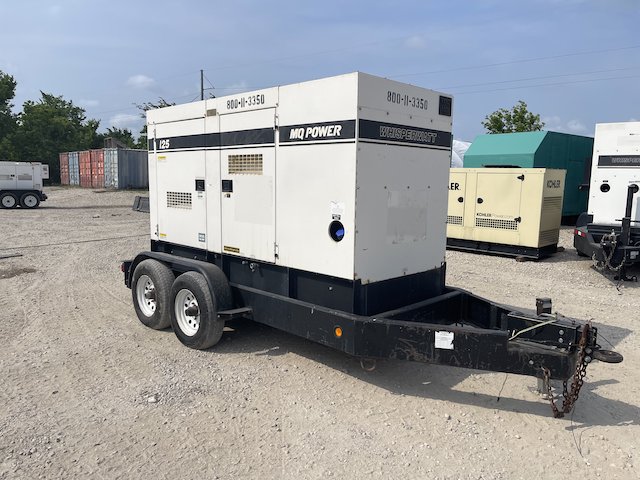
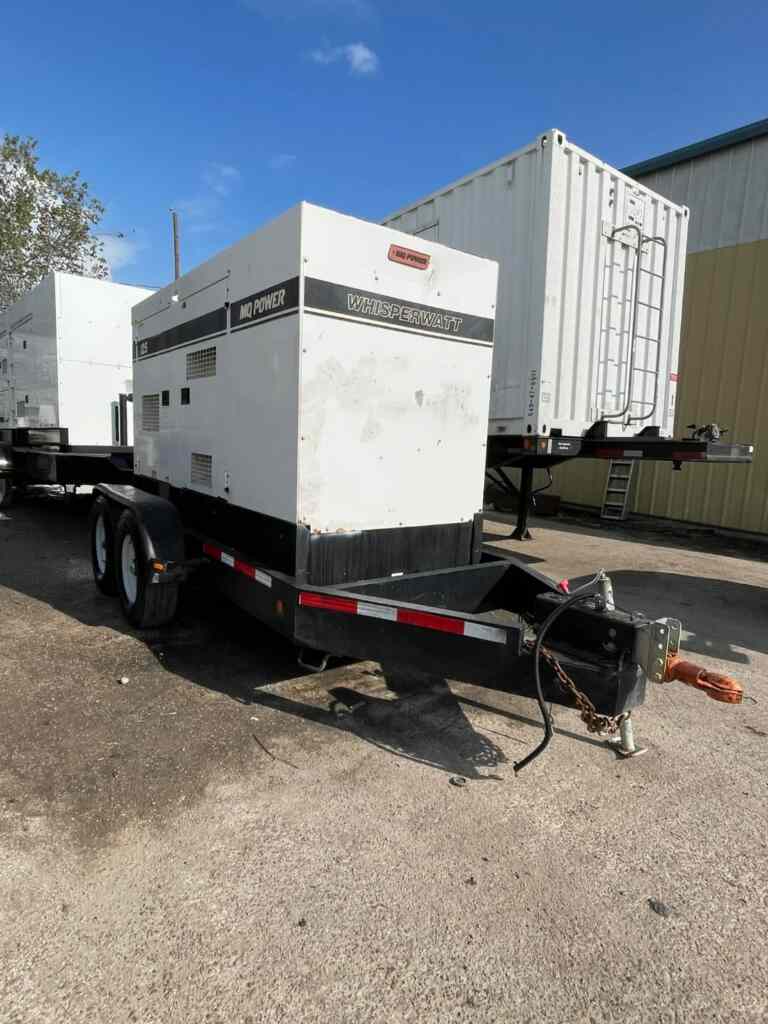
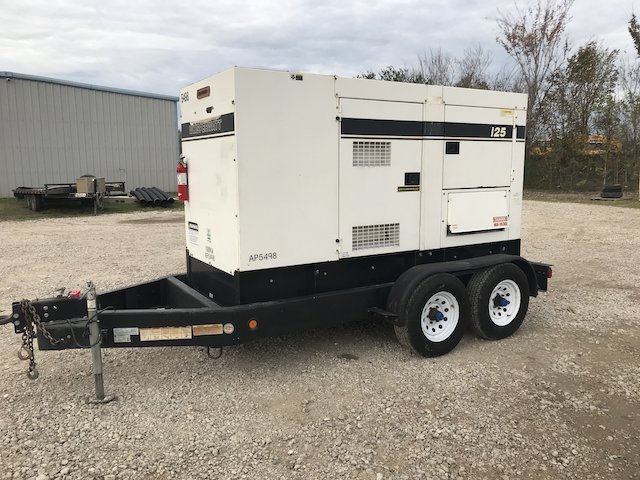
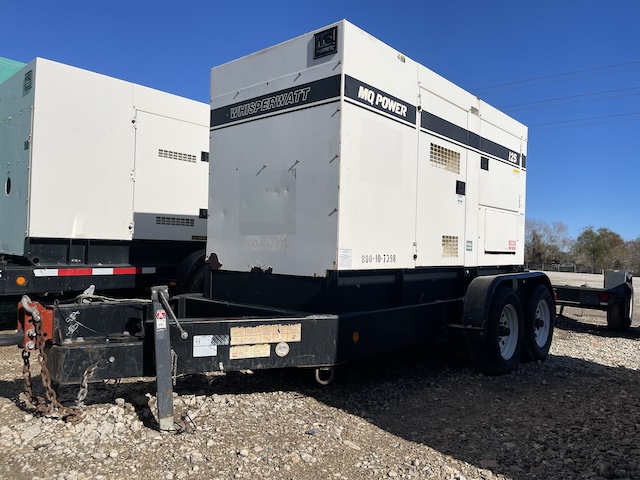
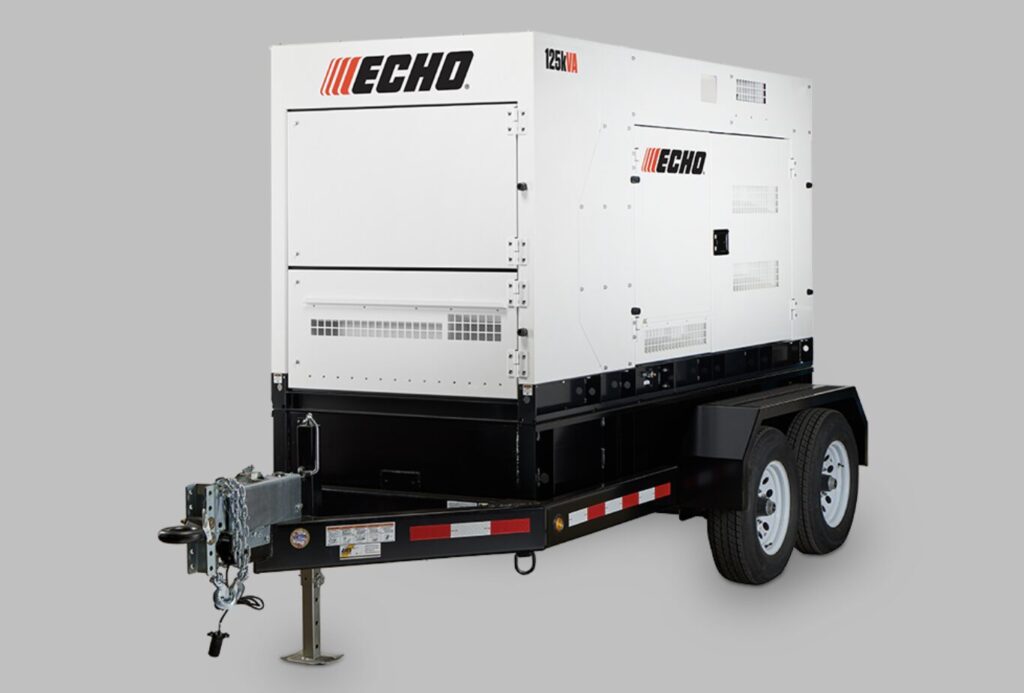
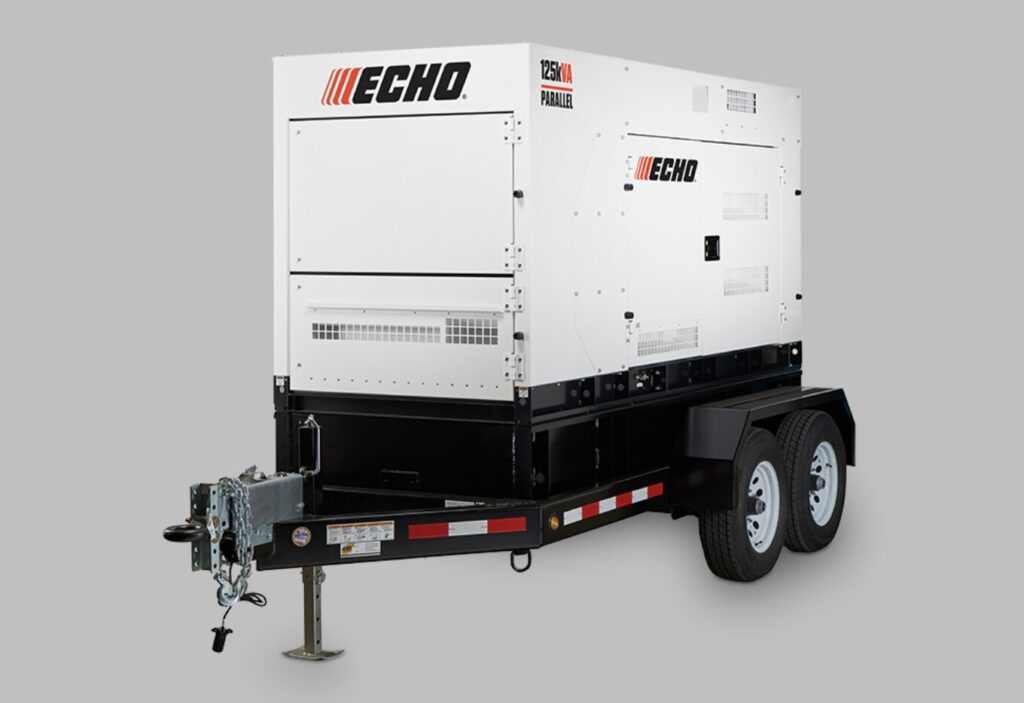
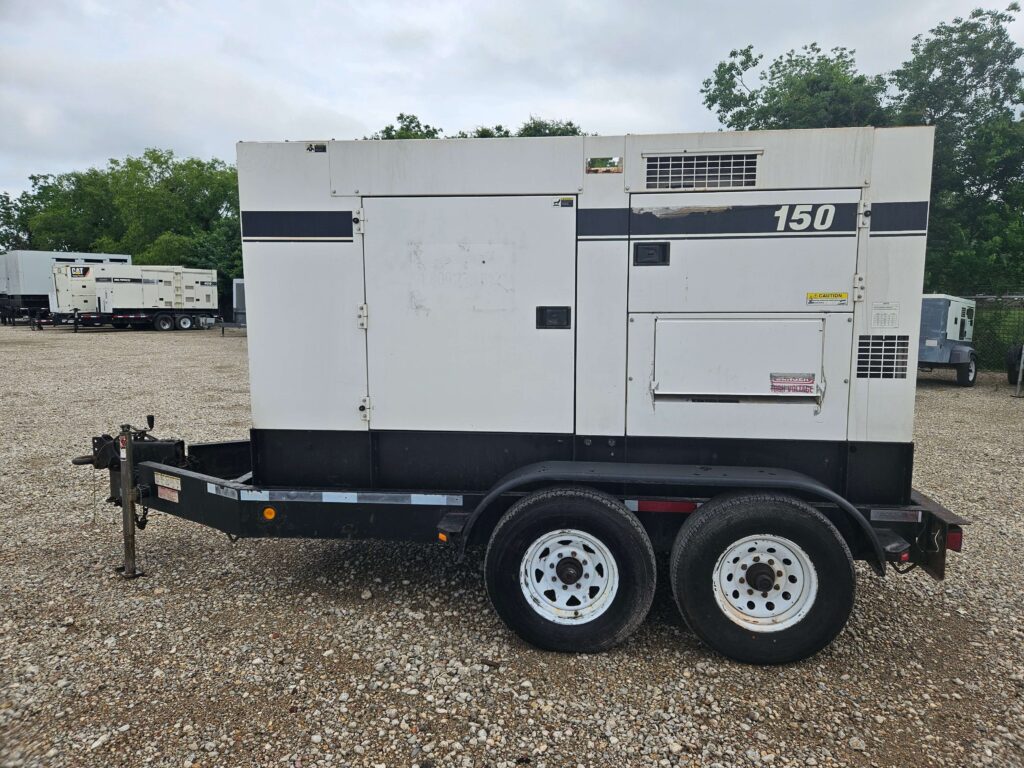
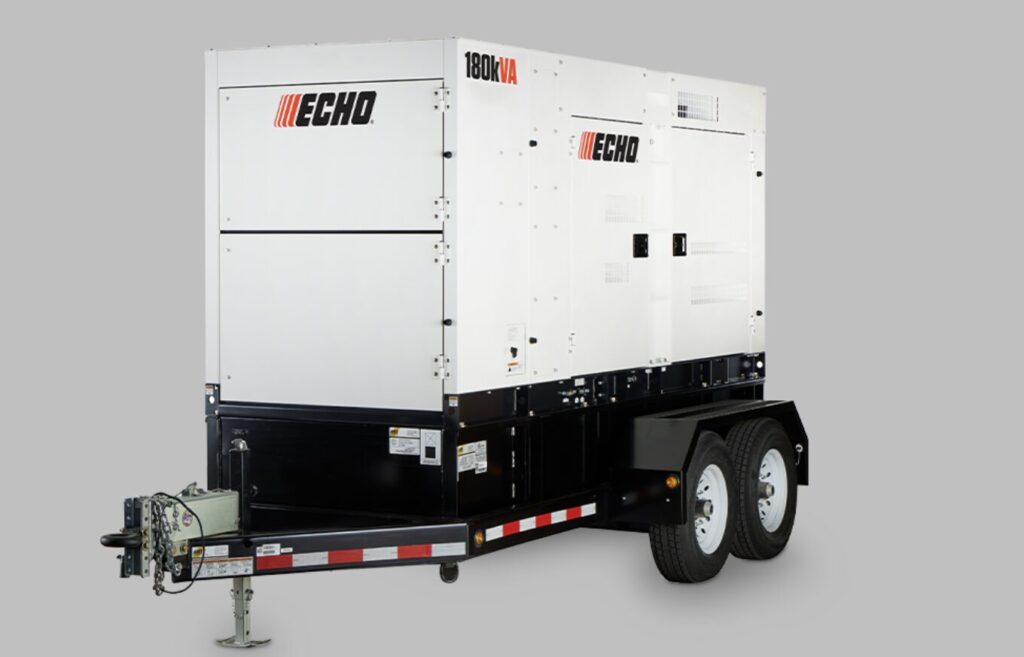
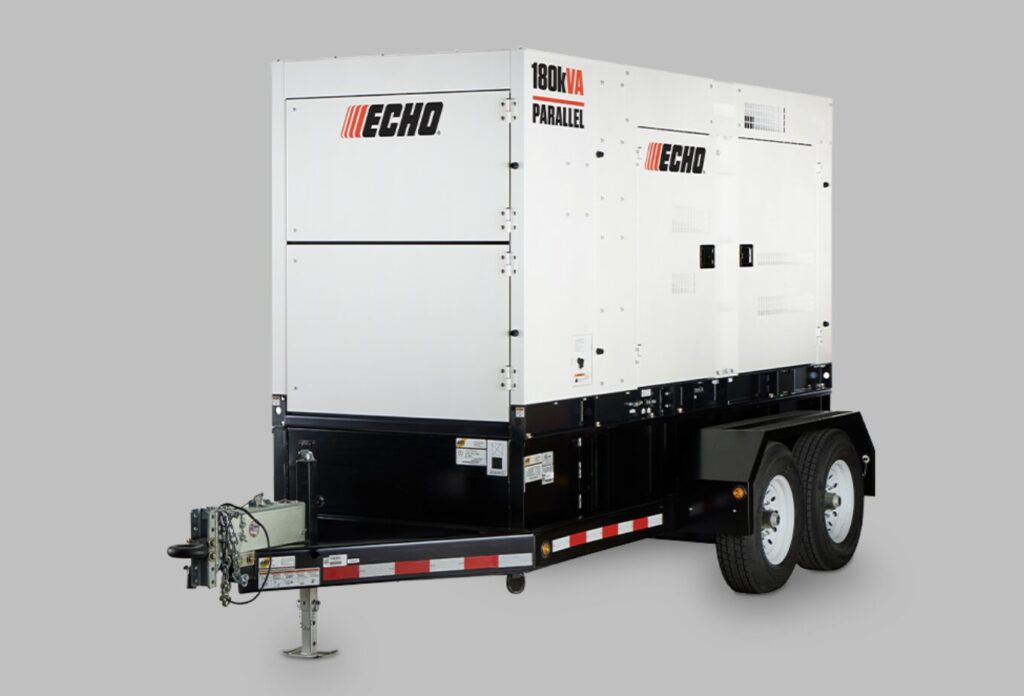
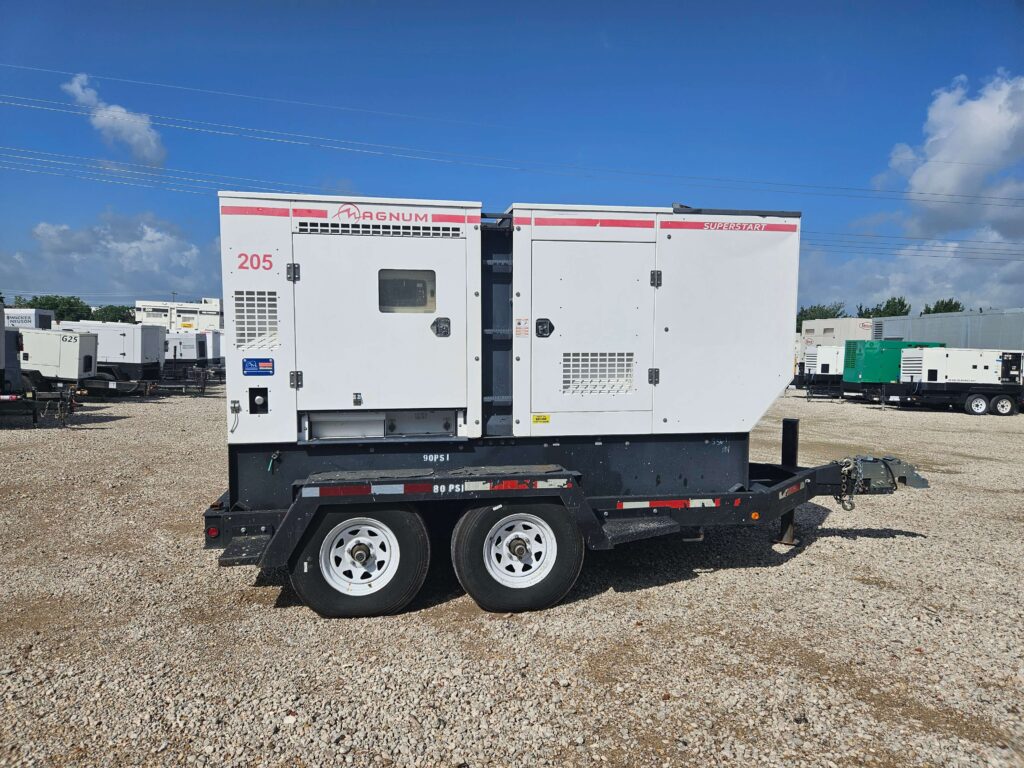
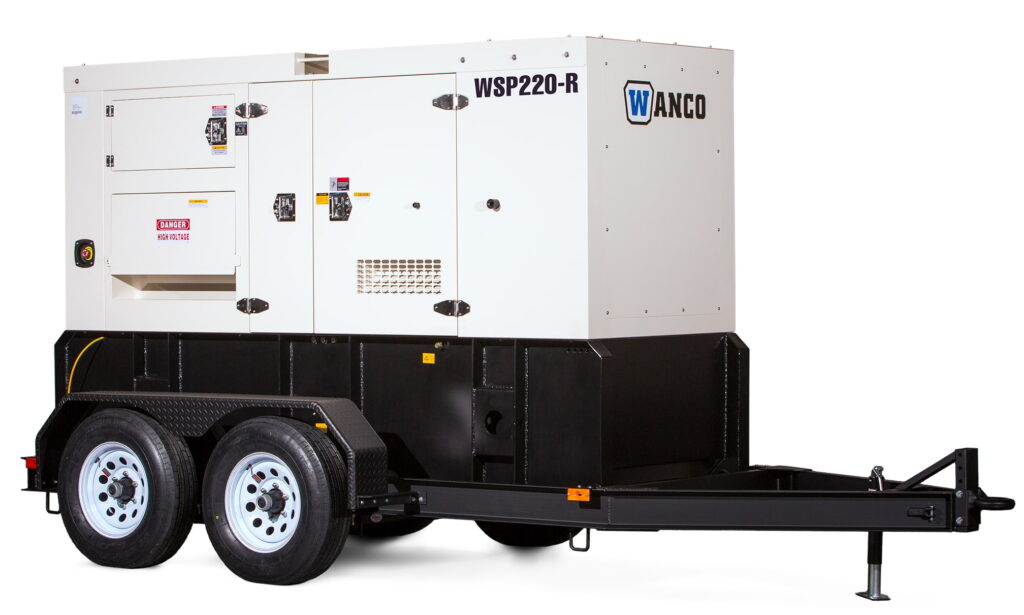
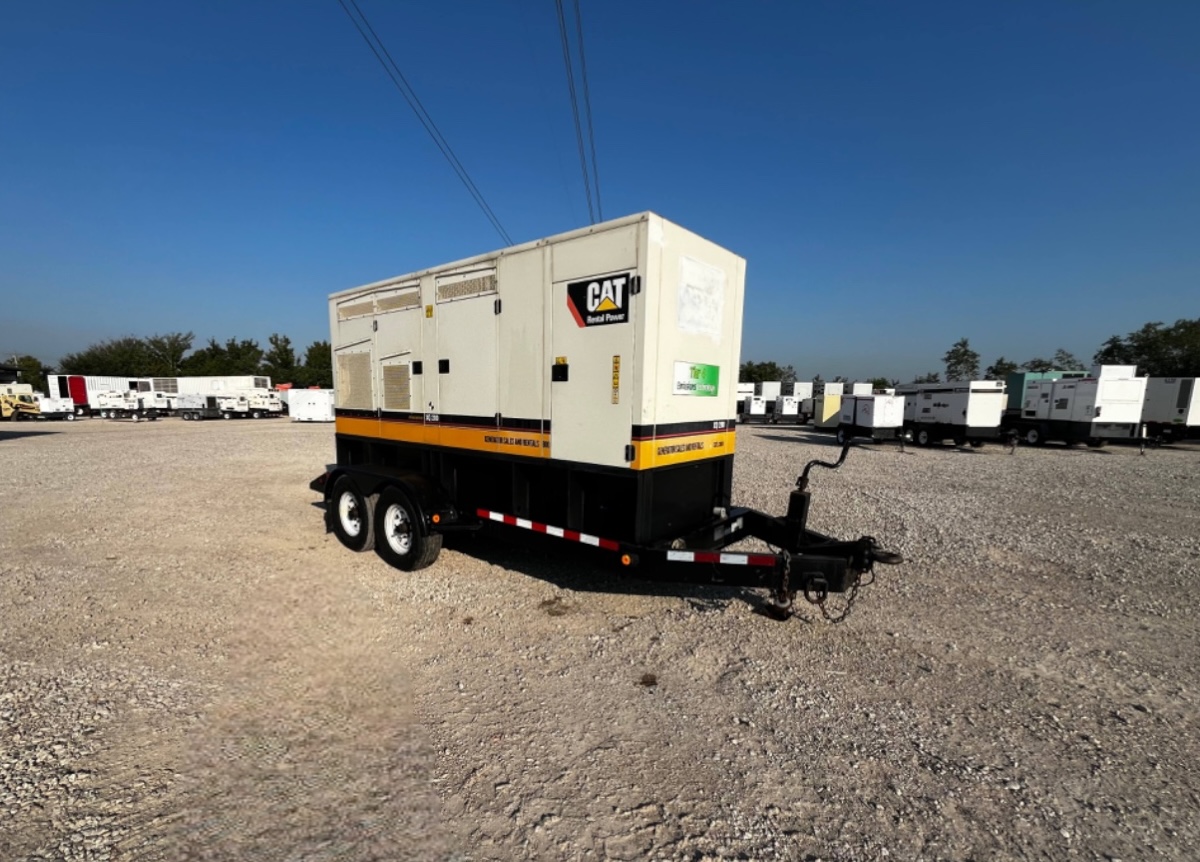
- Rental fleets: Trailer units from 110 kW to 375 kW for short-term and project work.
- Agriculture: Grain elevators and irrigation districts, where pumps and augers stack up at harvest. Many land near 300 kW.
- Hotels: 200 kW covers many mid-size properties; larger hotels and convention space push to 250 kW and up.
- Data rooms: Server rooms in commercial buildings, on an automatic transfer switch.
- Water treatment and airports: Infrastructure where downtime is a compliance issue, often specified around 400 kW.
- Manufacturing: Groups of motors, pumps, and fans, where an outage stops output.
For sector-by-sector sizing, see the industries served section.
100 kW to 499 kW Generators at a Glance
- Apparent power: 125 to 624 kVA at 0.8 power factor.
- Current: 150 A at 100 kW to 602 A at 400 kW at 480V. At 208V the same span runs 347 to 1,390 A.
- Diesel burn at full load: 7.4 gal/hr at 100 kW, 10.9 at 150 kW, and 28.6 at 400 kW on our chart.
- Towable weight: 8,424 lb wet for a Multiquip DCA125SSIU4F on its trailer to 22,130 lb with a full tank for a Cat XQ425.
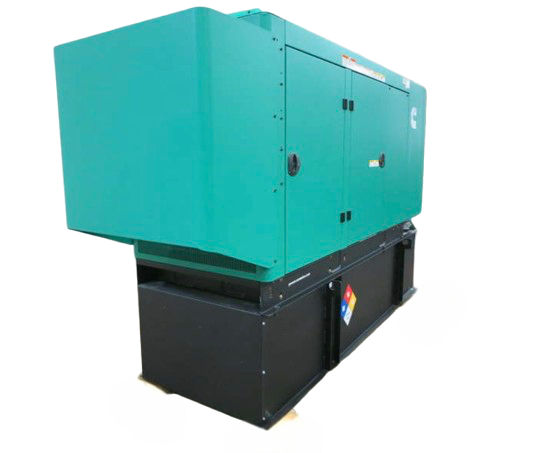
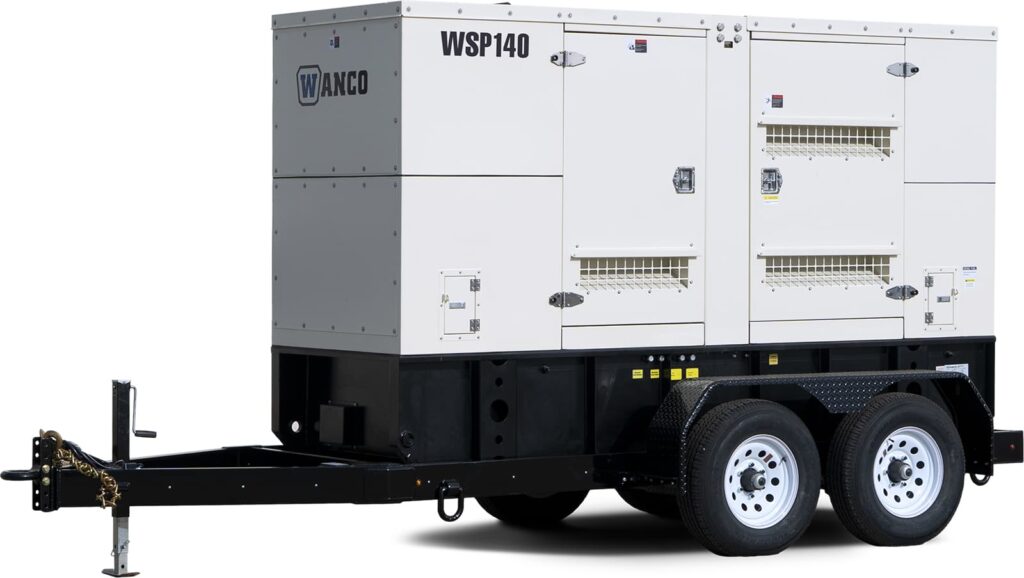
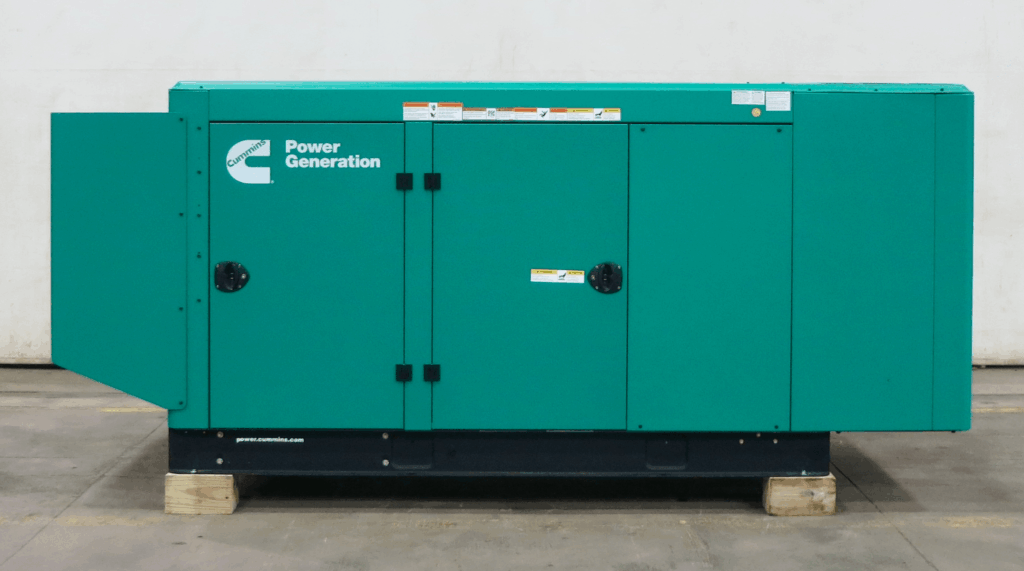
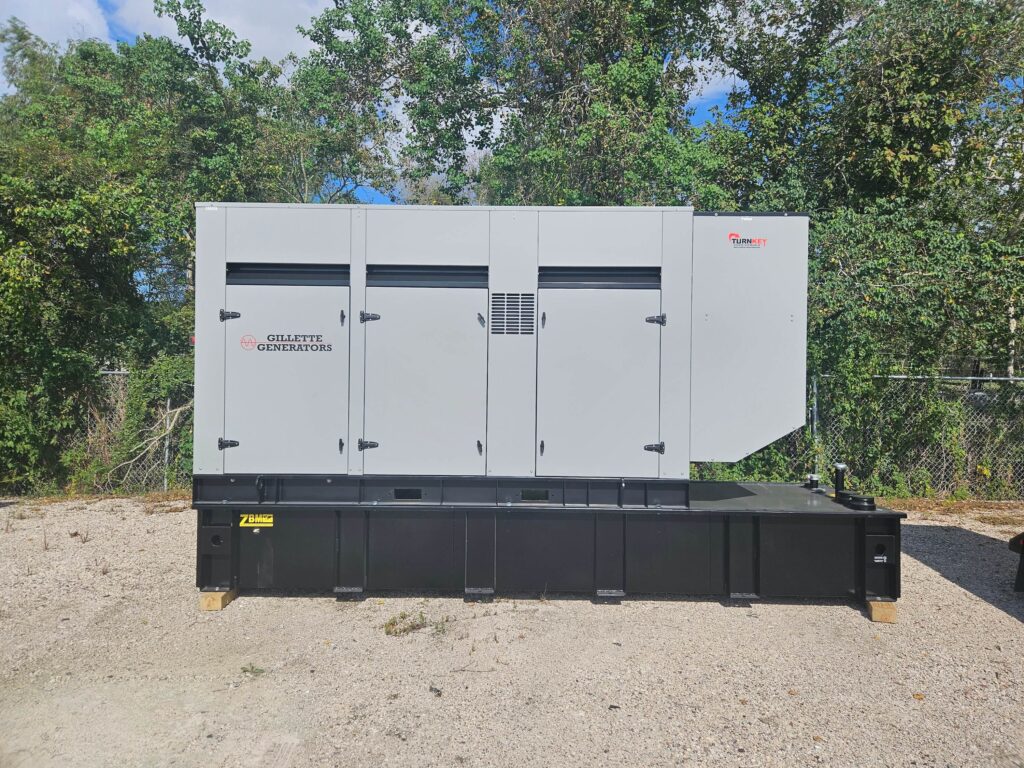
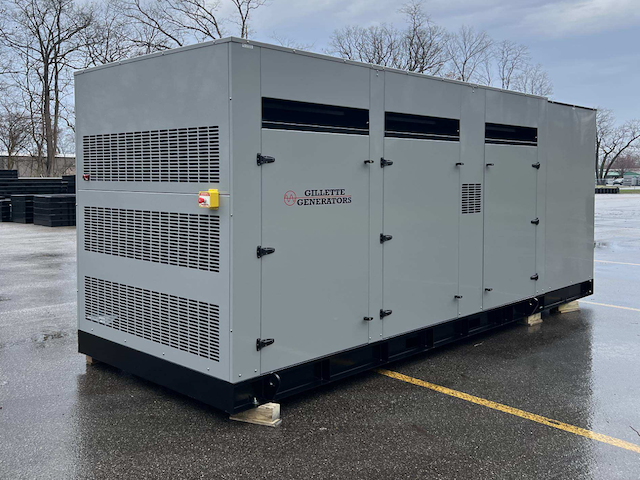
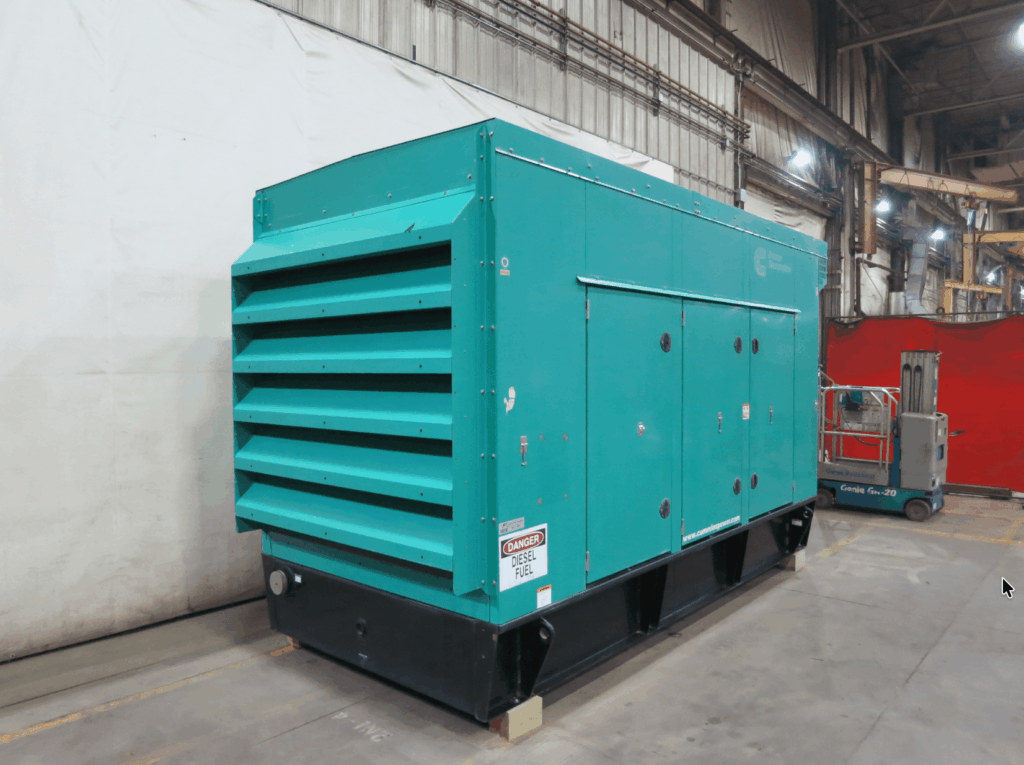
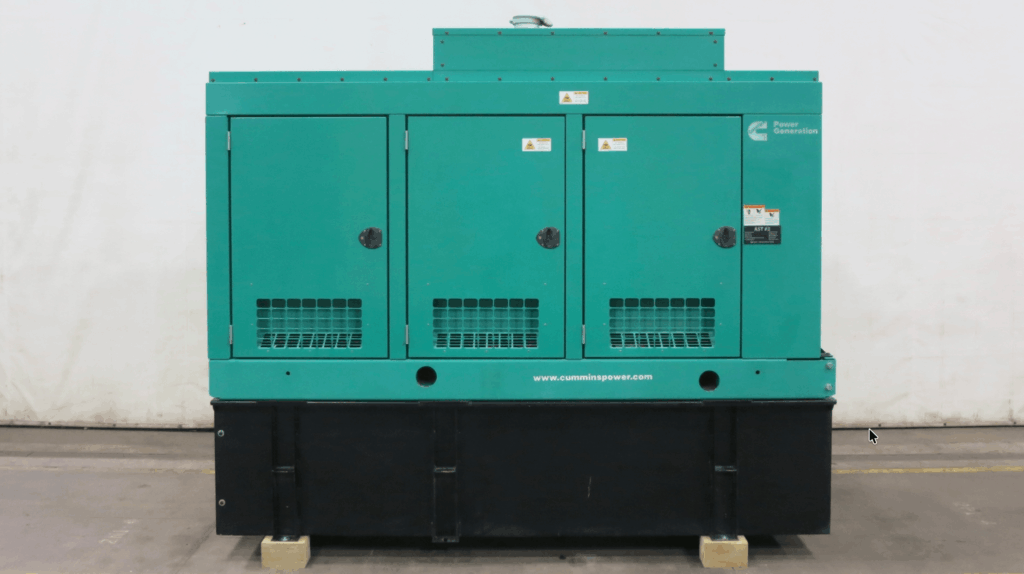
- Two formats side by side: trailer-mounted diesels for jobsites and rental, and pad-mount diesel or natural gas standby sets for buildings.
- First decision: scope. Backing up critical circuits and backing up the whole facility produce very different numbers, and the crossover usually sits near 150 kW.
The Three Bands Between 100 kW and 499 kW
A 400 kW spread is too wide to shop as one size. A load total usually lands in one of these:
| Band | kVA | What drives it |
|---|
| 100kW – 249kW | 125 to 311 kVA | The busiest part of the range: clinics, commercial buildings, and most of the towables. Critical-circuit backup turns into whole-building backup here. |
| 250kW – 374kW | 312 to 468 kVA | Warehouses, processing plants, and large farms with heavy motor load. |
| 375kW – 499kW | 469 to 624 kVA | Infrastructure, larger campuses, and the biggest rental towables. Paralleling and redundancy enter the conversation. |
For one size at a time, go to our 100 kW, 125 kW, 150 kW, 175 kW, 200 kW, 250 kW, 300 kW, 350 kW, and 400 kW generator pages.
Towables and Pad-Mount Sets We’ve Listed From 100 kW to 499 kW
A sample of units that have come through our yard, by listed output:
| Model | Output | Format | Condition |
|---|
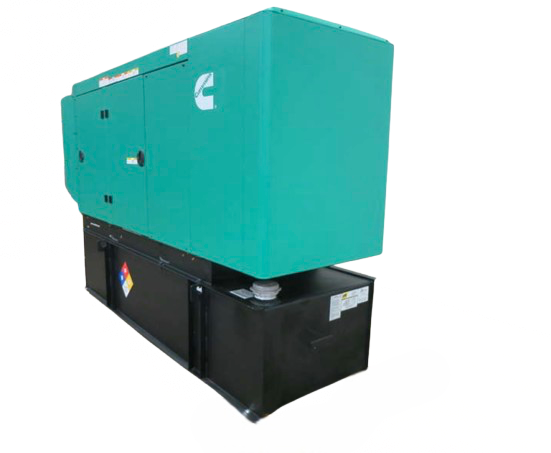
| Cummins C100D6C, Tier 3 | 100 kW | Standby | New |
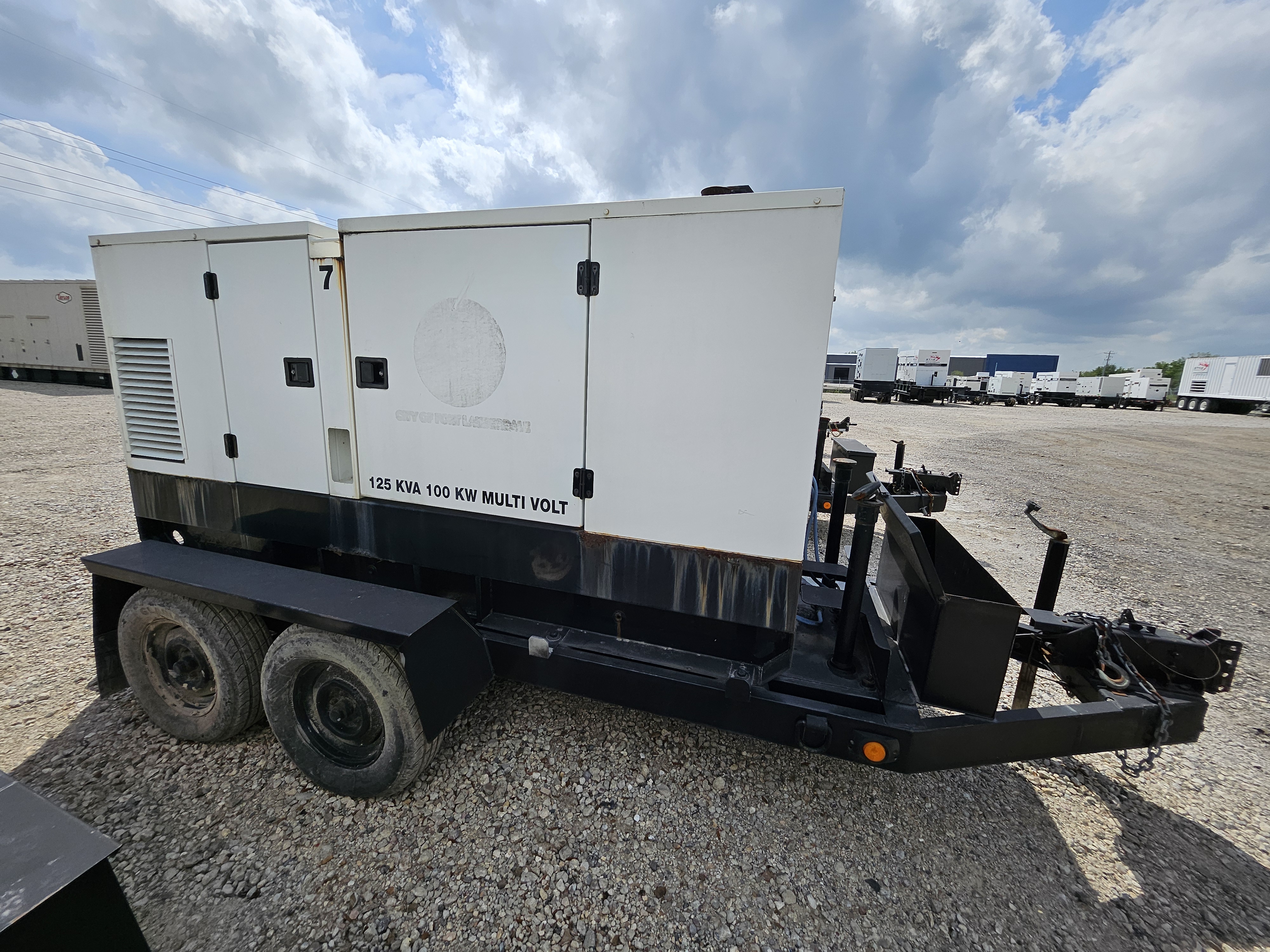
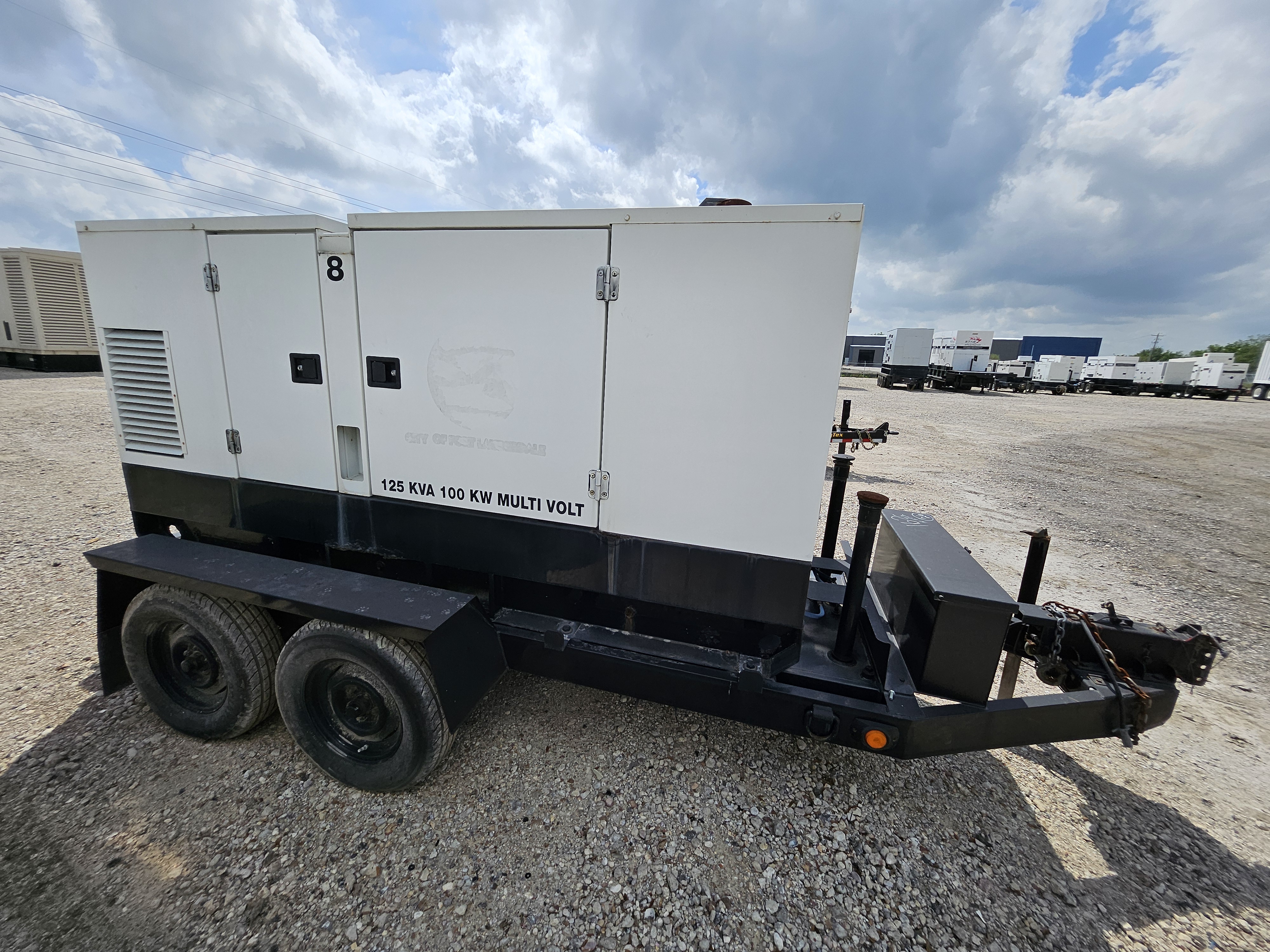
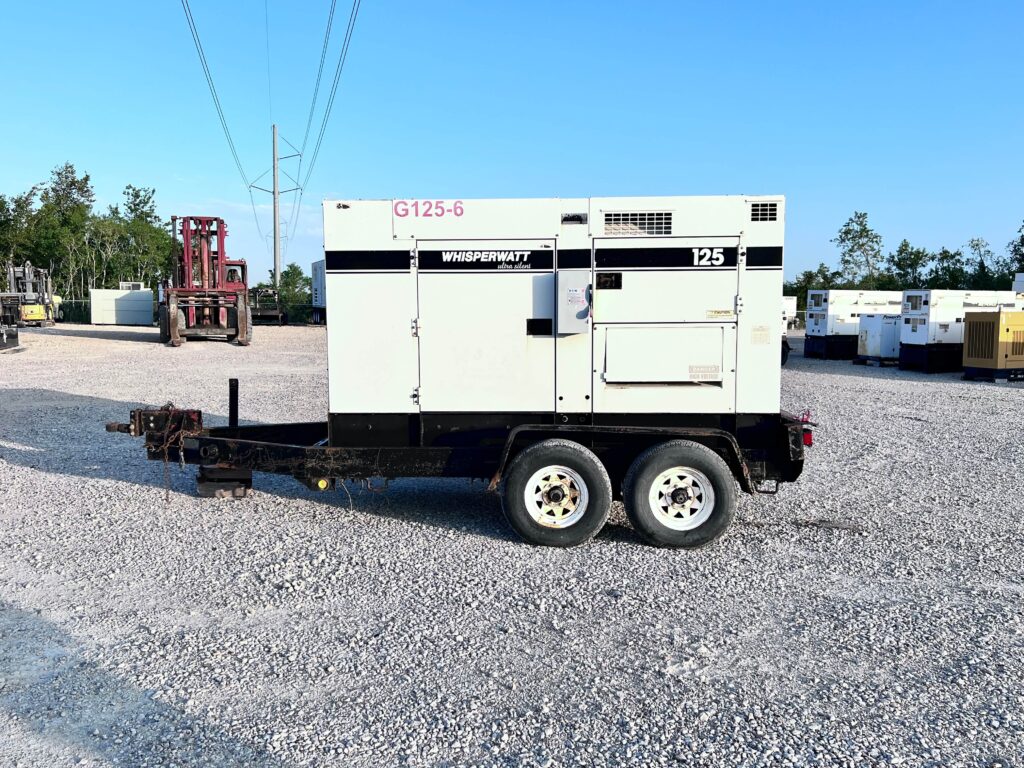
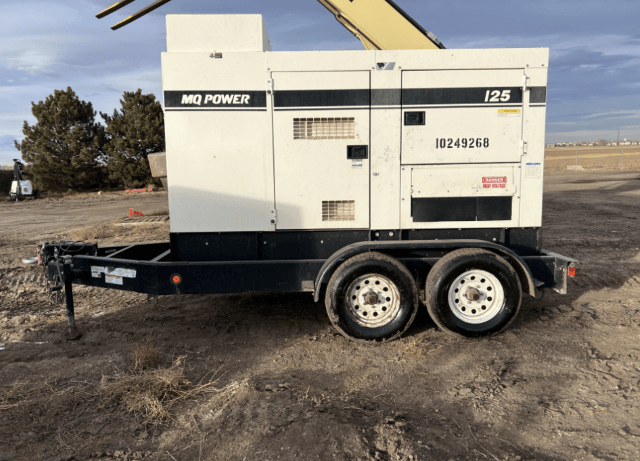
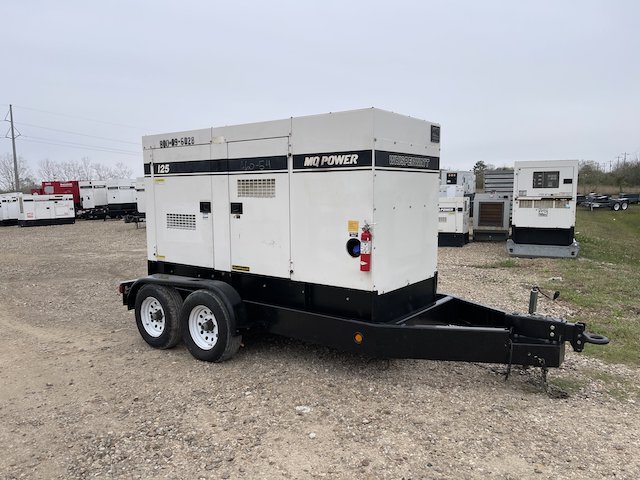
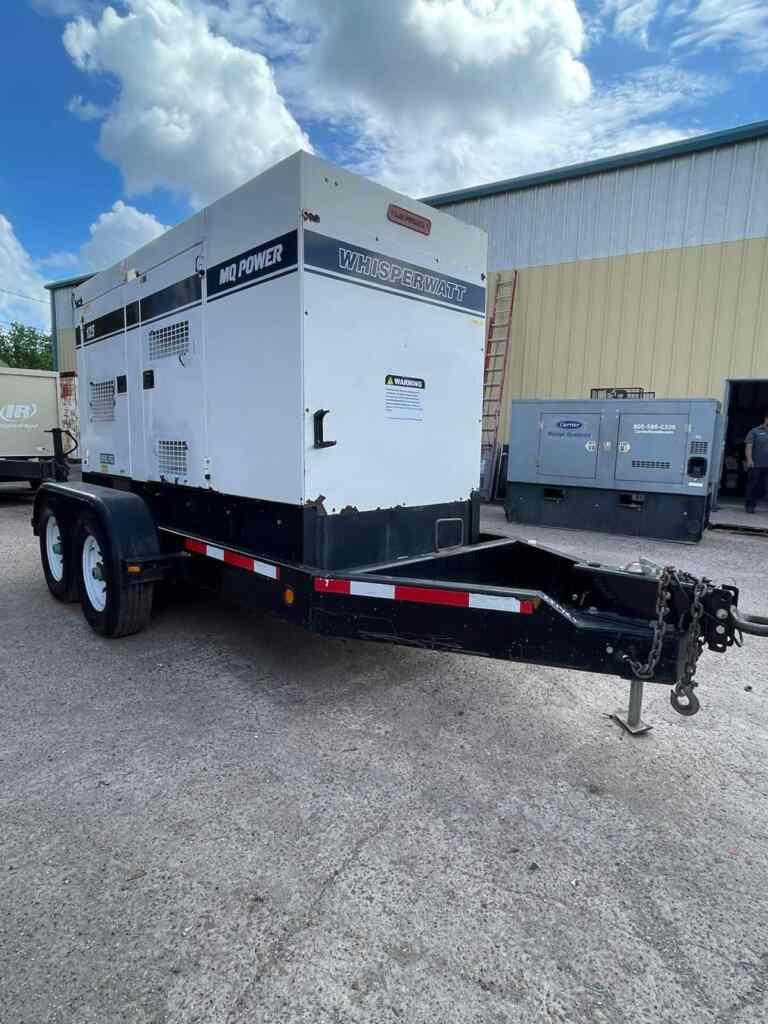
| Multiquip DCA125SSIU4F, DCA125SSJU4i, DCA125USJ | 110 kW | Trailer | Used, 6,994 to 18,514 hours |
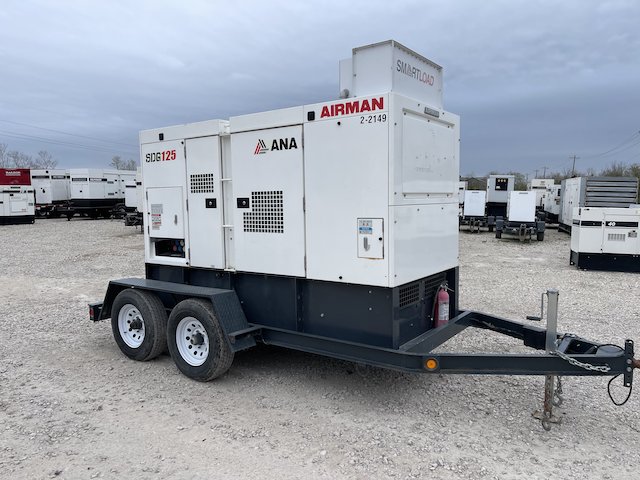
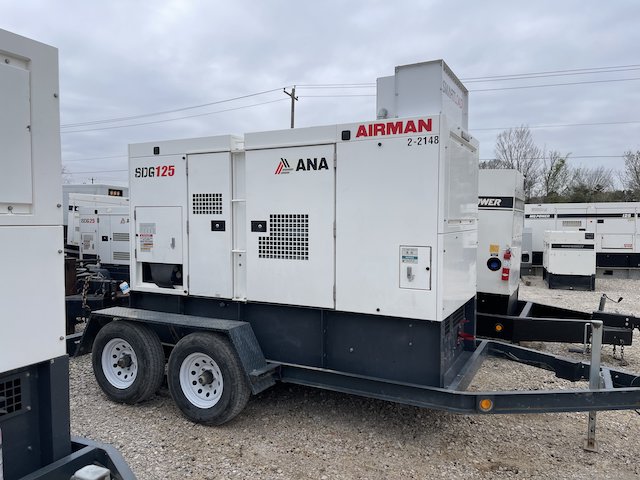
| Airman SDG125S | 110 kW | Trailer | Used, 7,612 and 12,818 hours |
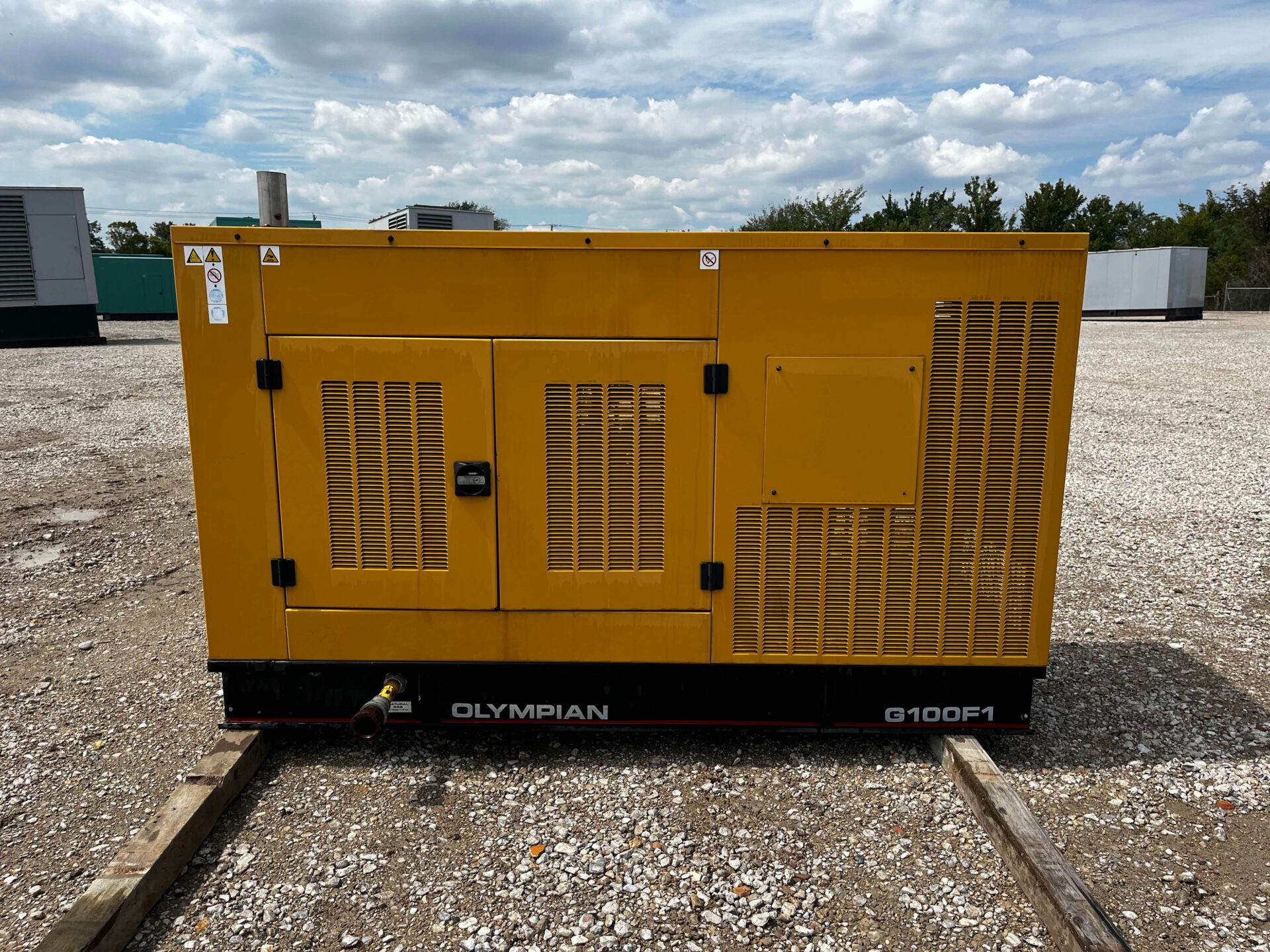
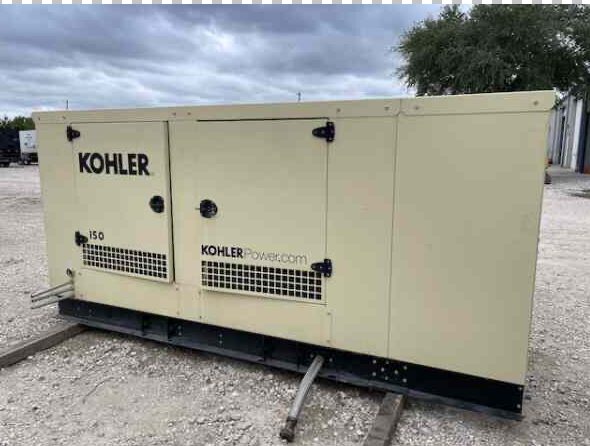
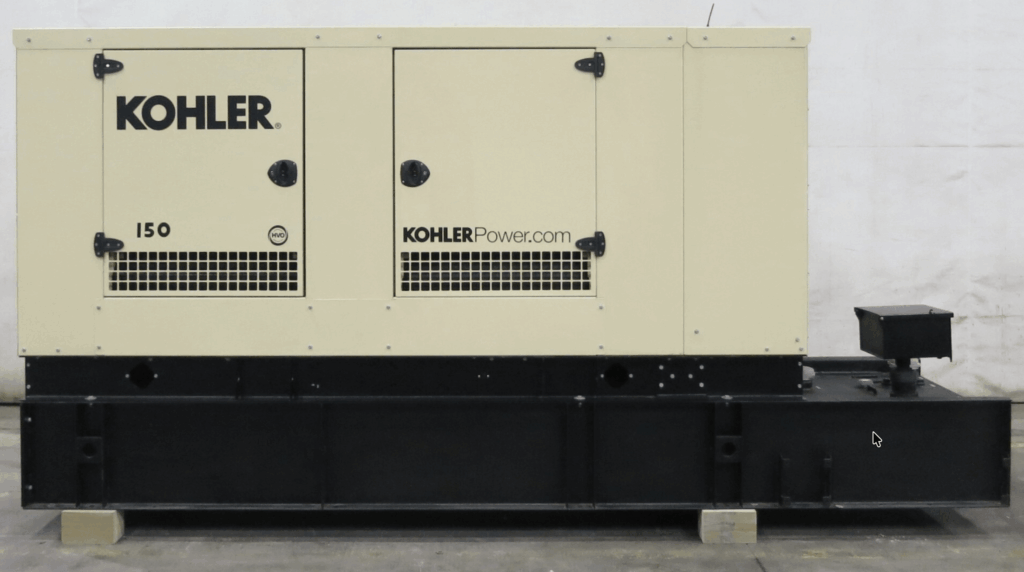
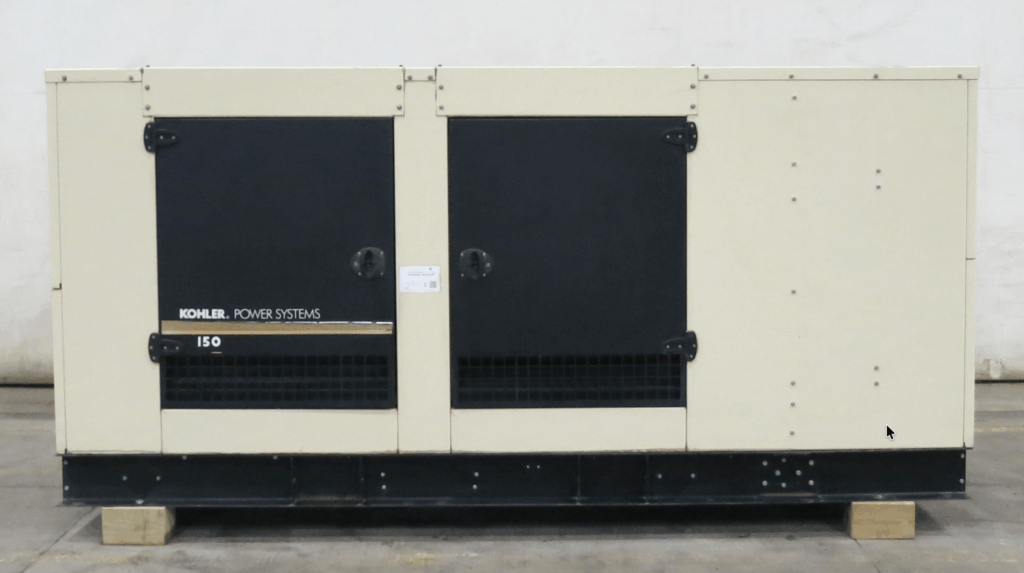
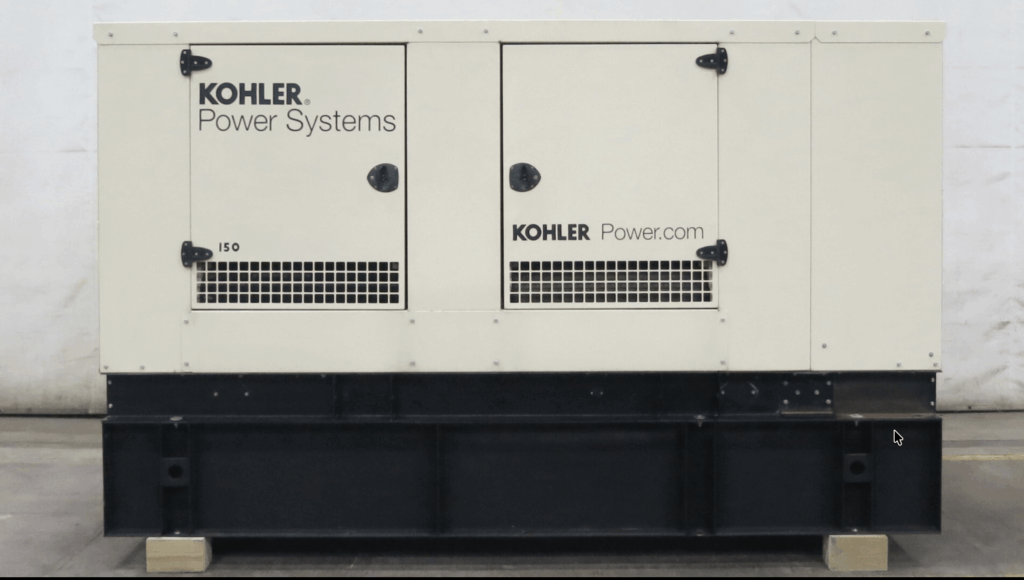
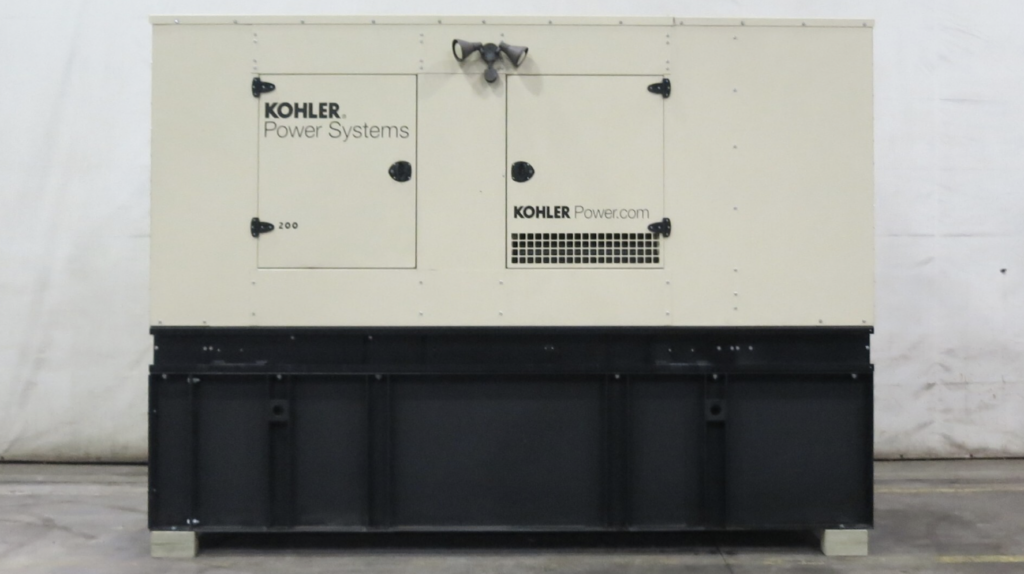
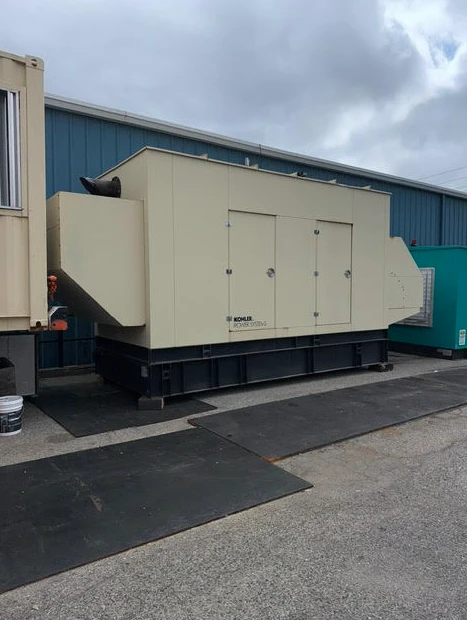
| Kohler 125RZG and 150REZGC | 125 kW and 150 kW | Natural gas standby | Used, 68 to 491 hours |
| Kohler 150REOZJF, Tier 3 | 150 kW | Standby | New, and used at 519 hours |
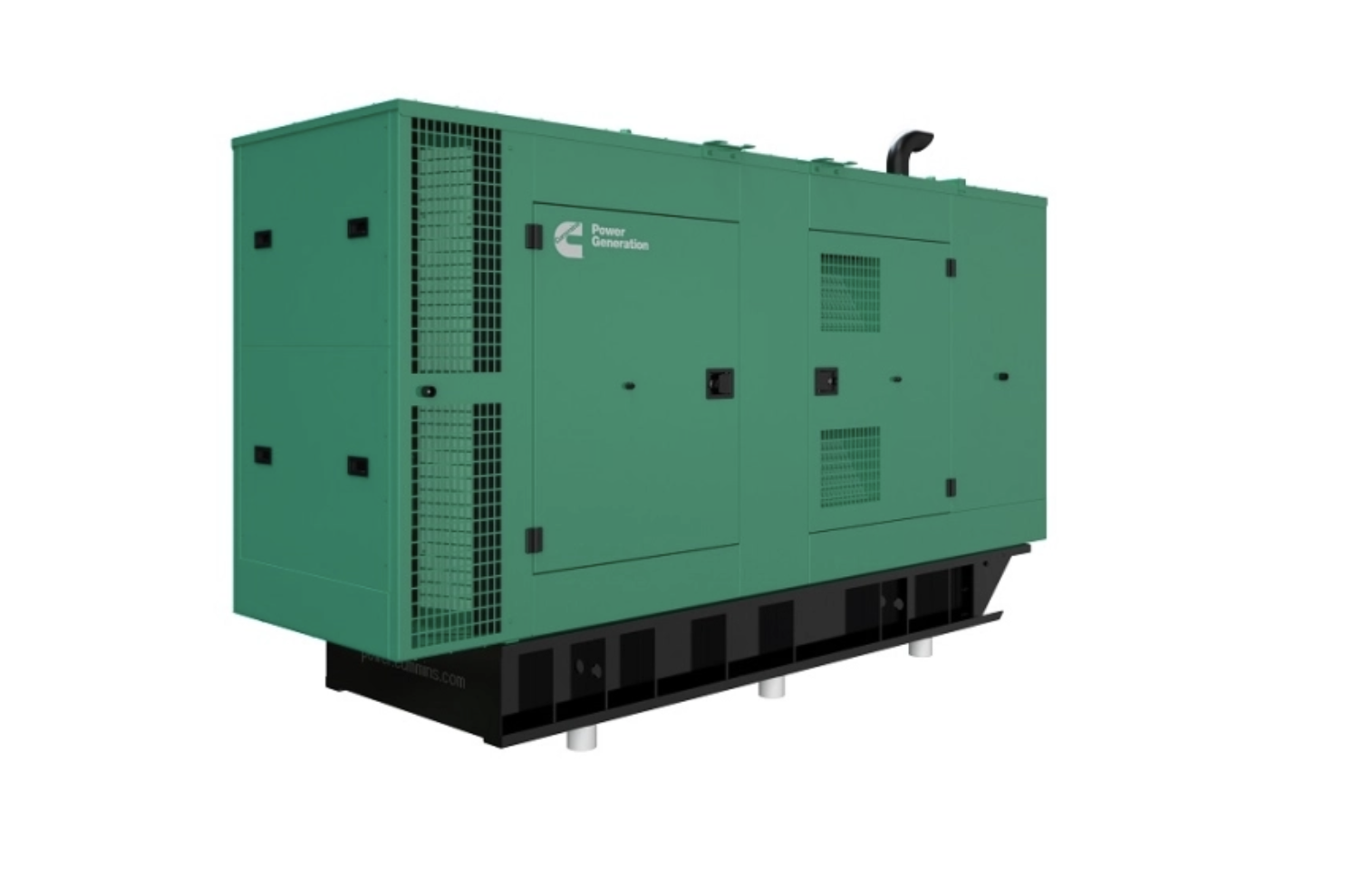
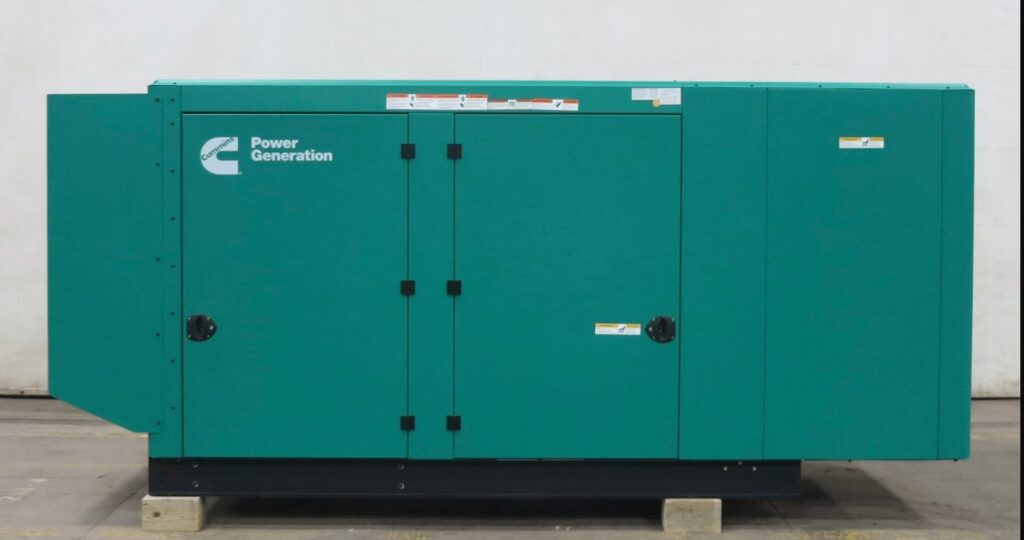
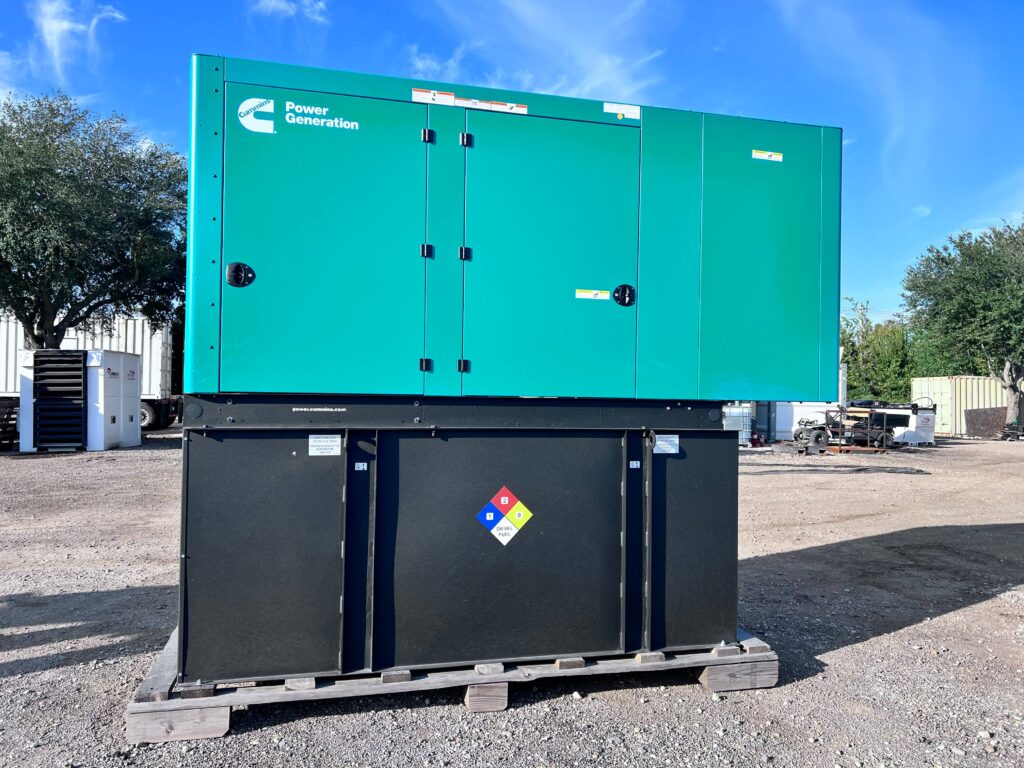
| Cummins C150D6D and C150N6 | 150 kW | Diesel and natural gas standby | New |
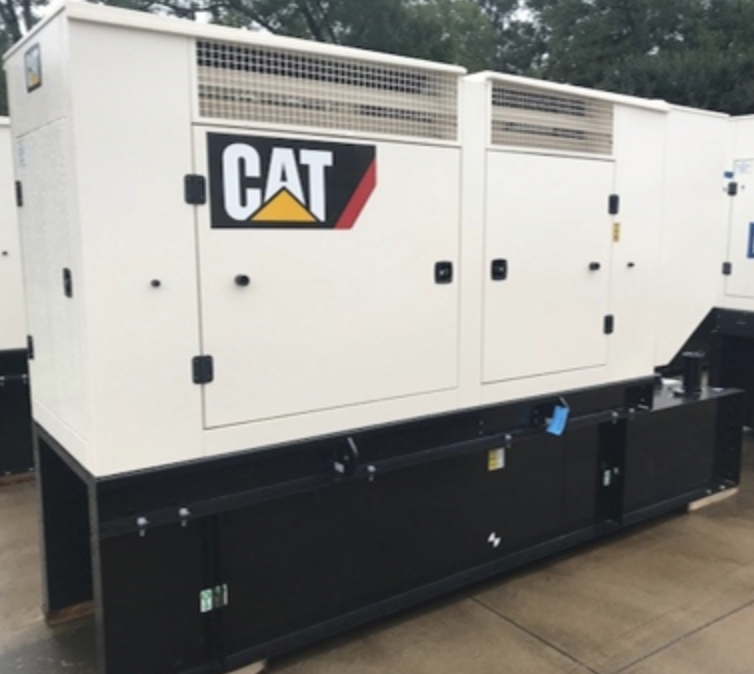
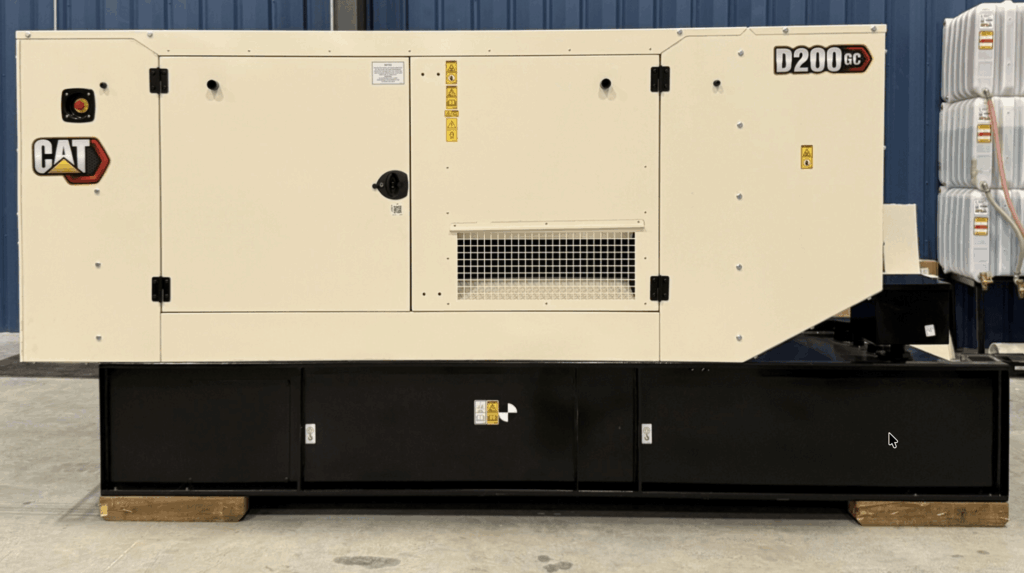
| Caterpillar XQ200 and XQ230 | 200 kW | Trailer | Used, 6,935 and 2,941 hours |
| Kohler 200REOZJF, Tier 3 | 200 kW | Standby | Used, 108 hours |
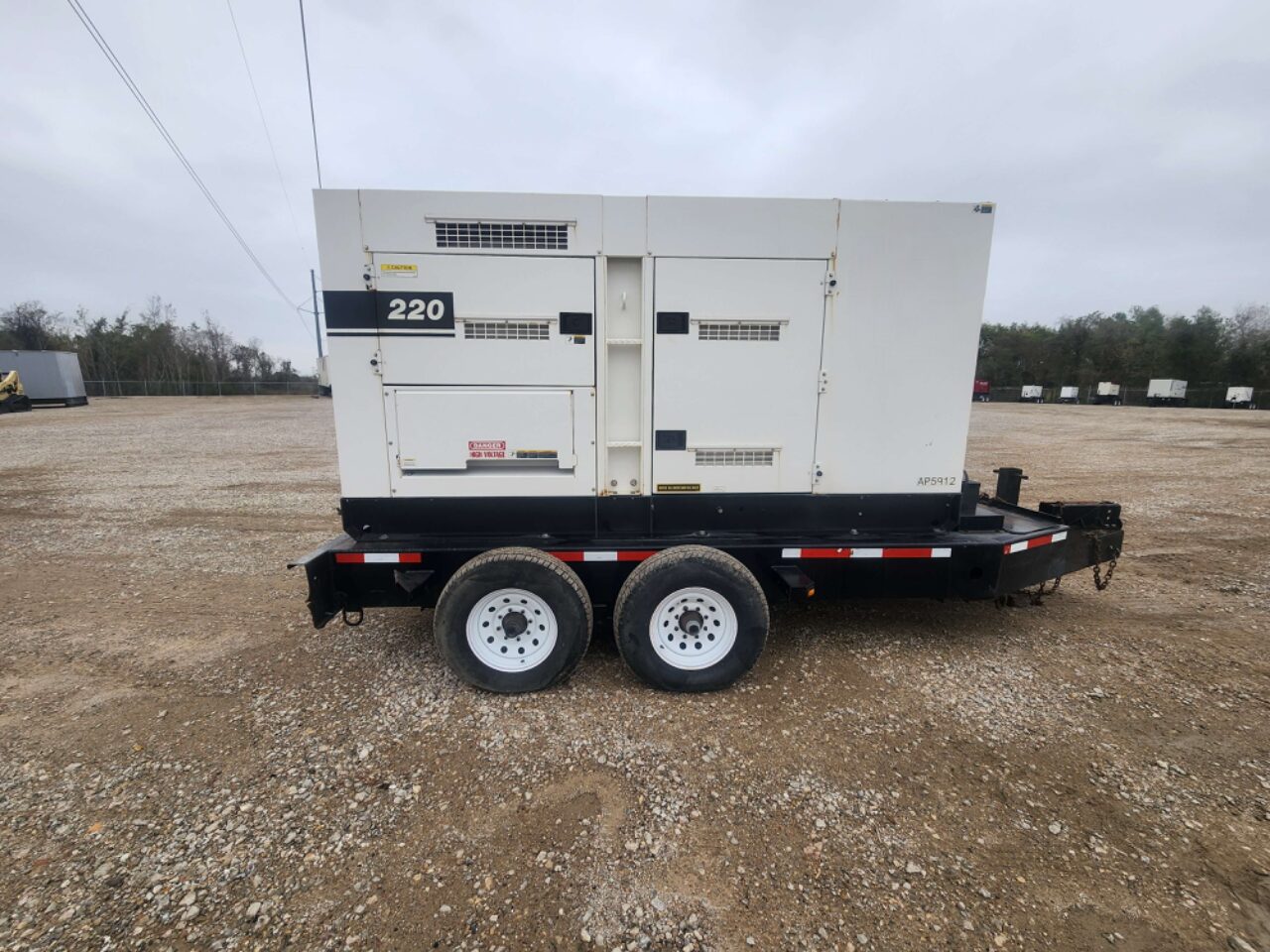
| Atlas Copco QAS250 | 220 kW | Trailer | Used, 7,459 hours |
| Cummins 150GCNC | 225 kW | Natural gas power module | Used, 20 hours |
| Cummins DQHAB, Tier 3 | 300 kW | Standby | Used, 556 and 570 hours |
| Multiquip DCA300SSJU4F3 and DCA400SSI4i | 264 kW and 352 kW | Trailer | Used, 9,266 to 11,317 hours |
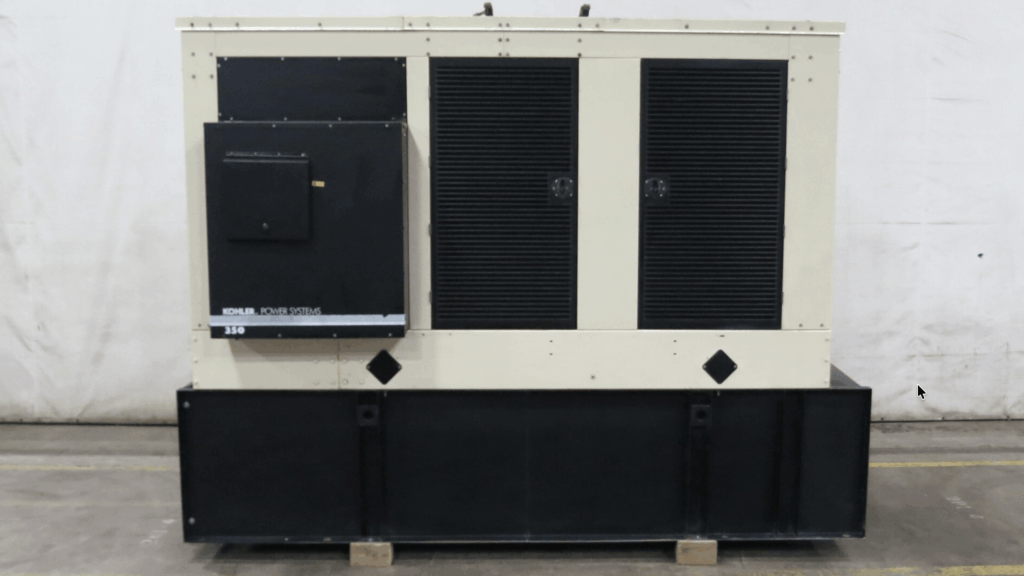
| Kohler 350REOZDD and 400REOZDD, Tier 3 | 355 kW and 400 kW | Standby | Used, 196 and 486 hours |
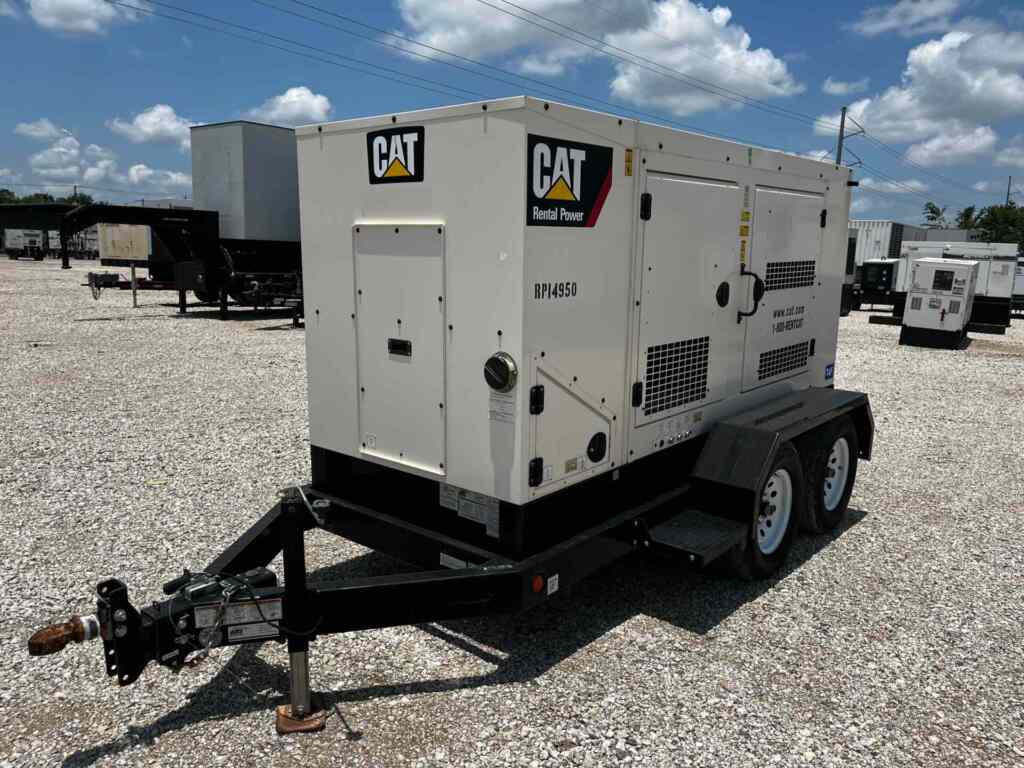
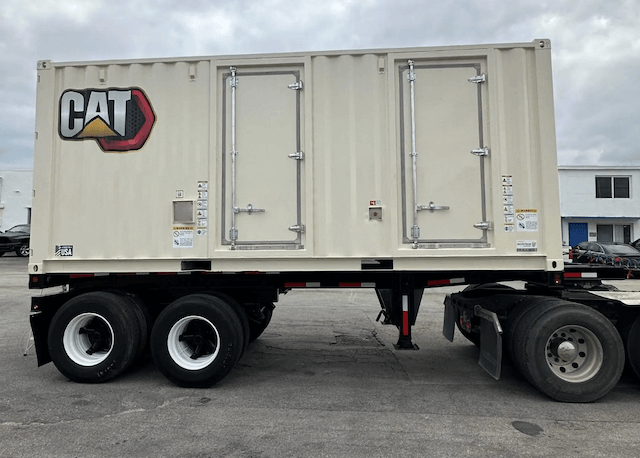
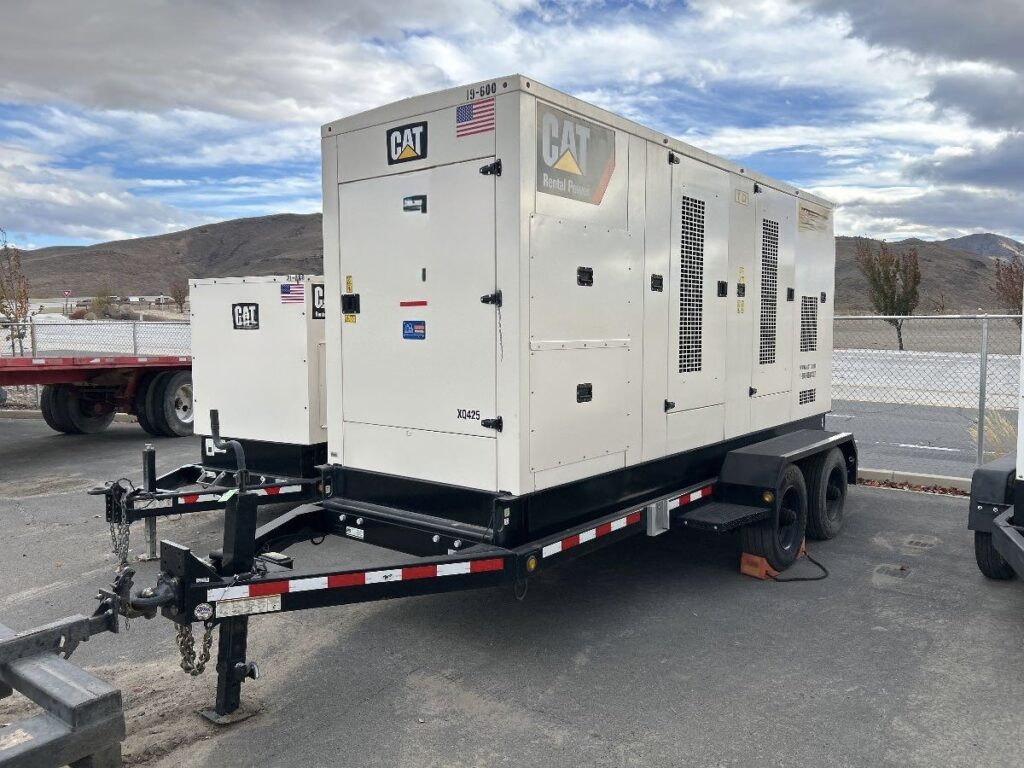
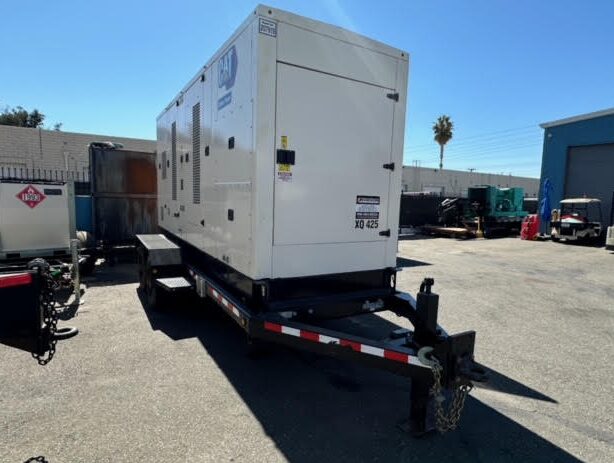
| Caterpillar XQ425 | 375 kW | Trailer | Used, 4,920 and 6,200 hours |
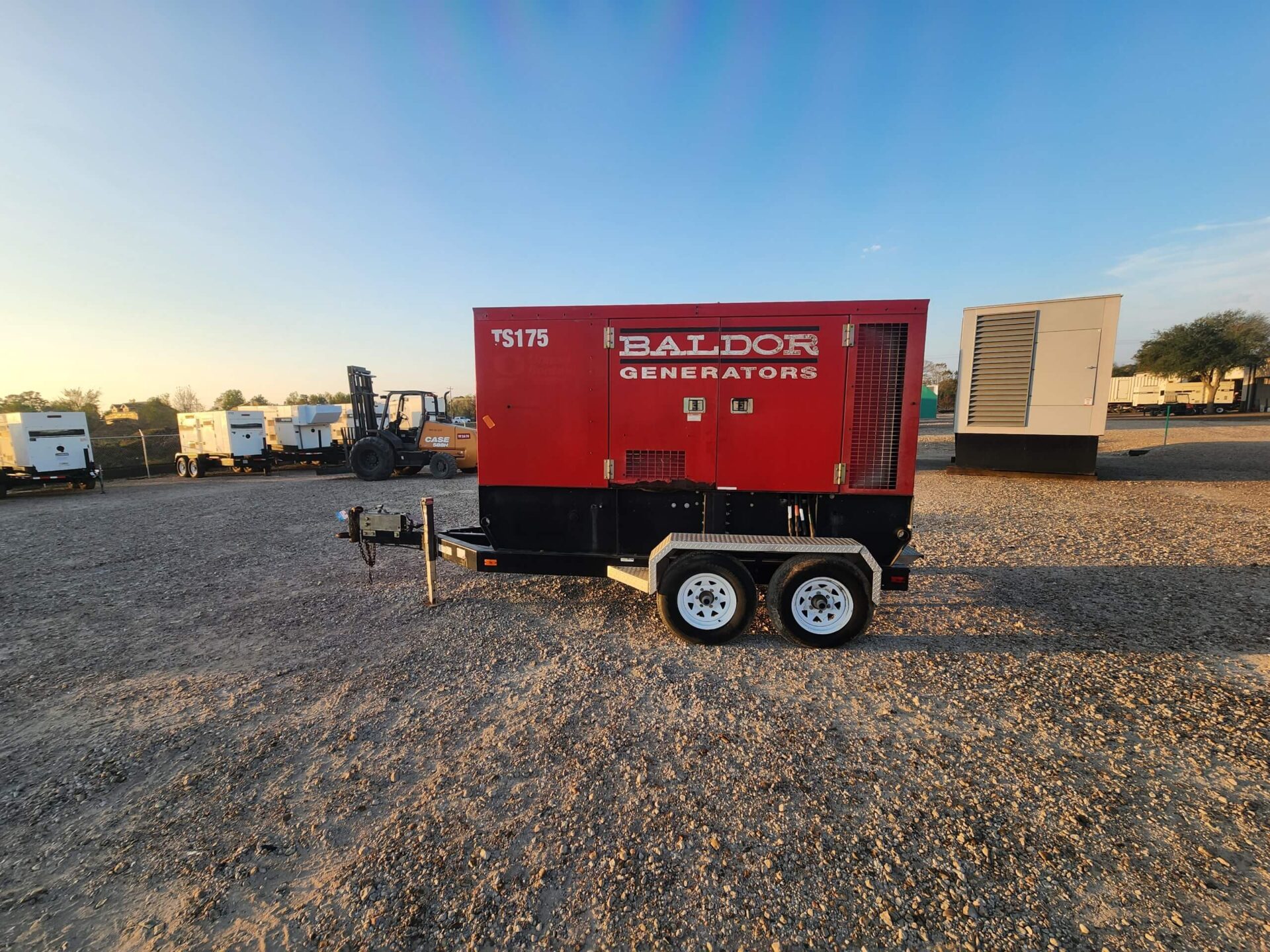
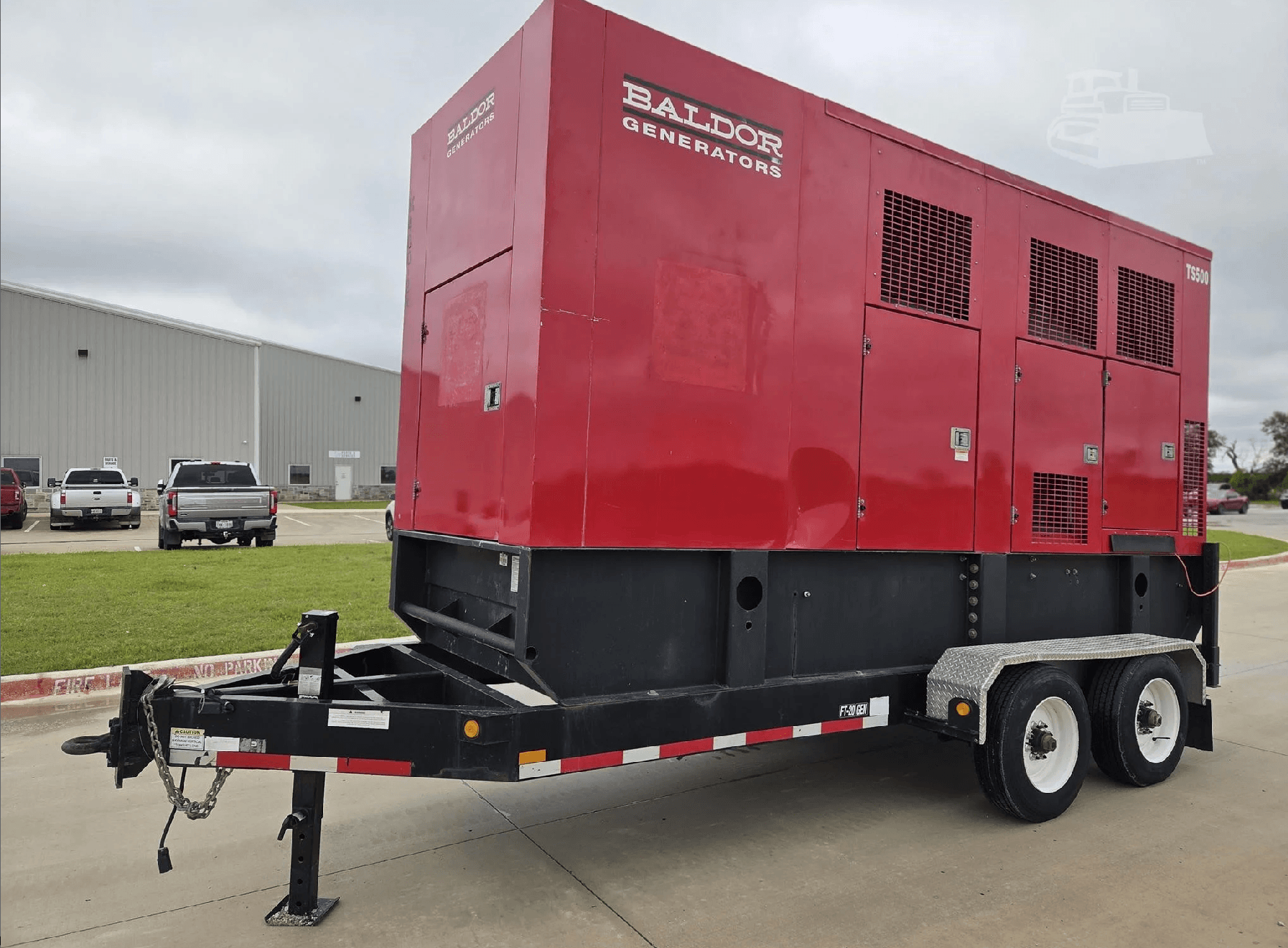
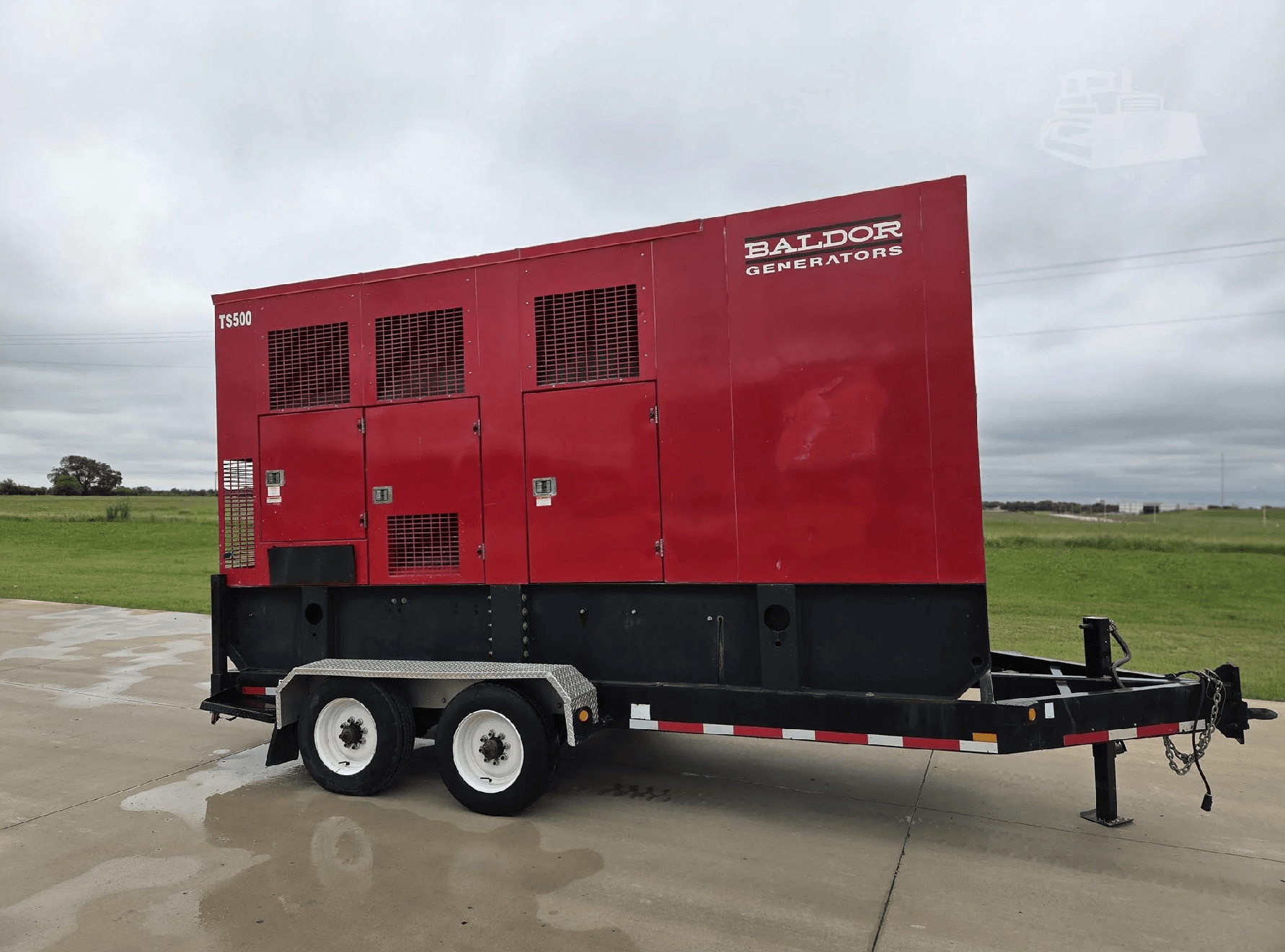
| Baldor TS500T | 400 kW | Trailer | Used, 4,494 and 8,222 hours |
| Cummins DFEJ, Tier 2 | 450 kW | Standby | Used, 931 hours |
Listings thin out as size climbs: most sit between 100 kW and 249 kW, led by a long run of 110 kW Multiquip and Airman towables, and only a handful sit above 375 kW. Natural gas appears only on stationary sets and one power module, never on a trailer.
Spec Sheets for Five Models Between 110 kW and 375 kW
Towable and stationary, diesel and gas, from manufacturer sheets:
| Model | Fuel and mount | Standby / prime | Full-load fuel | Tank or gas supply |
|---|
| Multiquip DCA125SSIU4F | Diesel, towable, Tier 4 Final | 110 kW / 100 kW | 7.1 gph | 169 gal diesel, 7.4 gal DEF |
| Generac SD150 | Diesel, stationary | 150 kW / 135 kW | 11.2 gal/hr | 134 gal (11 hr) to 1,325 gal (118 hr) |
| Generac SG150 | Natural gas, stationary | 150 kW / 135 kW | 2,220 scfh | 7 to 11 in. water column |
| Atlas Copco QAS 250 JD T4F | Diesel, towable, Tier 4 Final | 220 kW / 200 kW | 14.11 gal/hr | 385 gal, 33.3 hr at 75% load |
| Caterpillar XQ425 | Diesel, towable, Tier 4 Final | 375 kW / 340 kW | Not listed at full load | 520 gal, 29 hr at 75% of prime |
Multiquip rates the DCA125SSIU4F at 100 kW prime and 110 kW standby, and we list it at the standby figure, which is why so many 110 kW units appear above. The Generac pair shows what fuel changes at the same rating: the diesel SD150 runs a 6.7 L engine and the gas SG150 a 14.2 L engine, both rated 150 kW standby and 135 kW prime.
How Much Diesel a 100 kW to 400 kW Set Burns
Rows inside this band from our diesel fuel consumption chart:
| Size | 1/4 load | 1/2 load | 3/4 load | Full load |
|---|
| 100 kW | 2.6 gal/hr | 4.1 gal/hr | 5.8 gal/hr | 7.4 gal/hr |
| 125 kW | 3.1 gal/hr | 5.0 gal/hr | 7.1 gal/hr | 9.1 gal/hr |
| 150 kW | 3.6 gal/hr | 5.9 gal/hr | 8.4 gal/hr | 10.9 gal/hr |
| 175 kW | 4.1 gal/hr | 6.8 gal/hr | 9.7 gal/hr | 12.7 gal/hr |
| 200 kW | 4.7 gal/hr | 7.7 gal/hr | 11.0 gal/hr | 14.4 gal/hr |
| 250 kW | 5.7 gal/hr | 9.5 gal/hr | 13.6 gal/hr | 18.0 gal/hr |
| 300 kW | 6.8 gal/hr | 11.3 gal/hr | 16.1 gal/hr | 21.5 gal/hr |
| 350 kW | 7.9 gal/hr | 13.1 gal/hr | 18.7 gal/hr | 25.1 gal/hr |
| 400 kW | 8.9 gal/hr | 14.9 gal/hr | 21.3 gal/hr | 28.6 gal/hr |
Spec sheets here track the chart within a gallon or two an hour. Cat lists 7.4 gal/hr at full load for the D100 GC, matching the 100 kW row; Generac lists 11.2 for the SD150 against 10.9; and mtu’s DS400 lists 26.9, under the chart’s 28.6.
At full load a 100 kW set burns about 178 gallons in 24 hours, a 150 kW set 262, and a 400 kW set 686. Pad-mount sub-base tanks are quoted in hours of runtime: Generac’s SD250 tanks run from 153 gallons (8 hours) to 1,325 gallons (71 hours) at standby load.
Amps at 208V, 480V, and 600V
Our generator amperage chart gives these three-phase figures at 0.8 power factor:
| Output | kVA | 208V | 480V | 600V |
|---|
| 100 kW | 125 kVA | 347 A | 150 A | 120 A |
| 150 kW | 187 kVA | 520 A | 225 A | 180 A |
| 200 kW | 250 kVA | 694 A | 301 A | 241 A |
| 250 kW | 312 kVA | 866 A | 376 A | 300 A |
| 300 kW | 375 kVA | 1,040 A | 451 A | 361 A |
| 350 kW | 438 kVA | 1,220 A | 527 A | 422 A |
| 400 kW | 500 kVA | 1,390 A | 602 A | 481 A |
At 208V, current crosses 1,000 A by 300 kW, more than double the 480V figure. The transfer switch, conductors, and breaker follow that number. Towables carry their own main breaker, 600 A on Generac’s MDG150DF4 and 800 A on Atlas Copco’s QAS 250, so check it against the current at your voltage. Our power calculators turn a load list into a working figure.
Critical Circuits or the Whole Facility?
Below about 150 kW most buyers are backing up chosen circuits; at 150 kW and above, many are backing up the building.
Between 100 kW and 150 kW the question is usually whether the next size up is needed at all. Settle it with the facility’s own data: peak demand from a utility bill, the motors that start together, and growth planned within a few years. At 150 kW many facilities cross into keeping most of the building running, and by 175 kW the load list sorts into tiers: life-safety and process loads, comfort loads, and anything that can wait. Total each tier, then decide how many the generator carries.
Trailer or Pad: How the Format Changes Across the Band
Towables fit work that moves or ends; pad-mount sets fit a building that will need backup for decades.
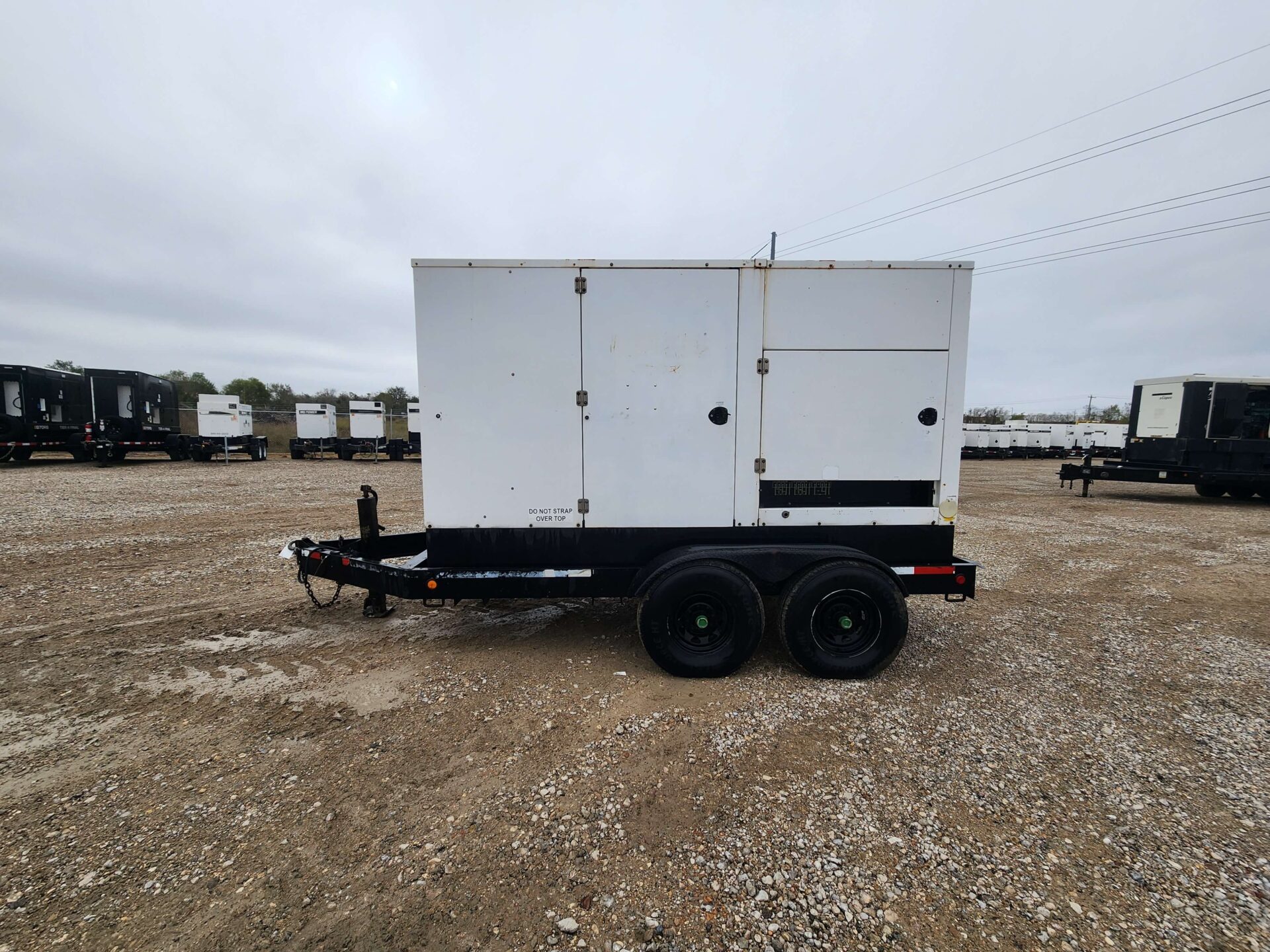
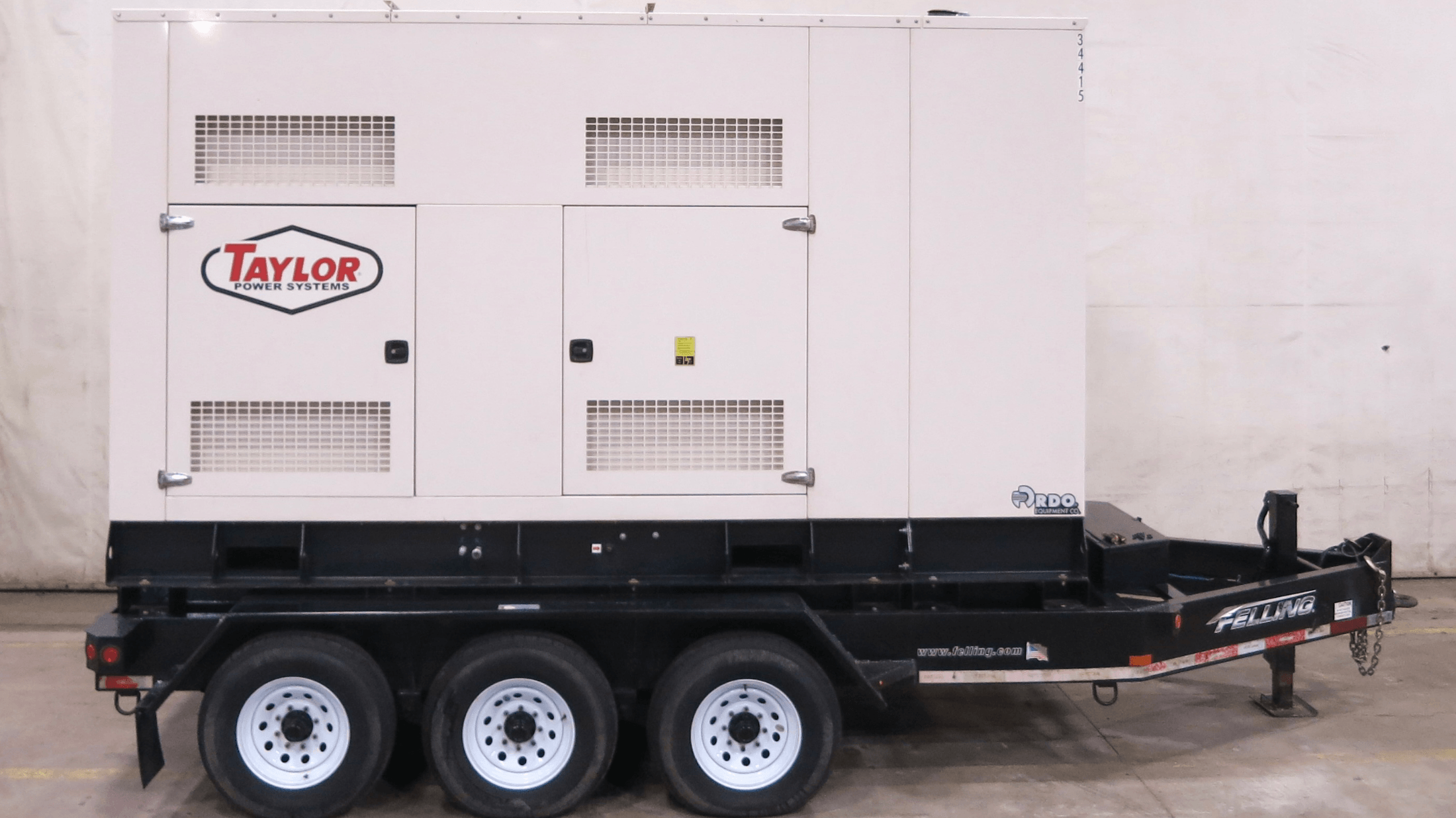
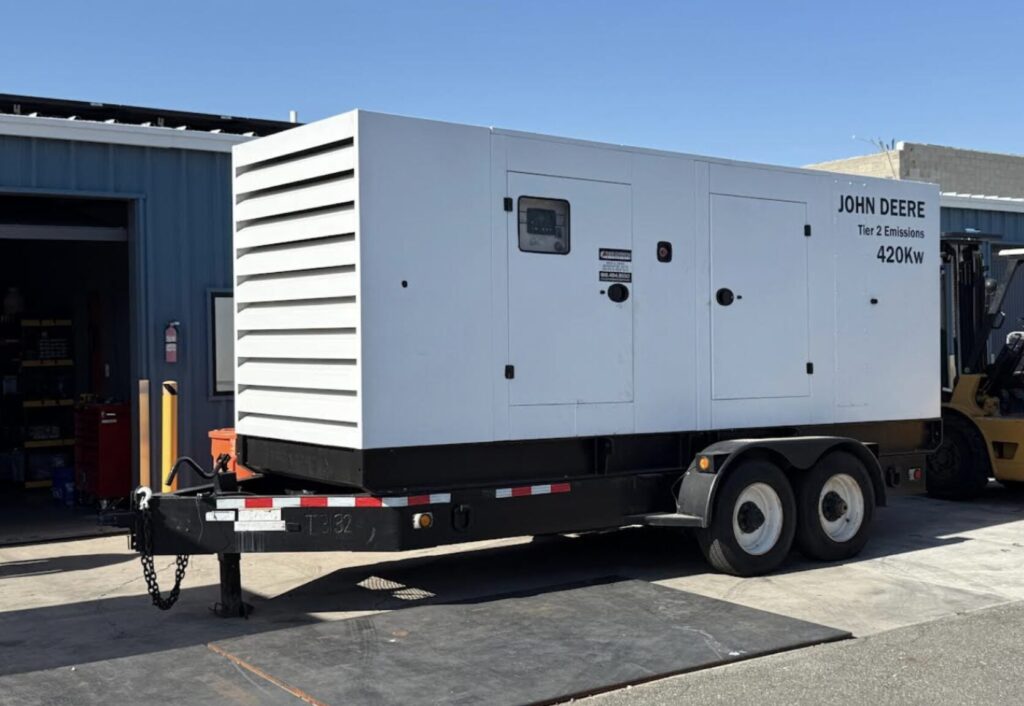
Trailer weight climbs steeply. Multiquip’s DCA125SSIU4F weighs 8,424 lb wet on a double-axle trailer, Generac’s MDG150DF4 12,990 lb on two 8,000 lb axles, and Cat’s XQ425 22,130 lb with a full tank, at 283.7 x 102 x 126.1 inches. Match the tow vehicle and hitch to the wet weight of the exact unit, and check your state’s towing rules.
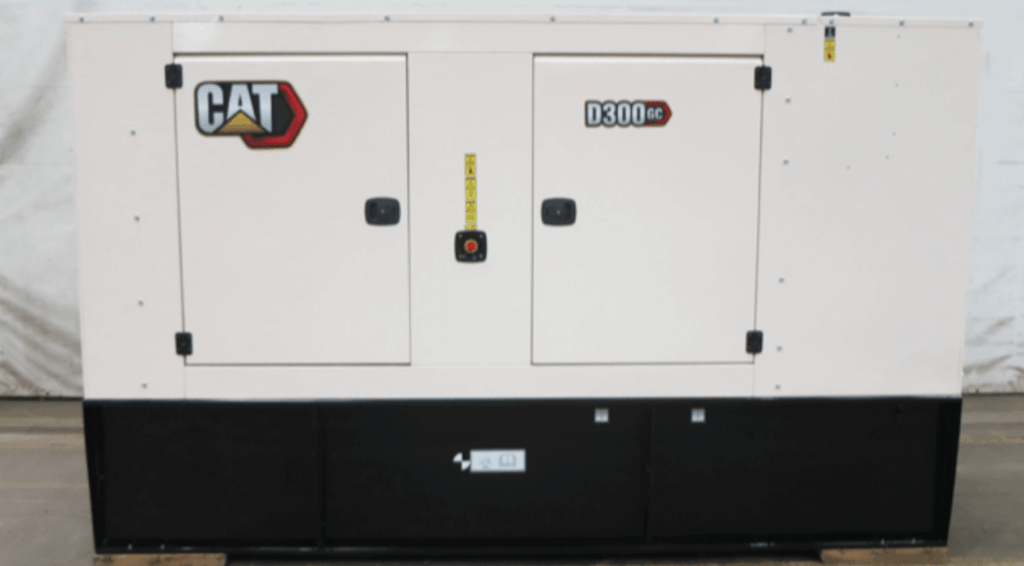
The towables on these sheets are Tier 4 Final and list 66 to 75 dB(A) at 23 ft. Stationary emergency sets such as Cat’s D300 GC and Kohler’s 350REOZJC are EPA Tier 3, with housing and sub-base tank priced as separate line items. Browse towables in trailer-mounted generators and permanent sets in industrial standby generators.
Diesel or Natural Gas at Mid-Size?
Diesel for anything that moves or must carry its own fuel; natural gas for building standby where the gas service can hold the pressure and flow the set needs.
The gas line becomes part of the project, and supply requirements vary by model: 7 to 11 in. water column on Generac’s SG150 and SG200, 11 to 15 in. on the SG250, 15 to 20 in. WC on the Cummins C300N6, and 1.25 to 1.5 psi at the base frame on Cat’s DG350. Flow climbs with size, from 1,280 scfh at full load on the SG100 to 4,620 scfh on the SG400. Generac calls for a supply line not shared with other appliances and a regulator rated for about 1.5 times maximum flow. Low pressure or flow can cause long cranking and a set that won’t carry full load.
Gas engines run larger for the same rating, 14.2 L on the SG200 against 8.7 L on the diesel SD200, and the SG130 and SG250 carry no prime rating. Diesel units are listed under industrial diesel generators and gas units under industrial natural gas generators.
Ratings, Hours, and Buying Used at This Size
Price a set on the rating that matches its duty, and judge a used unit by format as well as hours.
Caterpillar defines standby as typical use of 200 hours a year with a 500-hour annual maximum. Generac ties warranty to the rating on the SG400, 2 years on standby and 1 year on prime, and some prime ratings, such as the SD175’s 158 kW, aren’t offered in the U.S. In our listings, used stationary standby sets in this band carry 68 to 931 hours, while used towables commonly carry several thousand and the highest-hour 110 kW units more than 18,000. Compare used industrial generators against new industrial generators when a spec calls for a factory warranty or a current tier.
Paralleling Near the Top, and When to Rent
Around 350 kW, two smaller sets in parallel start to compete with one large one; below that, a single set is the norm.
Paralleling keeps power on when one unit is down, but the controls have to match: Kohler’s APM603 and Decision-Maker 6000 can run up to 8 generators on an isolated bus, but only with units on the same controller, and Cat’s XQ425 parallels with other EMCP 4.4 units. For a single project or a bridge to a permanent set, rent through Stag Power Rentals; when budget timing is the obstacle, see our generator financing options.
Too Small or Too Large for 100 kW to 499 kW?
A diesel set that idles far below its rating collects unburned fuel in the exhaust, so oversizing is not a free safety margin.
| Range | kVA | What it usually powers |
|---|
| 25kW – 99kW | 31 to 124 kVA | Jobsite towables, small commercial standby, farms, lift stations |
| 100kW – 499kW (this range) | 125 to 624 kVA | Clinics, commercial buildings, plants, large farms, rental towables |
| 500kW – 999kW | 625 to 1,249 kVA | Hospitals, data centers, campuses, power modules |
Under 100 kW, the smaller range costs less to buy and install; past 499 kW, step up rather than run a set at its limit. Every size we carry is on shop by kW.
Inspected, Load Tested, and Backed After the Sale
Each unit in this range passes a 22-point inspection and load bank testing before shipment, which matters most on high-hour towables, some past 10,000 hours. Turnkey Industries has bought and sold industrial generators for over a decade. New or used, every purchase includes our 30-day IronClad warranty, and our service and maintenance team handles industrial generator repair and emergency service once the set is running.
Ready to Buy a 100kW – 499kW Generator?
Tell us whether you’re backing up circuits or a whole building, what voltage you run, which fuel you have on site, and whether the unit moves, and we’ll narrow it to a band and a format. See our used industrial generators and new industrial generators, or contact us to work through the load list together.
100kW – 499kW Questions: Facility Scope, Towing, and Gas Supply
At what size does a generator back up a whole building instead of critical circuits?
Often around 150 kW. Below that, most buyers size against an essential panel; above it, many keep most of the building running.
What does a day of full-load running cost in diesel at this size?
About 178 gallons in 24 hours at full load for 100 kW, 262 for 150 kW, and 686 for 400 kW, based on our diesel chart. Partial load cuts that sharply: a 400 kW set at half load uses about 358 gallons.
How heavy is a towable generator in this range?
From about 8,400 lb to more than 22,000 lb. A Multiquip DCA125SSIU4F is 8,424 lb wet on its trailer, while a Cat XQ425 is 22,130 lb with a full tank. Check the wet weight against your truck and hitch rating.
Why are so many towables in this range listed at 110 kW?
Many are named for kVA rather than kW. Multiquip’s DCA125SSIU4F is rated 100 kW (125 kVA) prime and 110 kW standby, and we list it at the standby figure.
What gas pressure does a natural gas generator at this size need?
It depends on the model: 7 to 11 in. water column for Generac’s SG150, 11 to 15 in. for the SG250, and 15 to 20 in. for the Cummins C300N6. Confirm what your utility can deliver at full-load flow before choosing.
Do high-hour towables make sense?
For jobsite or temporary work, often yes, priced to their hours. For permanent standby, a low-hour stationary set is usually the better buy, and either way it carries our 30-day warranty.