
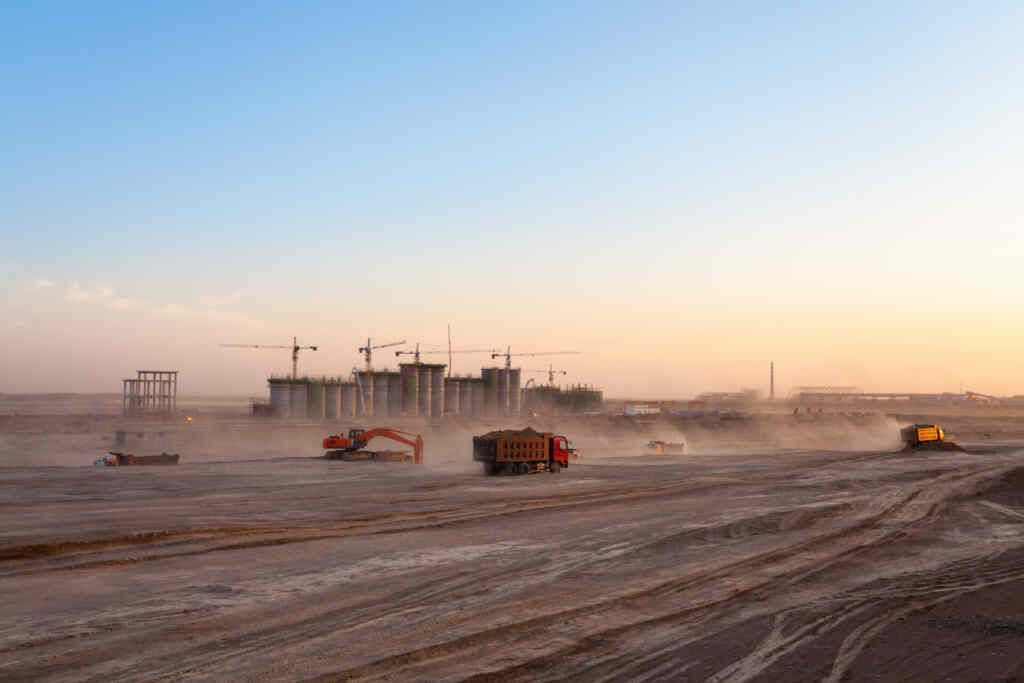
Choose Turnkey Industries for Reliable and Efficient Construction Site Generators
At Turnkey Industries, we understand the critical role that uninterrupted power plays in construction site operations. That’s why we offer a wide range of high-quality industrial generators from the top generator brands in the industry. With our comprehensive selection, including renowned names like Caterpillar, Multiquip, Cummins, and Baldor, you can trust us to provide the perfect generator for your specific needs.
Power outages on a construction site aren’t just inconvenient — they’re expensive. Equipment sits idle, crews stand down, deadlines slip, and penalties accumulate. Our generators are built to deliver reliable and efficient power in demanding environments, from small residential builds to large-scale infrastructure projects.
Peace of Mind with Turnkey Industries’ Comprehensive Generator Selection
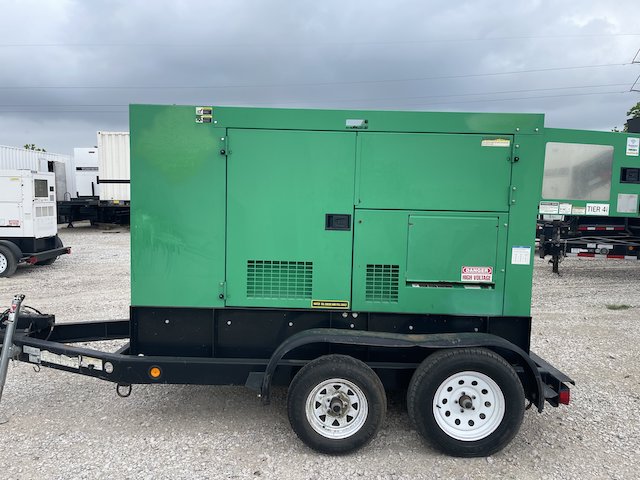
Choosing the right generator for your construction site shouldn’t be a hassle. Whether you need a 65 kW generator for a mid-sized project or something in the 2,000 kW range for a major development, Turnkey Industries simplifies the process. Our team considers power output, fuel efficiency, site logistics, and durability to match you with the right unit. One call. One solution.
Why Buy a Generator for a Job Site?
No two construction sites are alike. Some have grid access nearby; others are completely off-utility in remote locations. Either way, you need power — whether as a primary source or reliable backup. Industrial and commercial generators deliver significantly more capacity than residential units and can run continuously as long as fuel is supplied. Diesel is the dominant choice on job sites for good reason: it’s energy-dense, widely available, and well-suited to the kind of hard, continuous-duty cycles construction demands.
What Size Generator Is Right for a Jobsite?
It depends entirely on what’s running. Small crews using hand tools and basic site lighting can get by with far less capacity than a large-scale build running compressors, concrete equipment, cranes, and temporary HVAC simultaneously. Our inventory covers the full range — from 20 kW for minimal site power needs all the way to 2,500 kW for major industrial construction projects. The single most important step before purchasing is a proper load calculation. Use our power calculator to get a baseline figure before you start shopping.
How Much Does a Job Site Generator Cost?

The purchase price is only part of the picture. Fuel consumption, routine maintenance, and the cost of downtime if the unit fails — all of these factor into total cost of ownership. Diesel generators carry a higher upfront cost than some alternatives, but they earn it back in reliability and lower maintenance frequency over extended run cycles. Buying used from a reputable source like Turnkey Industries — where every unit is inspected and load bank tested before it ships — is often the smartest way to access commercial-grade power at a fraction of new equipment pricing. Browse our full industrial generator inventory to see what’s available.
Are Trailer Generators or Standby Generators Better on a Construction Site?
Trailer-mounted generators win on mobility. If your site footprint shifts, if you’re managing multiple active zones, or if the generator needs to move between projects, towable units are the obvious choice. They’re also faster to commission. Standby generators trade mobility for permanence — quieter operation, higher output thresholds, and less hands-on management once installed. For long-duration projects with a fixed site layout, standby configurations often make more economic sense. For anything dynamic, keep it on wheels.
Single Phase or Three Phase — Which Is Better for Construction?
Three-phase generators are the standard for commercial and industrial construction sites. They deliver consistent, balanced power across multiple high-draw circuits simultaneously — essential when you’re running large motors, compressors, and lighting systems at the same time. Single-phase units work for lighter applications and smaller projects where the load profile is simple. When in doubt, three-phase. The wiring complexity is worth it for the performance headroom it provides, and it future-proofs the power supply if the project scope expands.
Think About Fuel Source When Buying a Jobsite Generator
Larger generators consume more fuel. That’s obvious. What’s less obvious is how much fuel cost compounds over a multi-month project at high utilization rates. Diesel is energy-dense and widely available at most commercial fuel suppliers — a practical advantage on remote sites. Natural gas is cleaner burning and eliminates on-site fuel storage logistics if a supply line is accessible. Factor in your site location, project duration, and fuel access before committing to either.
How Loud Can an Industrial Generator Get on a Construction Site?
Loud. Industrial generators can reach sound levels above 100 dB depending on size and enclosure type — comparable to heavy machinery already operating on most sites. Sound-attenuated enclosures significantly reduce this, and many of the trailer-mounted units in our inventory come standard with acoustic housing. Position the generator as far as practical from workers and adjacent properties, and check local ordinance requirements for construction site noise limits before finalizing placement.
What Size Generator Is Best for the Construction Industry?
Larger projects — high-rise construction, infrastructure builds, heavy civil work — typically require 350 kW generators or above to sustain heavy equipment, site lighting, and temporary facilities simultaneously. Mid-sized commercial builds running essential tools, compressors, and a site office generally land in the 150 kW range. The right answer is always driven by a load analysis, not a rule of thumb — but those two benchmarks cover the majority of commercial construction scenarios we see.
The Role of 100 kW and 150 kW Generators in the Construction Industry
100 kW and 150 kW generators occupy the sweet spot for medium-scale commercial construction. A 100 kW unit handles smaller sites efficiently — lighting, hand tools, a site office, modest mechanical loads. Step up to 150 kW and you pick up enough headroom for concrete equipment, larger compressors, and simultaneous multi-circuit operation. Both sizes are well-represented in our trailer-mounted diesel inventory, making them easy to deploy and reposition as site needs evolve.
Popular Generator Models for Construction Sites
Two units from our current inventory that consistently match construction site requirements are the Caterpillar XQ125 trailer-mounted diesel generator — a 125 kW mobile unit built for the kind of continuous-duty punishment that job sites deliver, well suited to mid-sized commercial builds needing reliable primary power — and the Caterpillar XQ350 trailer-mounted diesel generator, a 350 kW heavy-duty unit capable of powering large-scale construction operations including cranes, concrete equipment, site lighting, and temporary facilities running concurrently without breaking stride.
Shop Construction Site Generators by kW Range
Smaller job sites and light commercial projects typically land in our 50kW–74kW generator range or our 100kW–249kW range for medium-scale builds. Large-scale commercial and infrastructure construction projects with heavy simultaneous equipment loads belong in our 250kW–374kW generators and above — output levels where there is genuine capacity to sustain every active circuit on a large jobsite without risk of overload.
Essential Generator Sizing by Industry
- Hospitals — Typically 100 kW to 3,000 kW or more depending on facility size and critical system requirements.
- Data Centers — 125 kW to 500 kW for smaller server rooms; 600 kW to 2,000 kW for medium to large facilities with high uptime requirements.
- Financial Institutions — 50 kW to 200 kW for branch-level backup; up to 1,000 kW for regional data and processing centers.
- Telecom — 30 kW for small remote sites; 40 kW to 150 kW for urban cell infrastructure; 150 kW to 500 kW+ for major facilities and regional hubs.
Looking to Buy or Sell a Used Generator for Your Job Site?
Construction moves fast and equipment needs change project to project. Whether you’re sourcing a generator for a specific build or offloading equipment at project close, Turnkey Industries is the right partner. We carry one of the largest used industrial generator inventories in the country — units that have been inspected, load bank tested, and priced to move. Equipment ships from Texas, arrives ready to run, and is backed by our 30-day IronClad warranty. If you have surplus equipment to sell, get a quote here. To find the right unit for your next project, connect with our team.
What Types of Job Site Generators Are Available for Sale?
Our construction site generator inventory covers every configuration — used generators, new units, trailer-mounted generators, standby systems, diesel-powered, and natural gas options. If you don’t see the exact spec you need listed, contact us — we source equipment continuously and can often locate specific units faster than you’d expect.
Renting a Generator for a Construction Site
Project timelines don’t wait for equipment procurement cycles. When a purchased generator is delayed, when a short-duration project doesn’t justify a capital purchase, or when you need additional capacity to cover a specific phase of work, renting is the faster and more cost-effective path. Stag Rentals maintains a fleet of trailer-mounted industrial generators available for construction site rental across Texas, with units ranging from 20 kW to 2,000 kW deployable on short notice. Their construction-specific rental program is built around the realities of job site power — flexible contract terms, rapid deployment, and equipment that’s ready to run on delivery. For projects running through hurricane season in coastal Texas, a contingency power agreement can pre-stage a rental generator at the site before a storm event, keeping the project on schedule through weather disruptions that would otherwise cause multi-day shutdowns.
Frequently Asked Questions: Generators for Construction Sites
How do I calculate the generator size needed for a construction site with multiple concurrent loads?
Start by listing every piece of equipment that will run simultaneously at peak load — not just what’s on site, but what’s running at the same time during the most power-intensive phase of the project. For each item, collect the running wattage and the startup surge (typically 2 to 3 times running wattage for motor loads like compressors and concrete equipment). Add the running wattages for everything operating concurrently, then add the largest single startup surge load on top of that sum. That combined figure is your minimum generator requirement. Add 20% headroom for safety margin and future load additions. Our power calculator gives you a starting point, but a site-specific load list is always more accurate.
What is wet stacking and how do I prevent it on a construction site generator?
Wet stacking occurs when a diesel generator runs continuously at low load — typically below 30% of rated capacity — causing unburned fuel and carbon to accumulate in the exhaust system. On construction sites this commonly happens when a large generator is deployed early in a project when only minimal loads are active, or when crews are working reduced hours. Symptoms include black oily residue around exhaust outlets, excessive black smoke, and reduced power output over time. The fix is to run the generator at 70% to 80% of rated load for several hours to burn off accumulated deposits — either by adding real load or using a resistive load bank. Prevention means right-sizing the generator to the actual phase load, not the peak project load.
Can I run a tower crane off a construction site generator?
Yes, but crane motor loads are among the most demanding startup surge loads on any job site. A typical luffing jib or hammerhead tower crane with a 30 to 75 kW hoist motor can draw 3 to 5 times its running current at startup. The generator must have sufficient transient response capability — not just rated kW output — to handle that startup surge without voltage dip severe enough to trip the crane’s control system. Many crane manufacturers specify minimum generator kVA ratings that are significantly higher than what the running load alone would suggest. Get the crane manufacturer’s generator requirements document before specifying the generator, and factor in what else will be running on the same generator when the crane starts.
How should I manage fuel logistics for a generator running through a multi-month construction project?
Establish a fuel delivery agreement with a commercial supplier before the project starts, not after the tank runs dry. Define a minimum tank level that triggers a reorder — typically 30% to 40% capacity — and automate that monitoring if possible through the generator’s control panel. For remote sites where on-road tanker access is seasonal or weather-dependent, plan for larger on-site storage that covers your worst-case delivery gap. Keep fuel logs as part of your daily site report — fuel consumption anomalies (sudden increases or decreases) are often early indicators of engine issues, fuel leaks, or unauthorized use. Stabilize stored diesel with fuel treatment if the tank will sit without regular drawdown; diesel degrades significantly in hot conditions over 6 to 12 months.
What OSHA requirements apply to generator use on construction sites?
OSHA 29 CFR 1926 Subpart K covers electrical requirements for construction, including temporary power. Key requirements include proper grounding of generator frames and equipment housings, GFCI protection on 15 and 20 amp 120V receptacle outlets, assured equipment grounding conductor program or GFCI protection for all temporary wiring, and maintenance of adequate clearances from energized parts. Generators must be positioned to prevent exhaust from accumulating in enclosed spaces — enclosed or semi-enclosed work areas near the generator require carbon monoxide monitoring. OSHA has cited and fined numerous contractors for generator-related CO exposure incidents, so take ventilation and exhaust routing seriously on any enclosed site area.
When does it make more financial sense to rent versus buy a construction site generator?
Project duration is the primary variable. A rule of thumb used by many equipment managers: if the rental cost over the project duration exceeds 60% to 70% of the purchase price for a comparable unit, buying — or buying used — typically pencils out better. For projects under 3 months, renting usually wins. For projects over 6 months, purchasing a quality used generator and reselling it at project close often results in a lower net cost than renting for the duration. The calculus also changes if you have a pipeline of projects — a generator that moves from one site to the next earns back its purchase cost faster than one sitting idle between projects. Factor in mobilization, fuel, maintenance, and resale value when making the comparison, not just the day rate versus purchase price.